Johannesburg
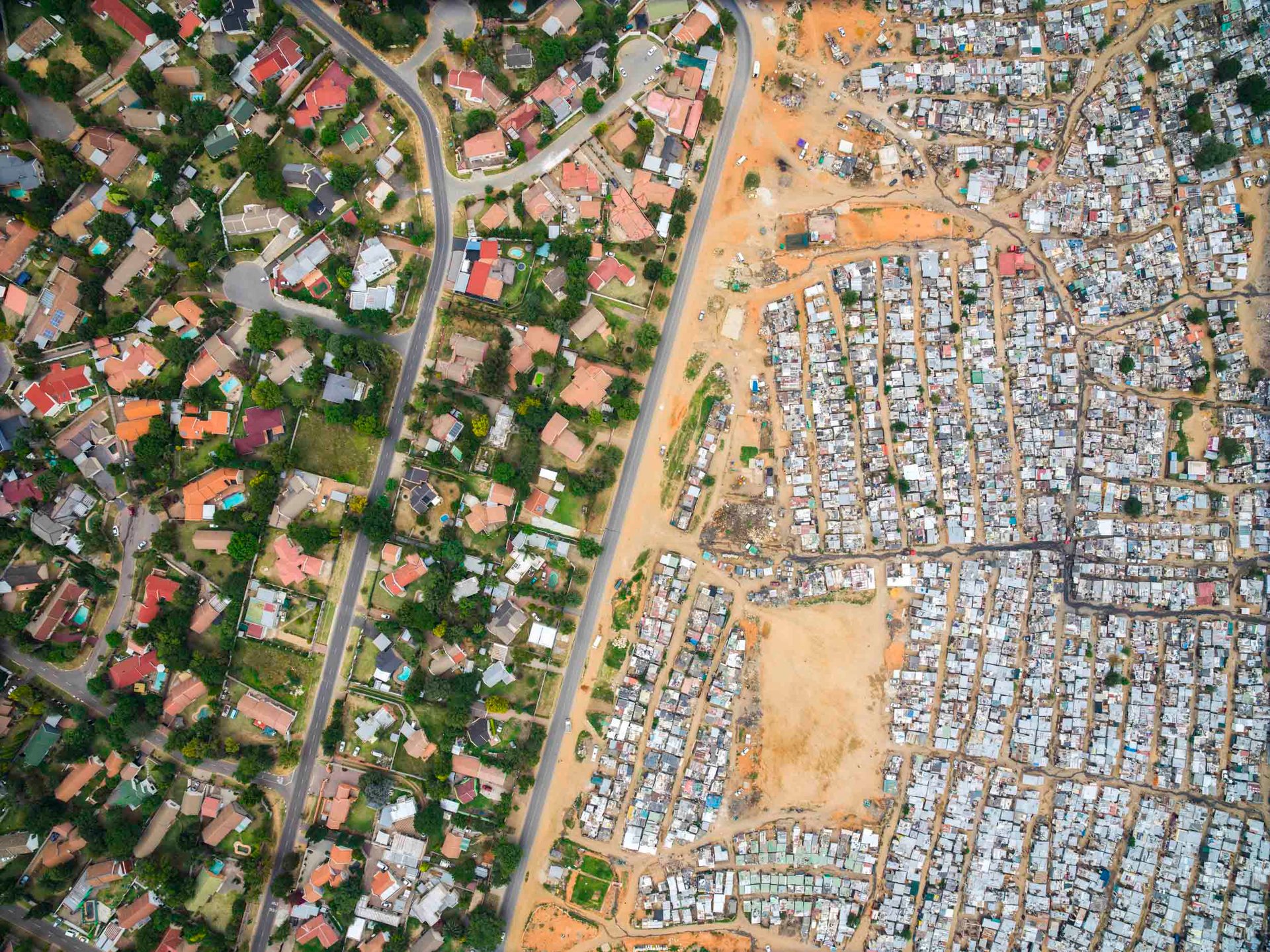
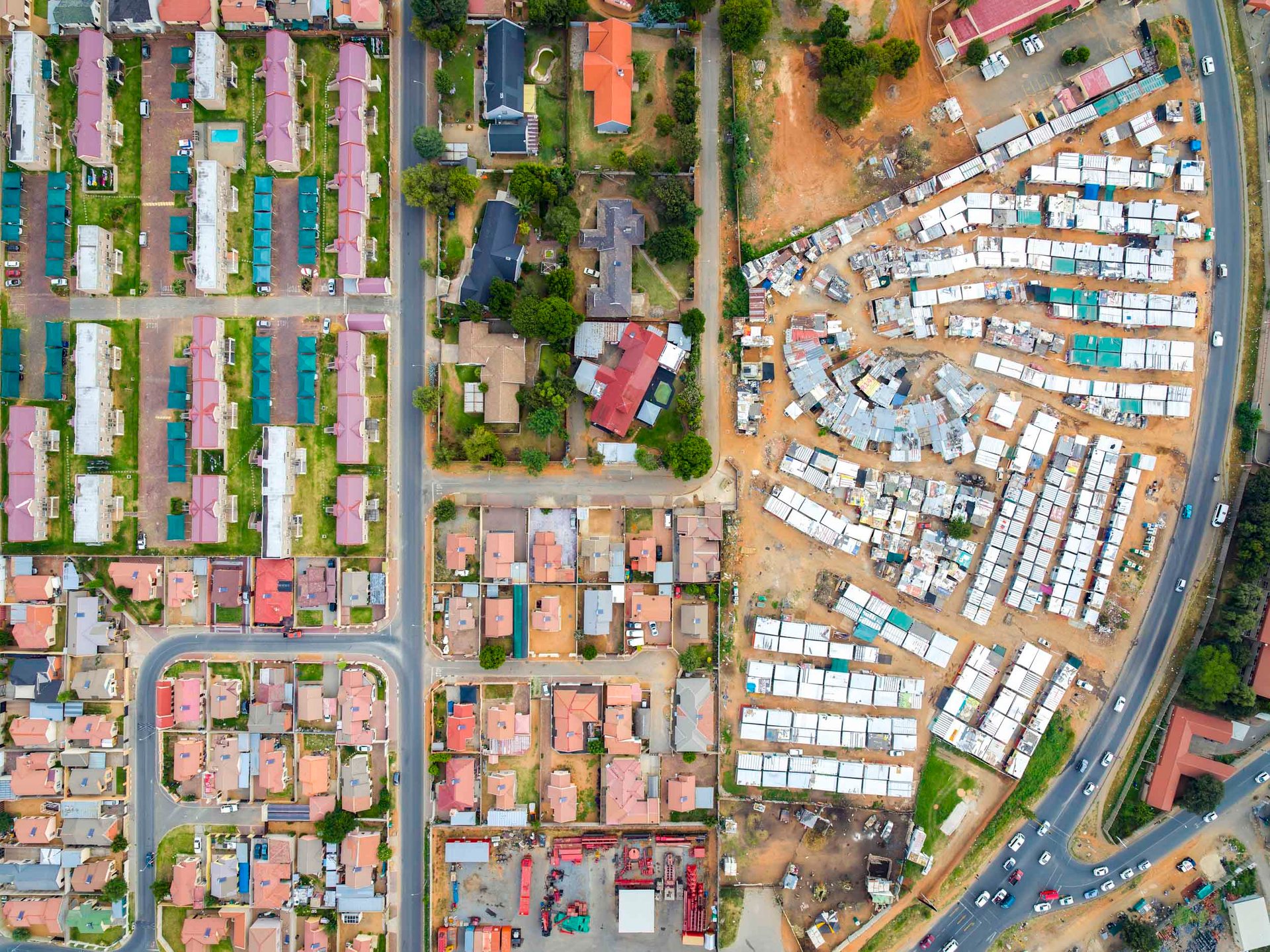
Kya Sands and Bloubosrand.
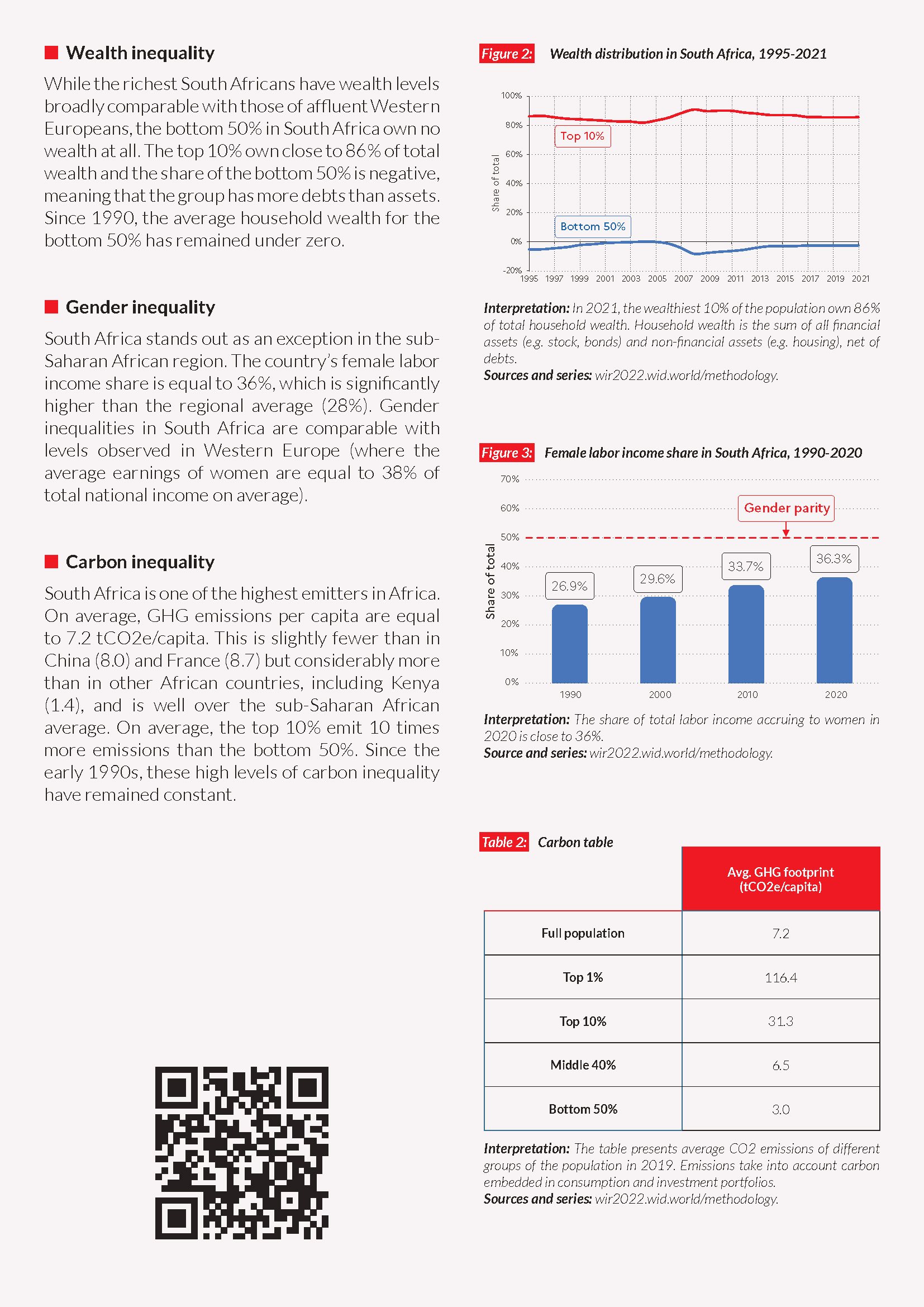
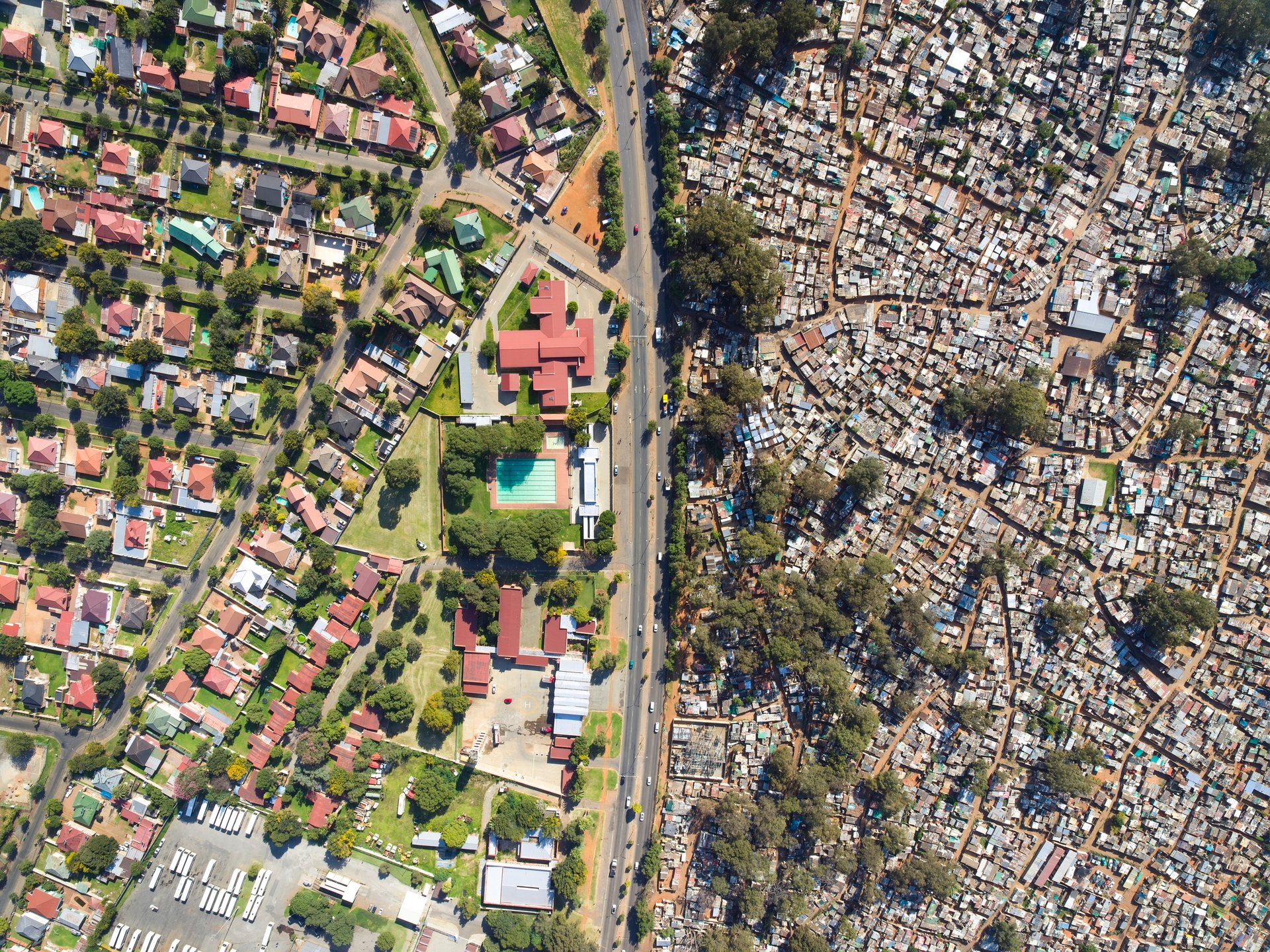
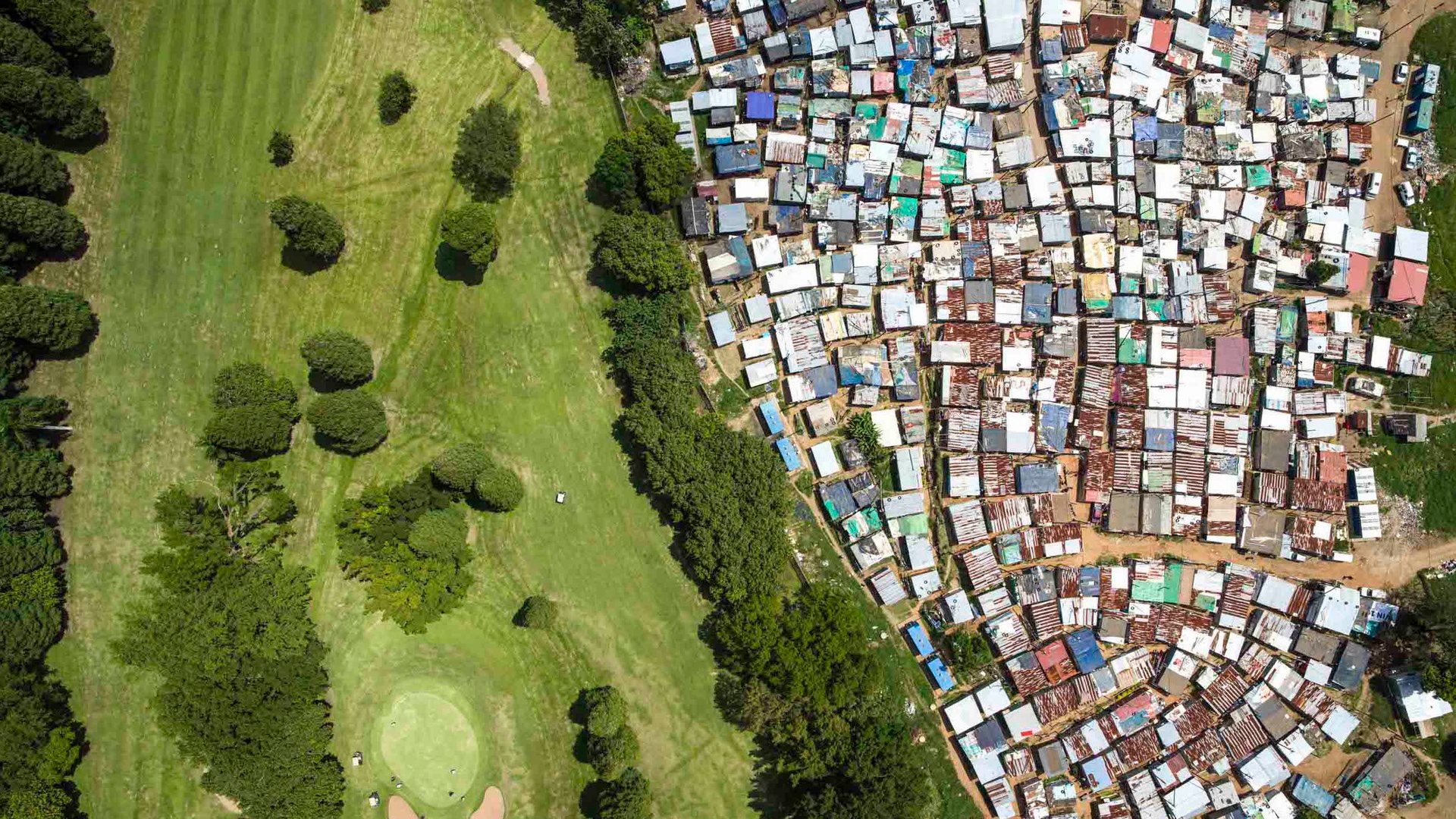
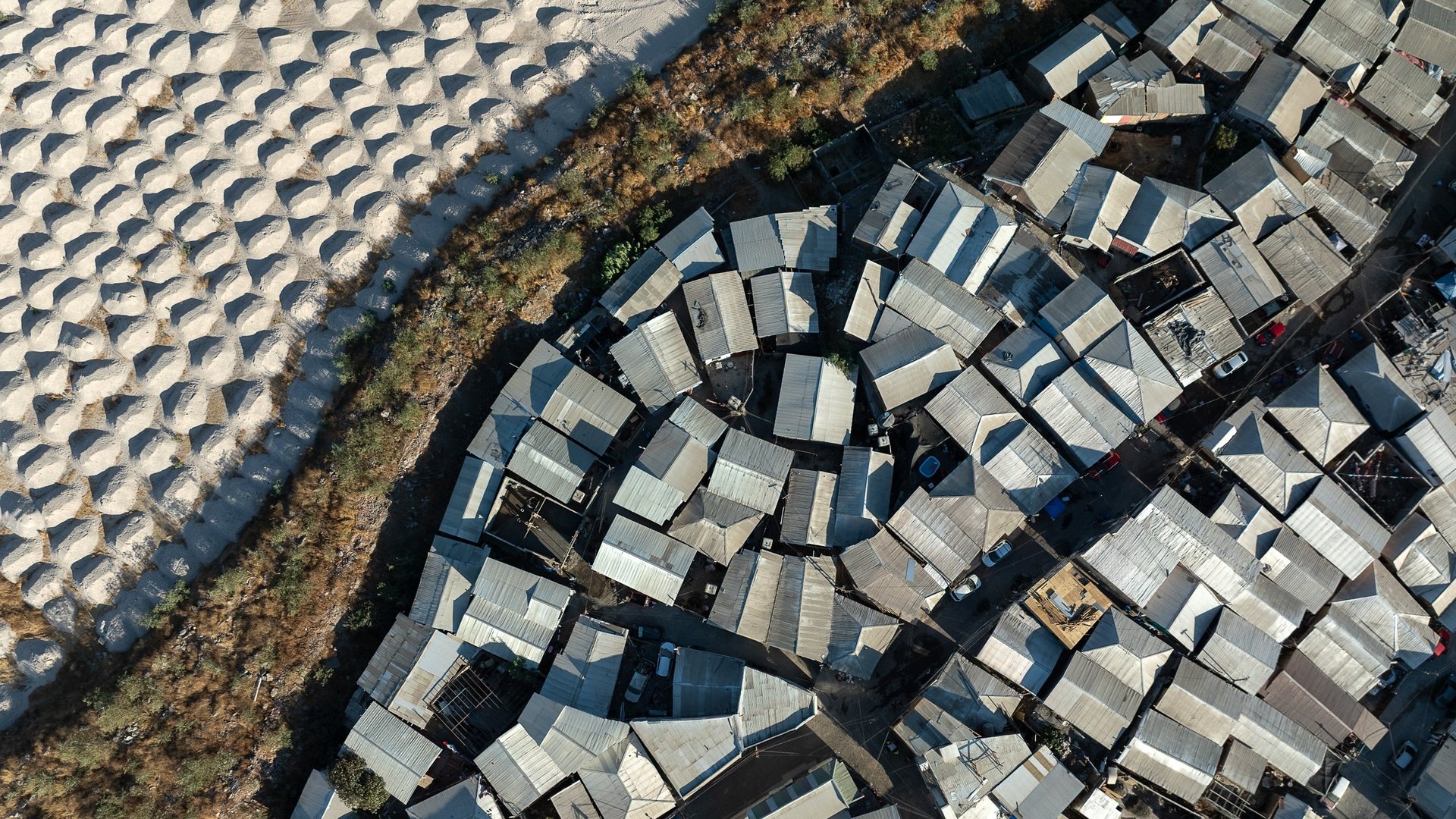
In Germiston, about 15km east of Johannesburg, two worlds meet. On the left, Primrose is an old middle-class suburb of parks and tidy homes. It borders Makause, an informal settlement of somewhere between 10,000 and 30,000 people, estimates vary, built in the mid-1990s by retrenched mineworkers on an abandoned gold mine. The two sit a few metres and an unmarked boundary apart, one of many points across the East Rand where disused mines, gated estates, informal settlements and high-rise wealth press against each other.
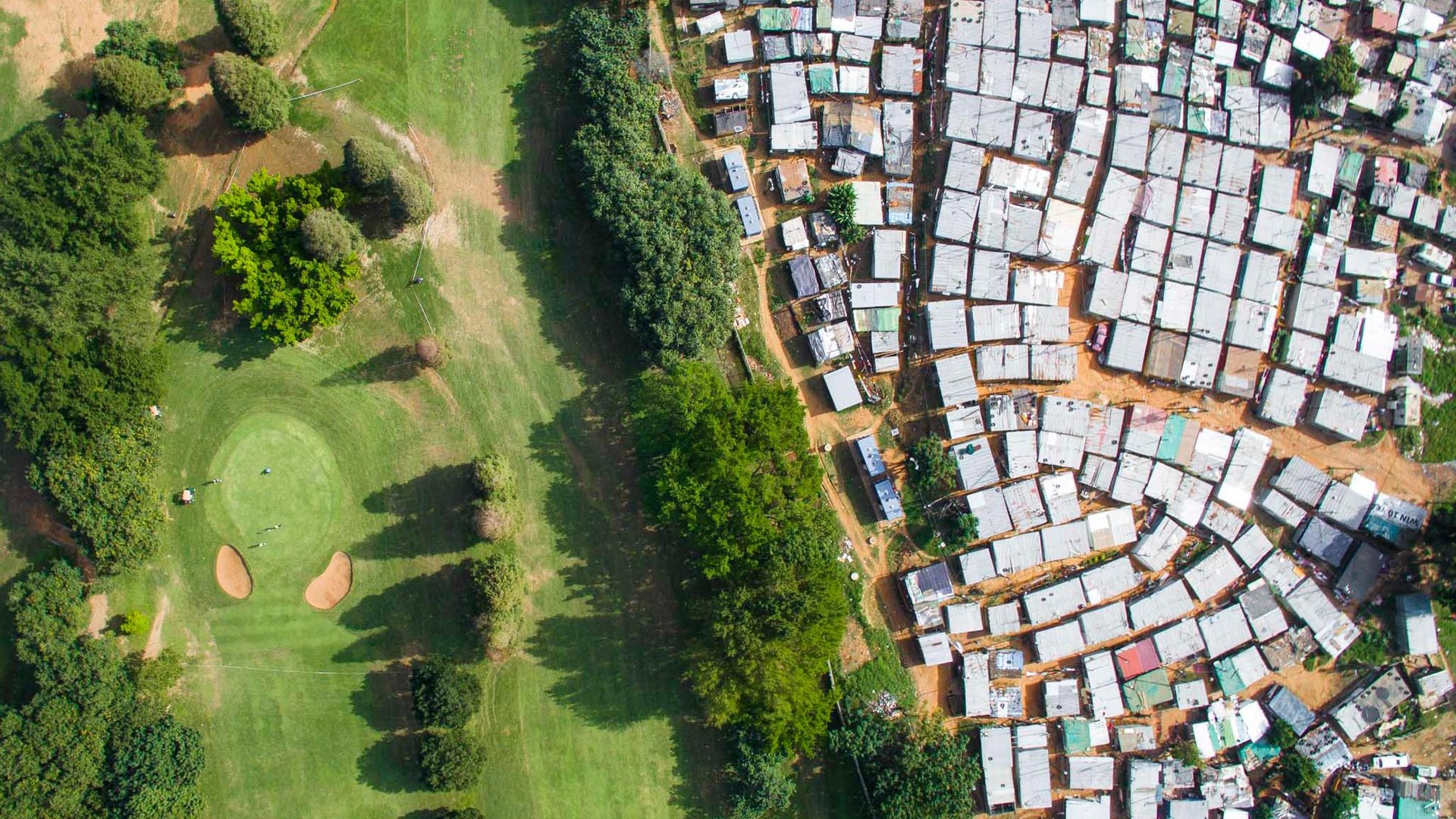
This is the dystopian patchwork of the Johannesburg cityscape, where abandoned gold mines, gated security estates, informal settlements and towering skyscrapers make up the fascinating and sometimes horrifying built environment that architect Eyal Weizman called the "inscribed history" of the world.
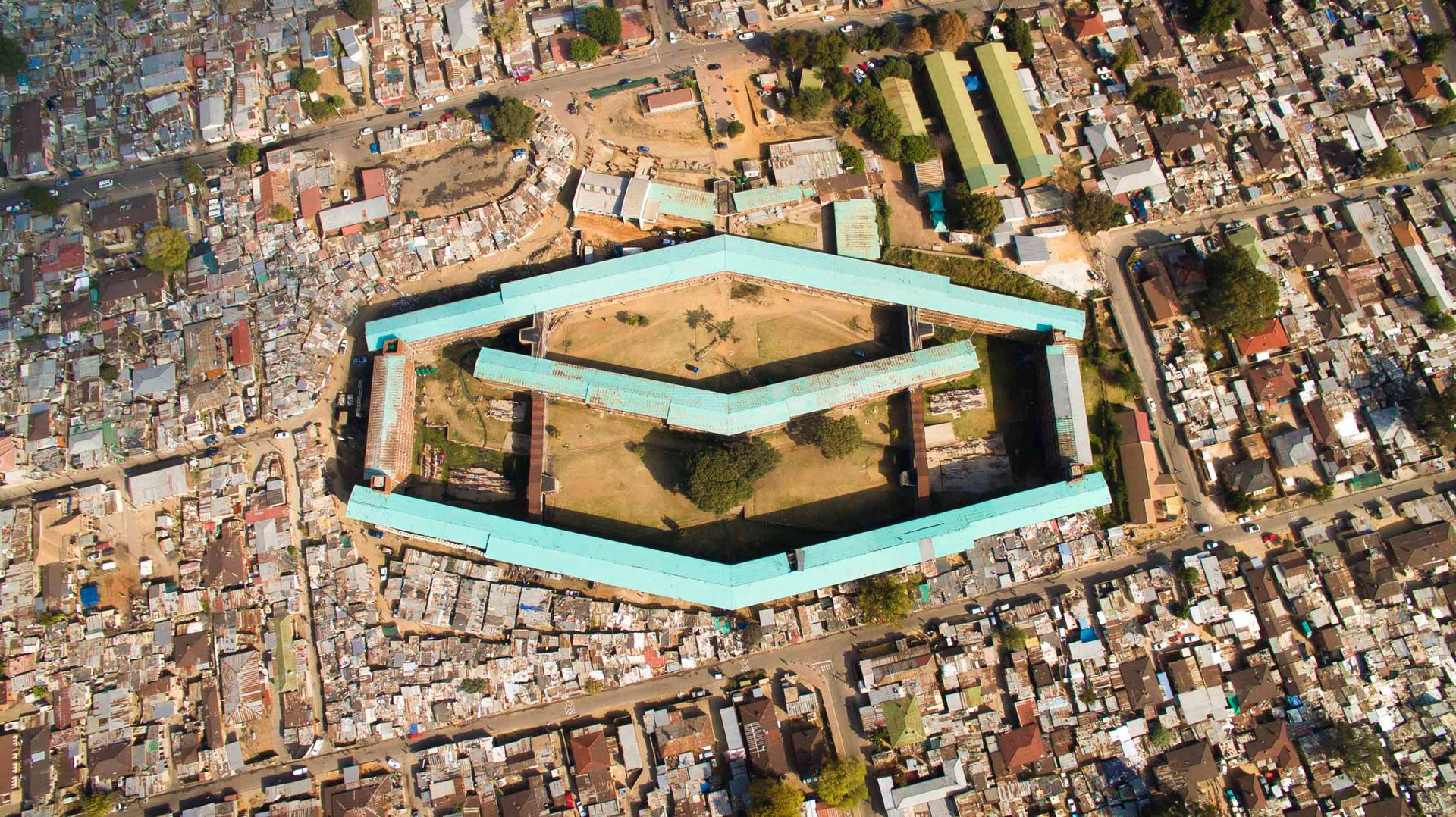
The famous women's hostel in Alexandra, Johannesburg, South Africa.
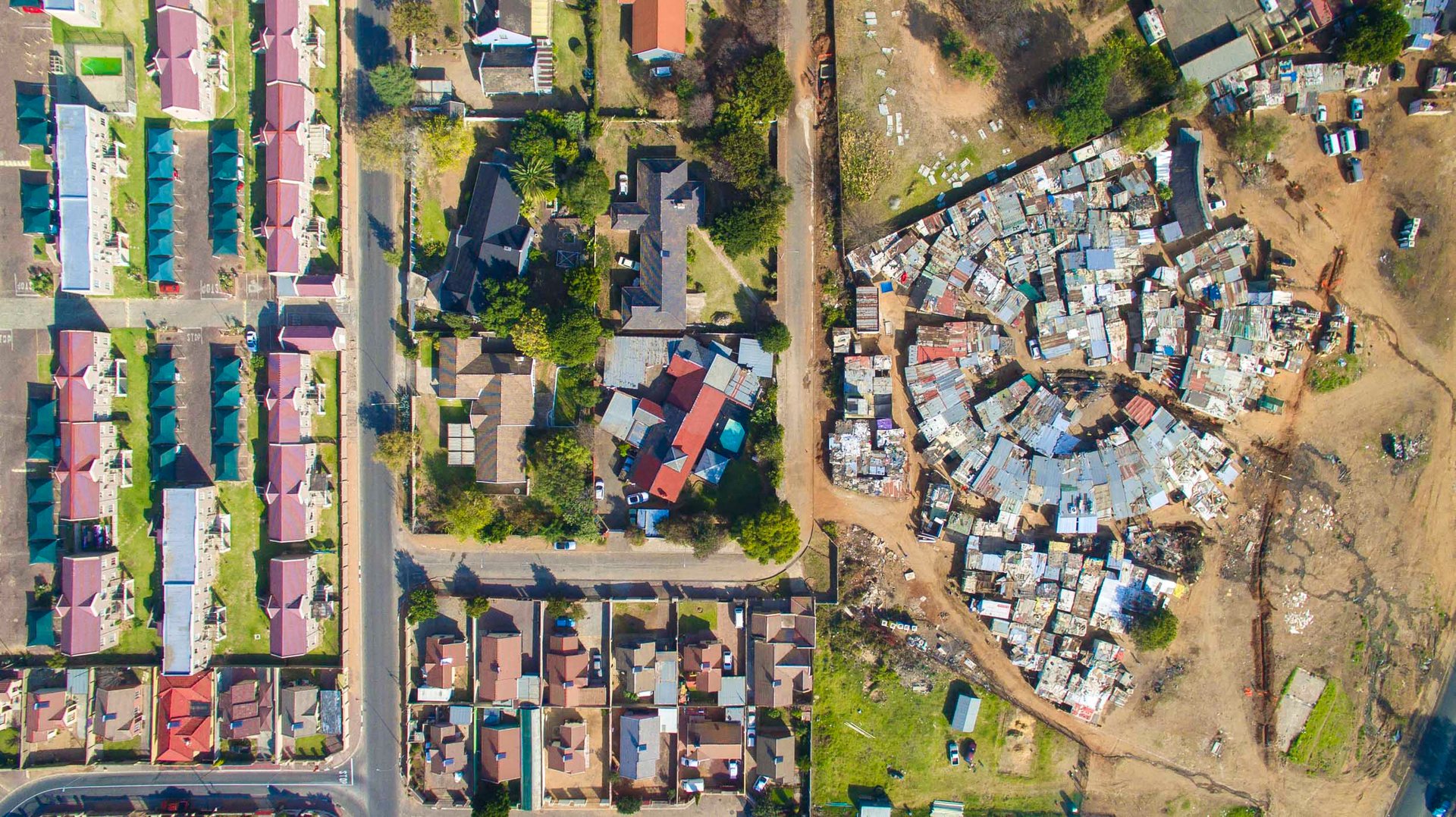
Alexandra in 2016.
Alexandra now. Informal settlements continually adapt, change, and morph to suit their environment.
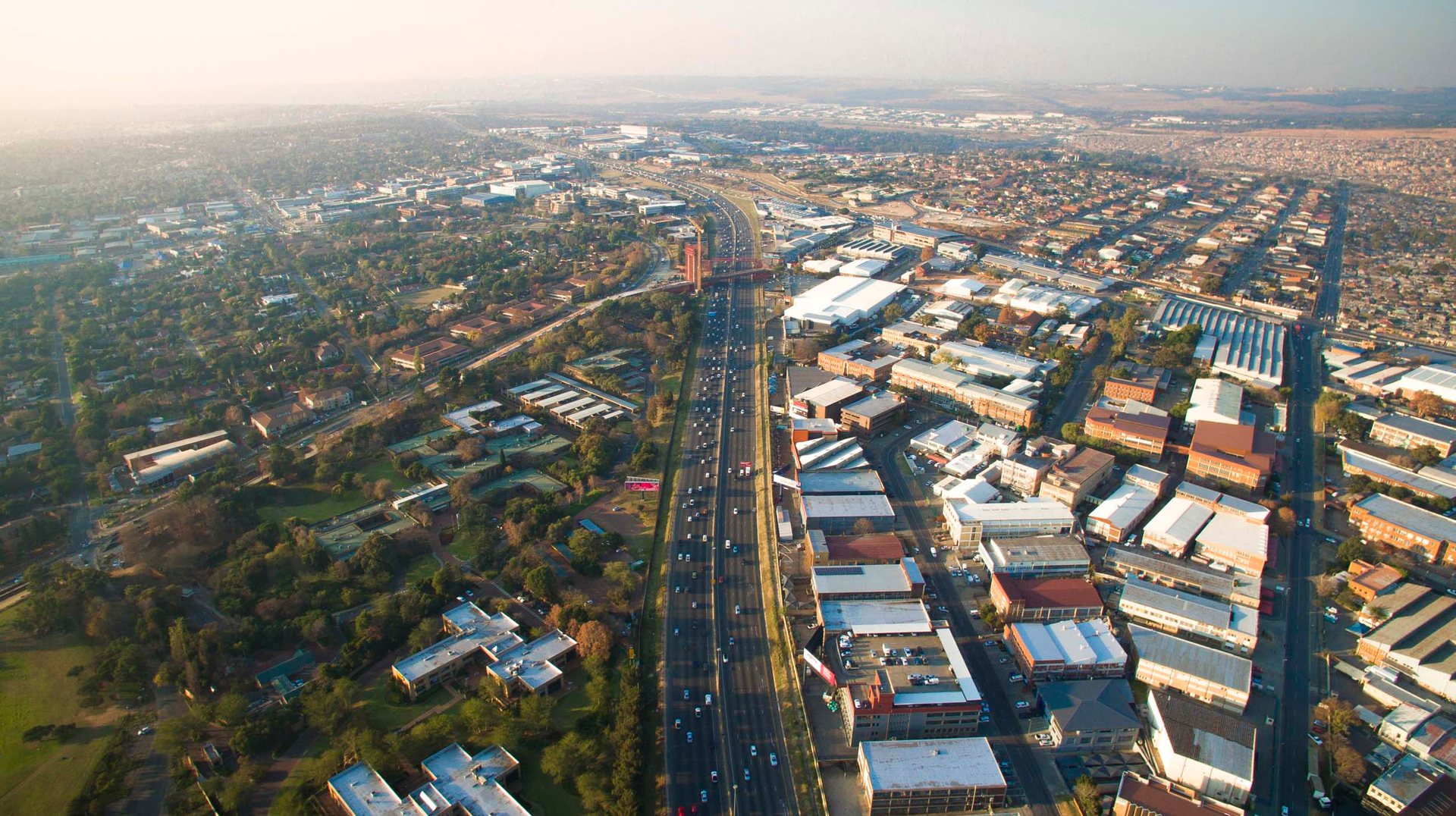
The M1 highway bisecting Alexandra from the wealthy enclave of Sandton, in Johannesburg, South Africa.
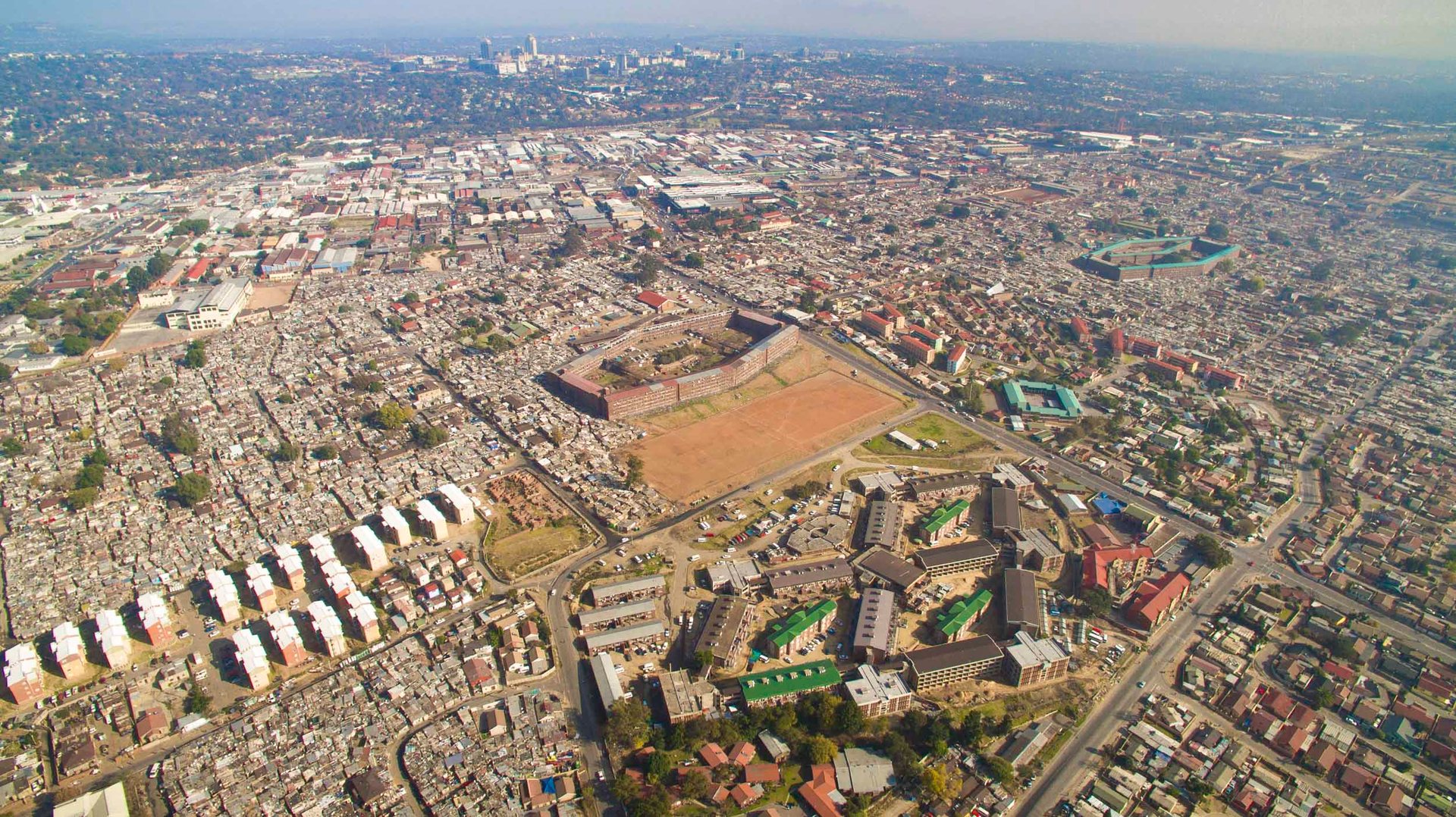
Massive hostels, built to control and house black workers in the early 20th century, still stand in Alexandra, just kilometers from Sandton, "The Richest Square Mile" in Africa.
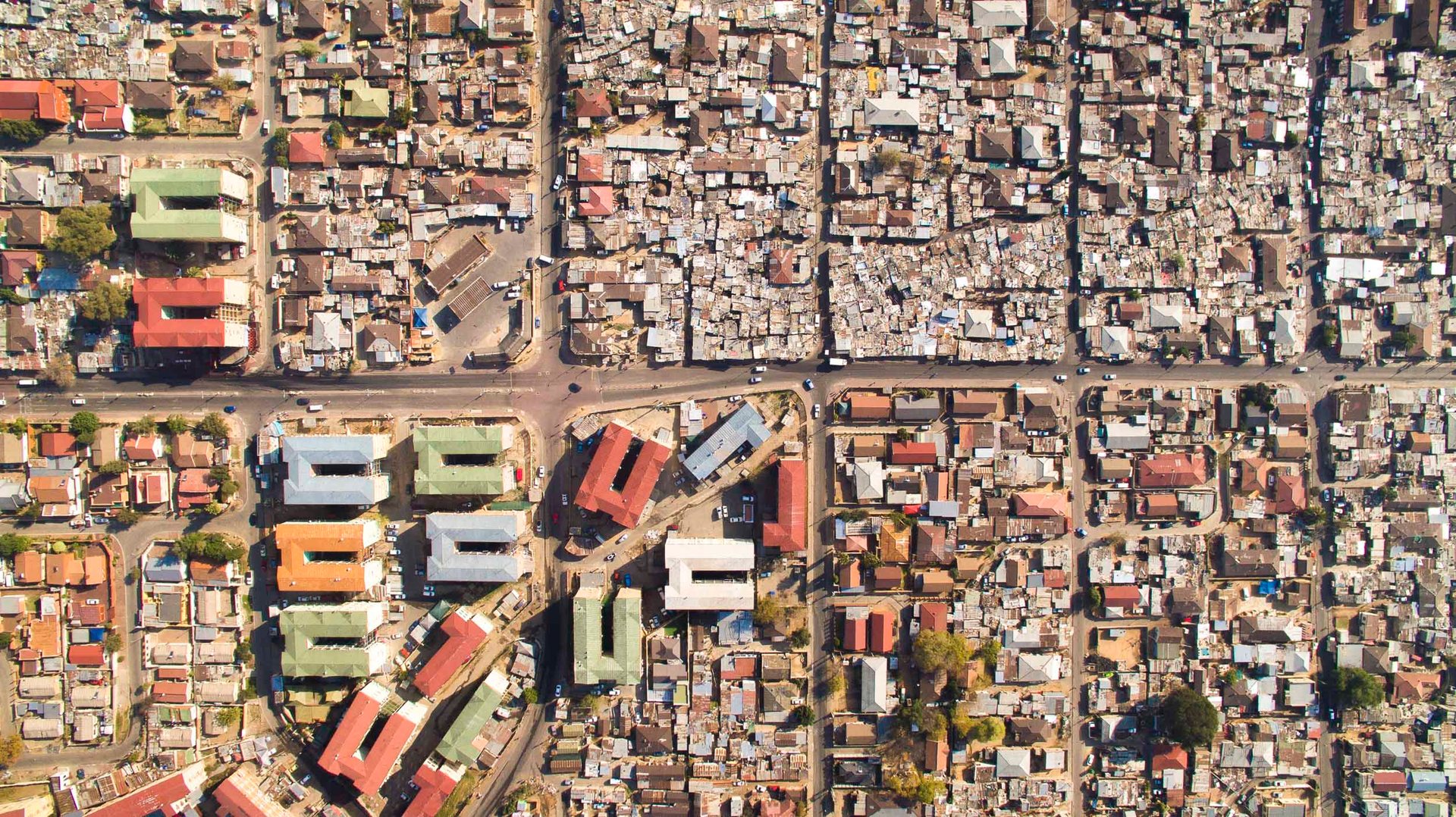
An alphabet soup of apartment buildings in Alexandra.
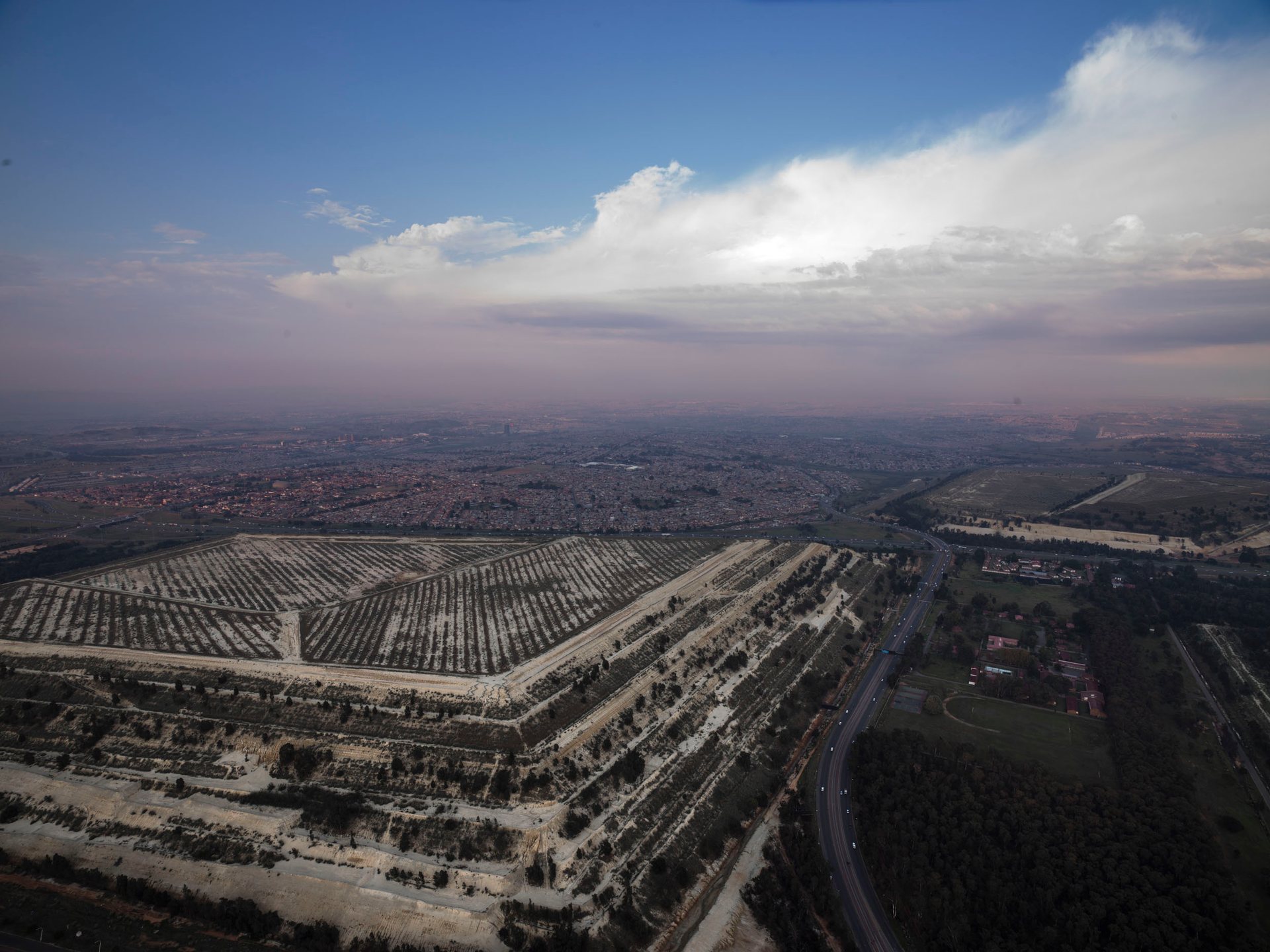
Johannesburg's gold mines, once symbols of wealth, now exacerbate inequality through environmental damage. Abandoned mines like this one, near Soweto, pollute water sources and air with harmful substances like uranium, disproportionately affecting impoverished communities living nearby. This environmental injustice widens the socio-economic divide, as poorer residents bear the brunt of health risks without receiving benefits from the mining wealth.
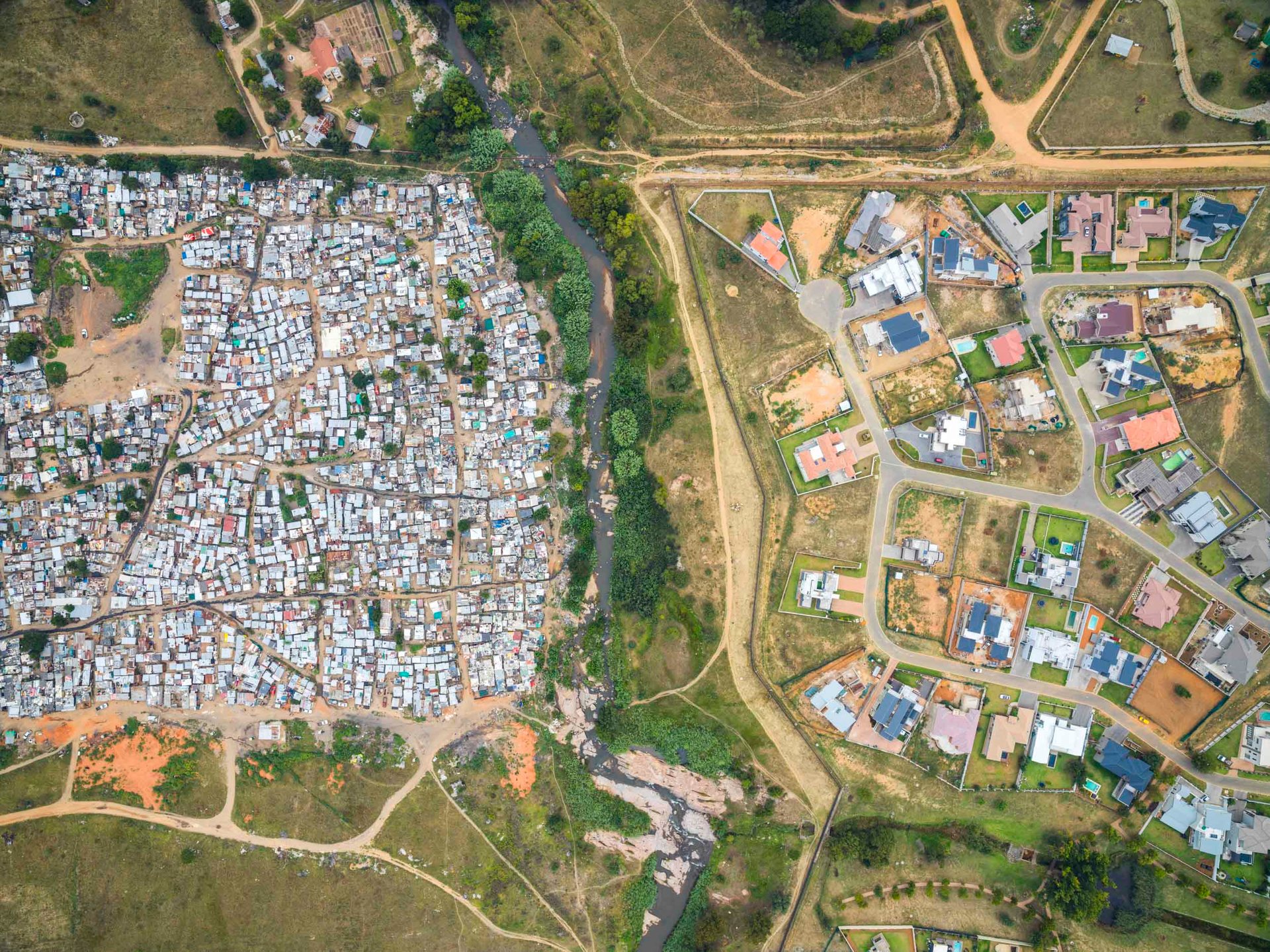
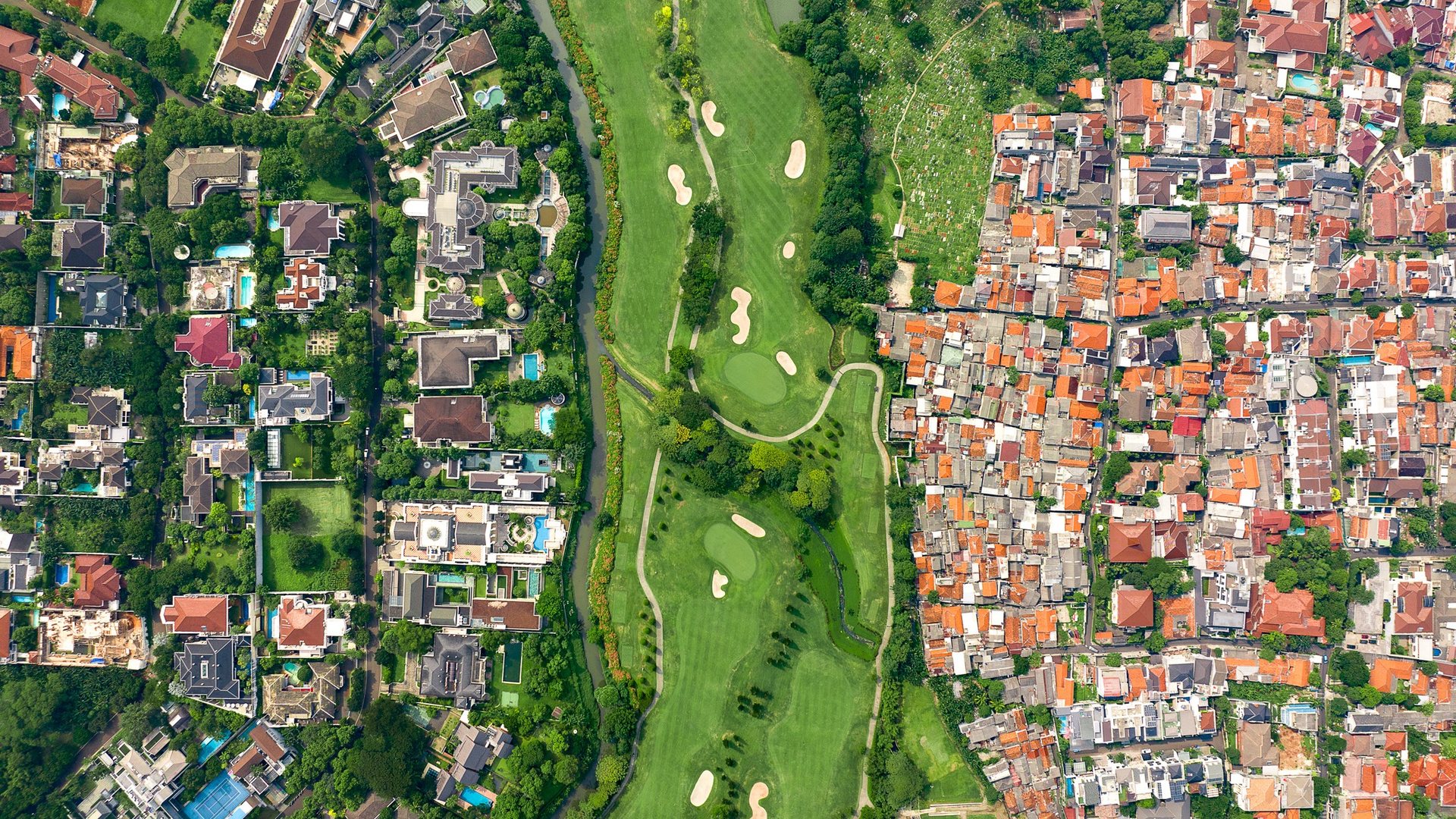
The Klein Jukskei river and its tributaries split this scene, north of Johannesburg, between the informal settlement of Msawawa and the Cedar Creek Estates.
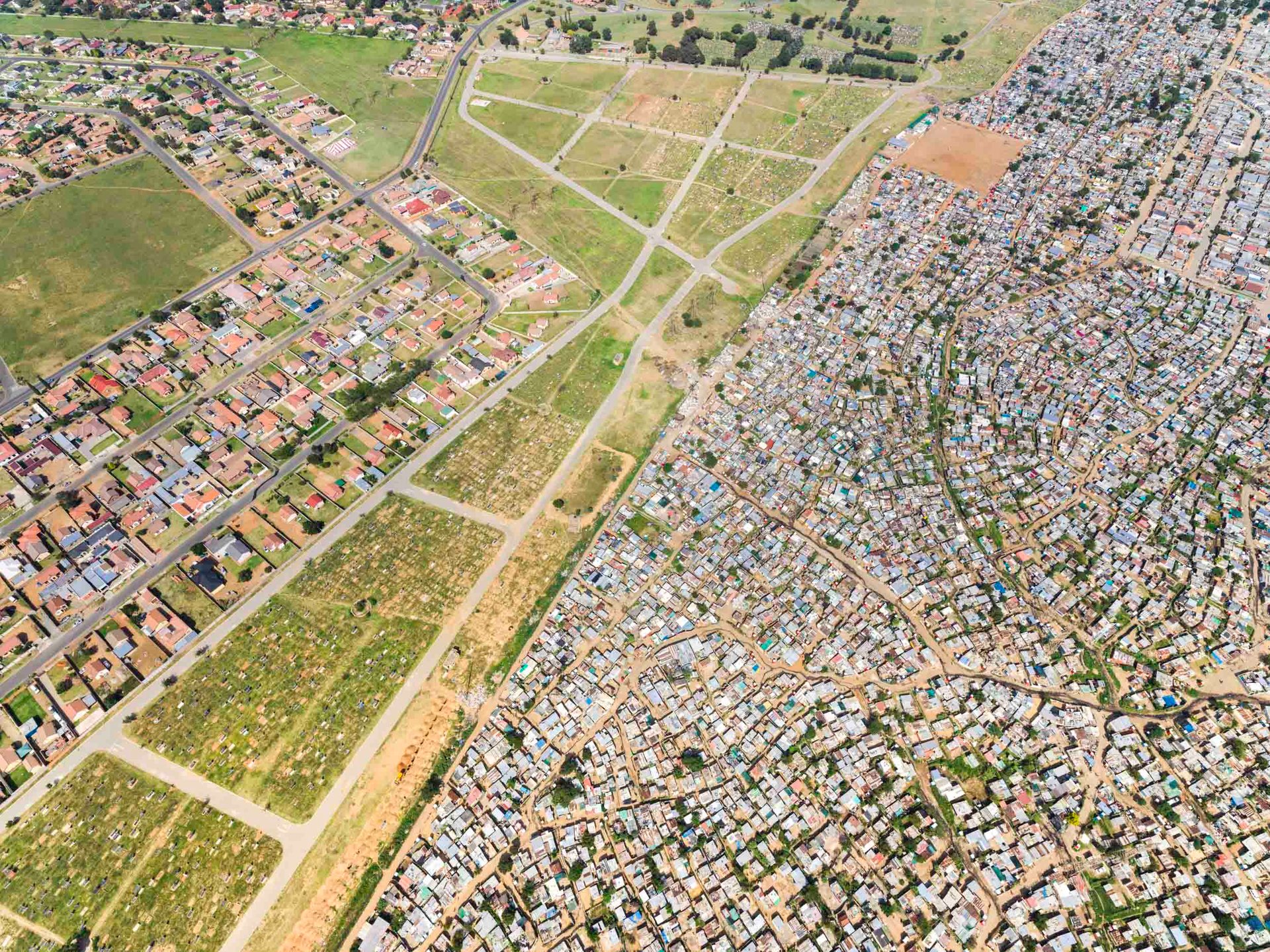
Near Tembisa.
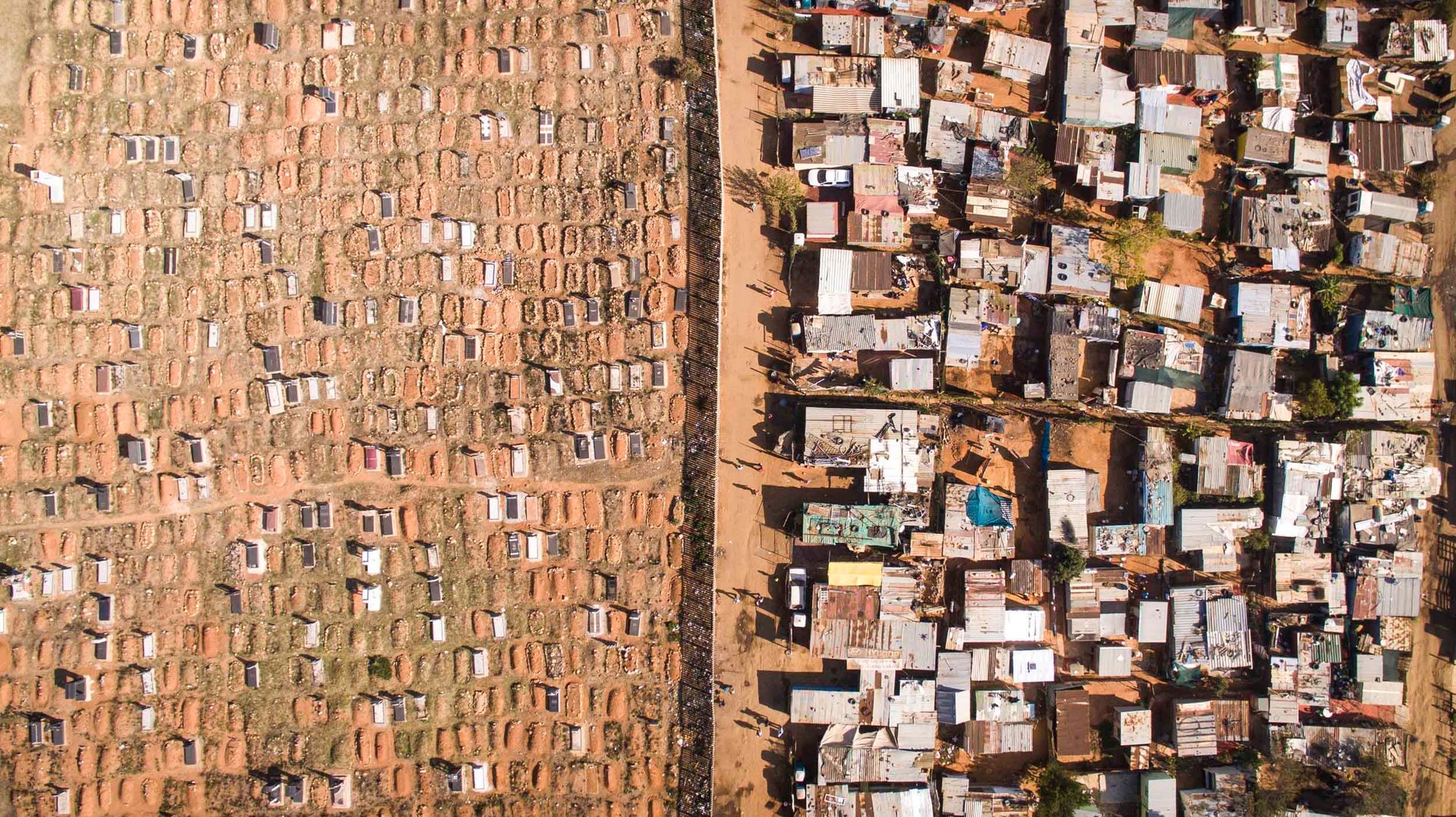
Mooifontein Cemetery next to Vusimuzi, Tembisa.
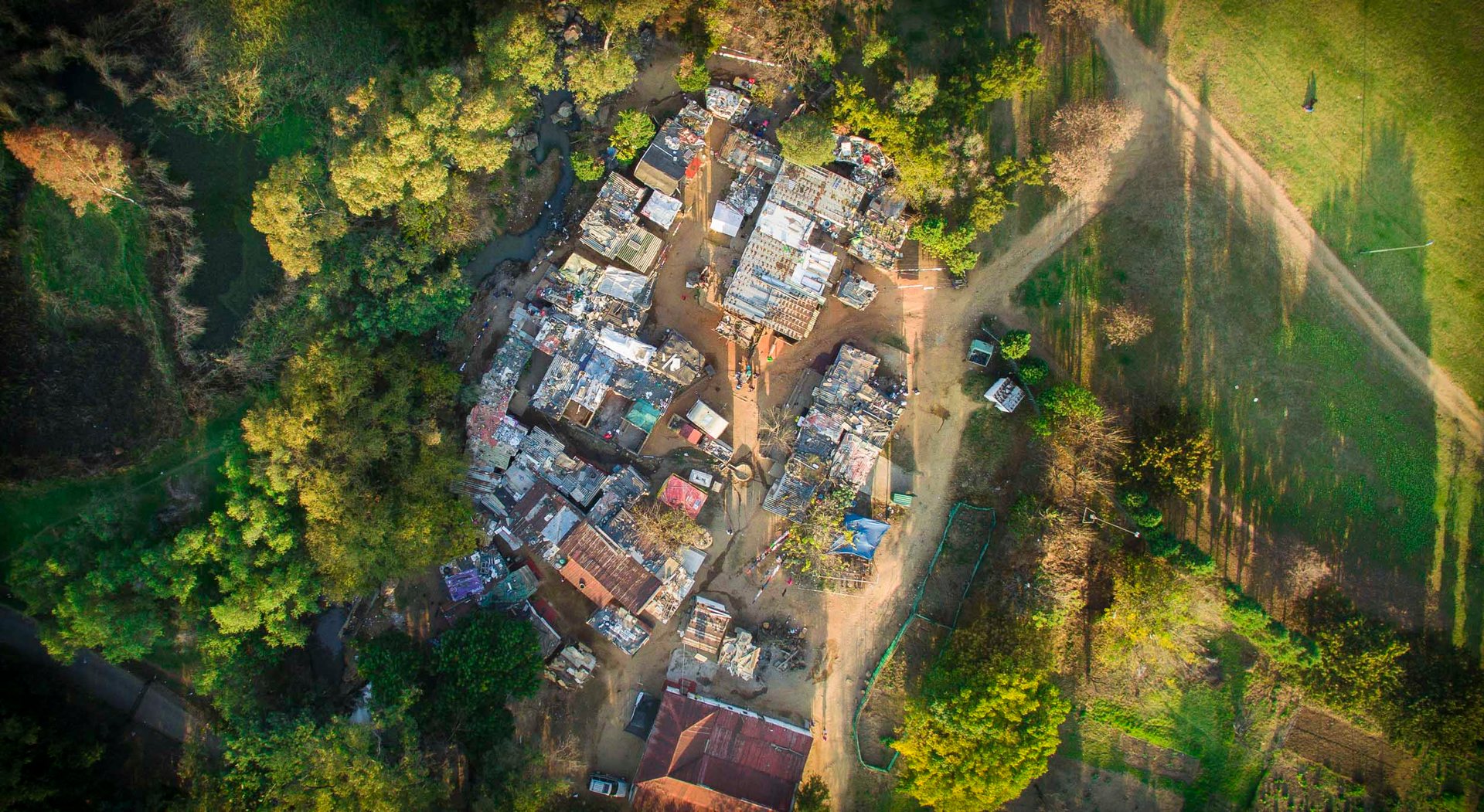
Informal settlement in Innisfree Park, near Sandton.
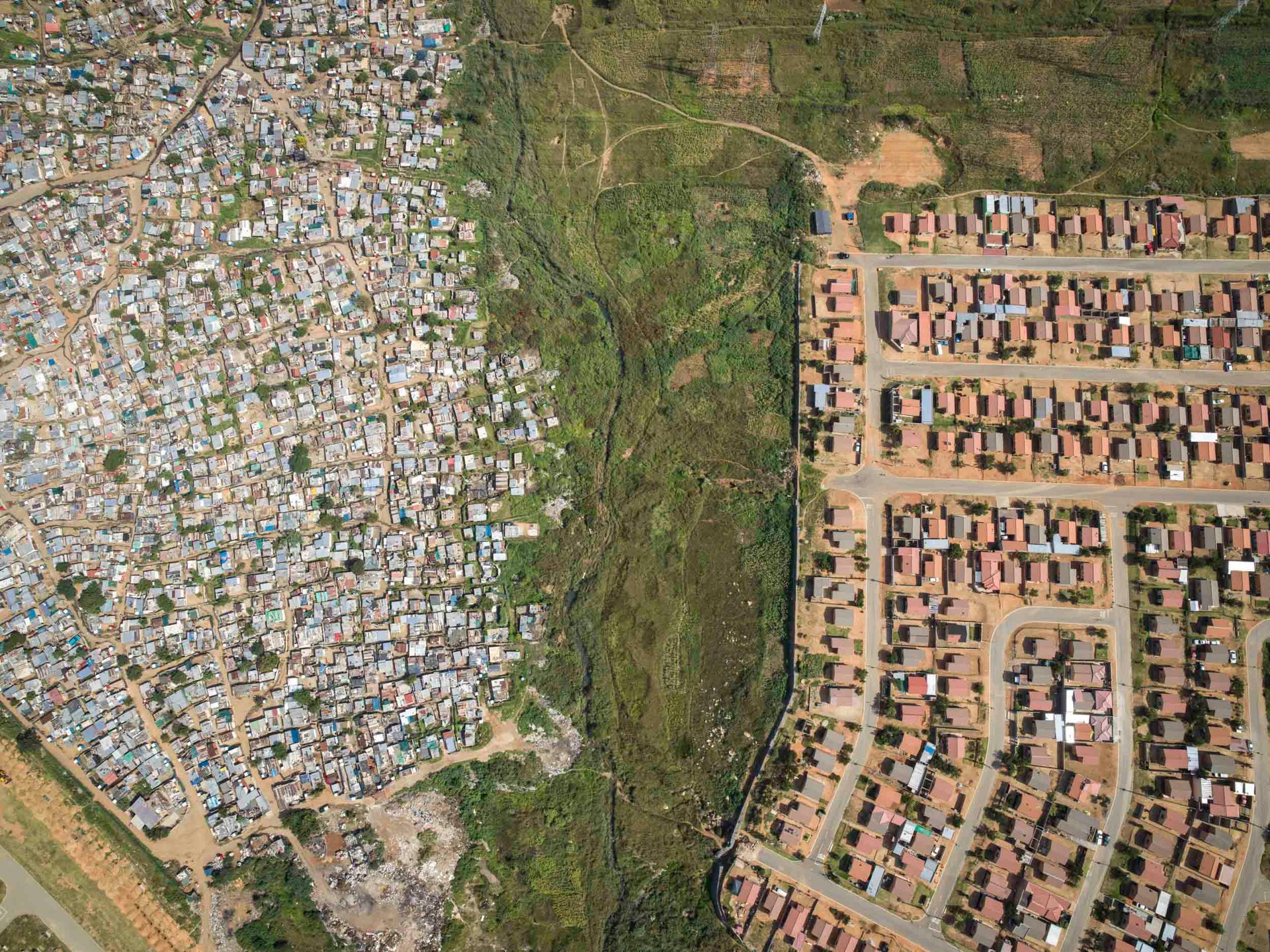
Vusimuzi settlement is in an interesting position. It protrudes like an isthmus between a fetid stream, a huge cemetery, and two slightly wealthier suburbs. High above the shacks, high-tension power lines carry electricity to other areas of Johannesburg, but not Vusimuzi. As one resident put it (in an article written in 2013), "Electricity flows above, but not below".
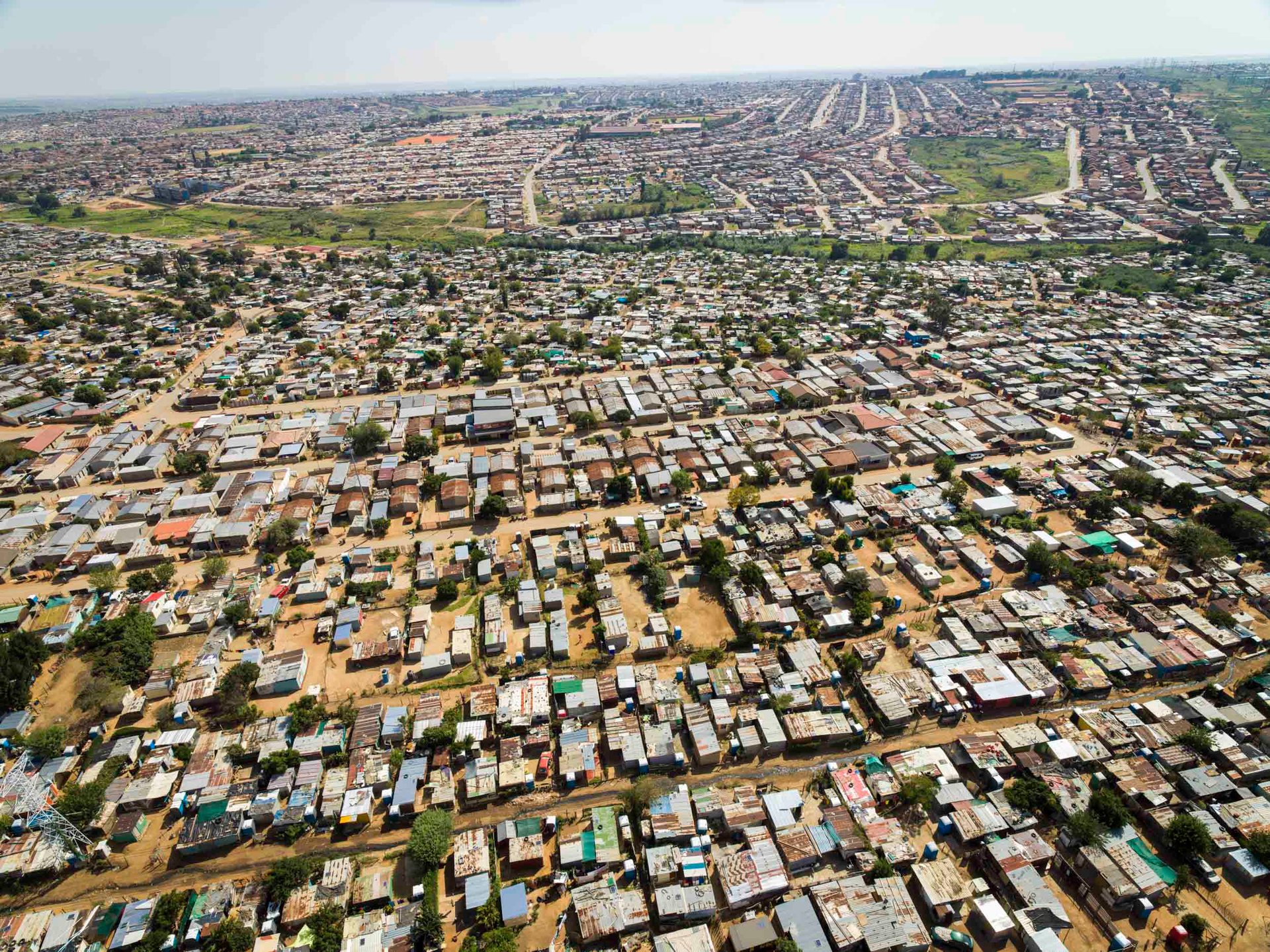
An endless sea of shacks and homes in Tembisa, near Johannesburg, South Africa.
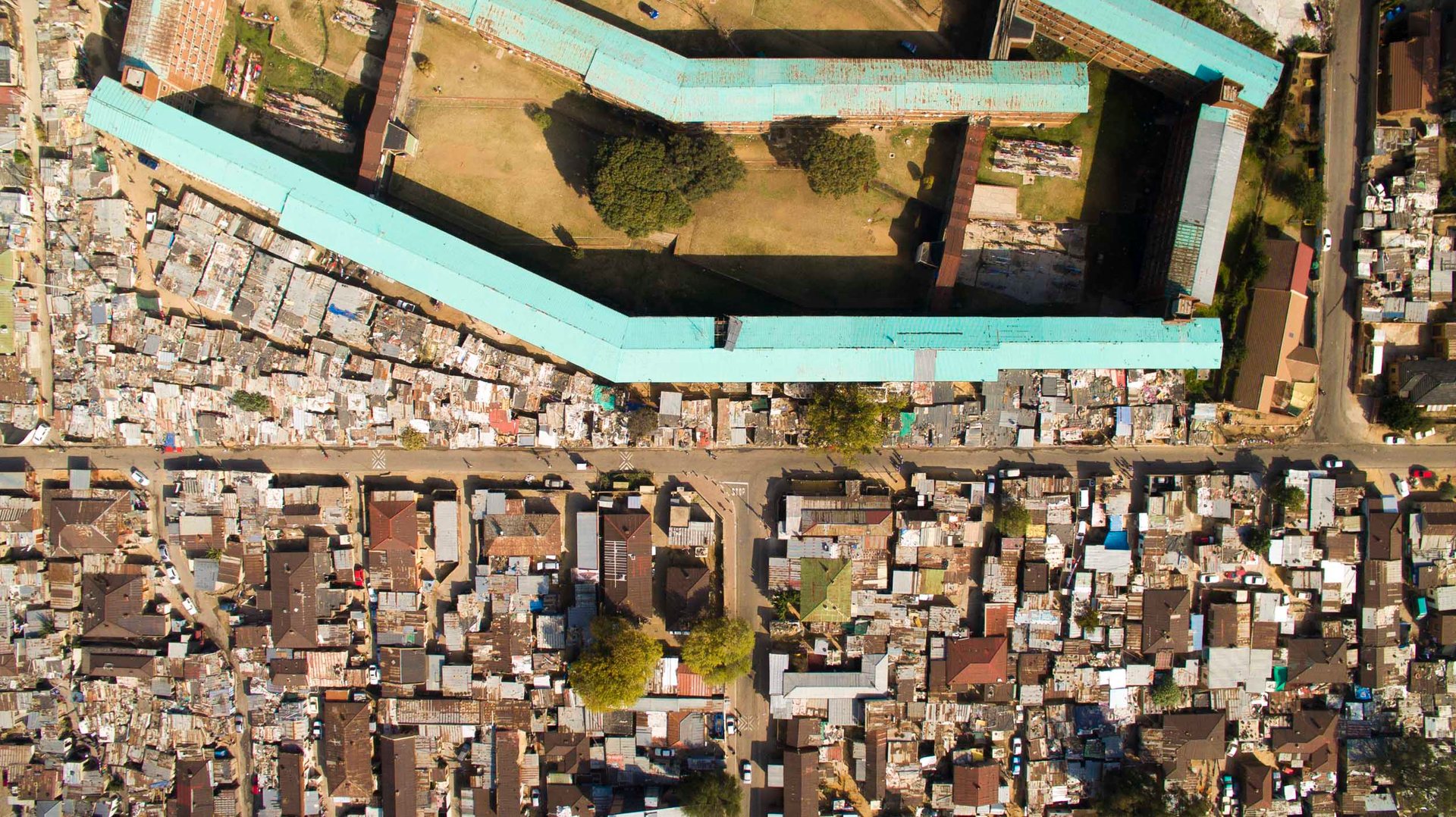
Hostels like this one were used to temporarily house black workers as they worked in the gold fields. To this day, hundreds of thousands of South Africans still live within them.
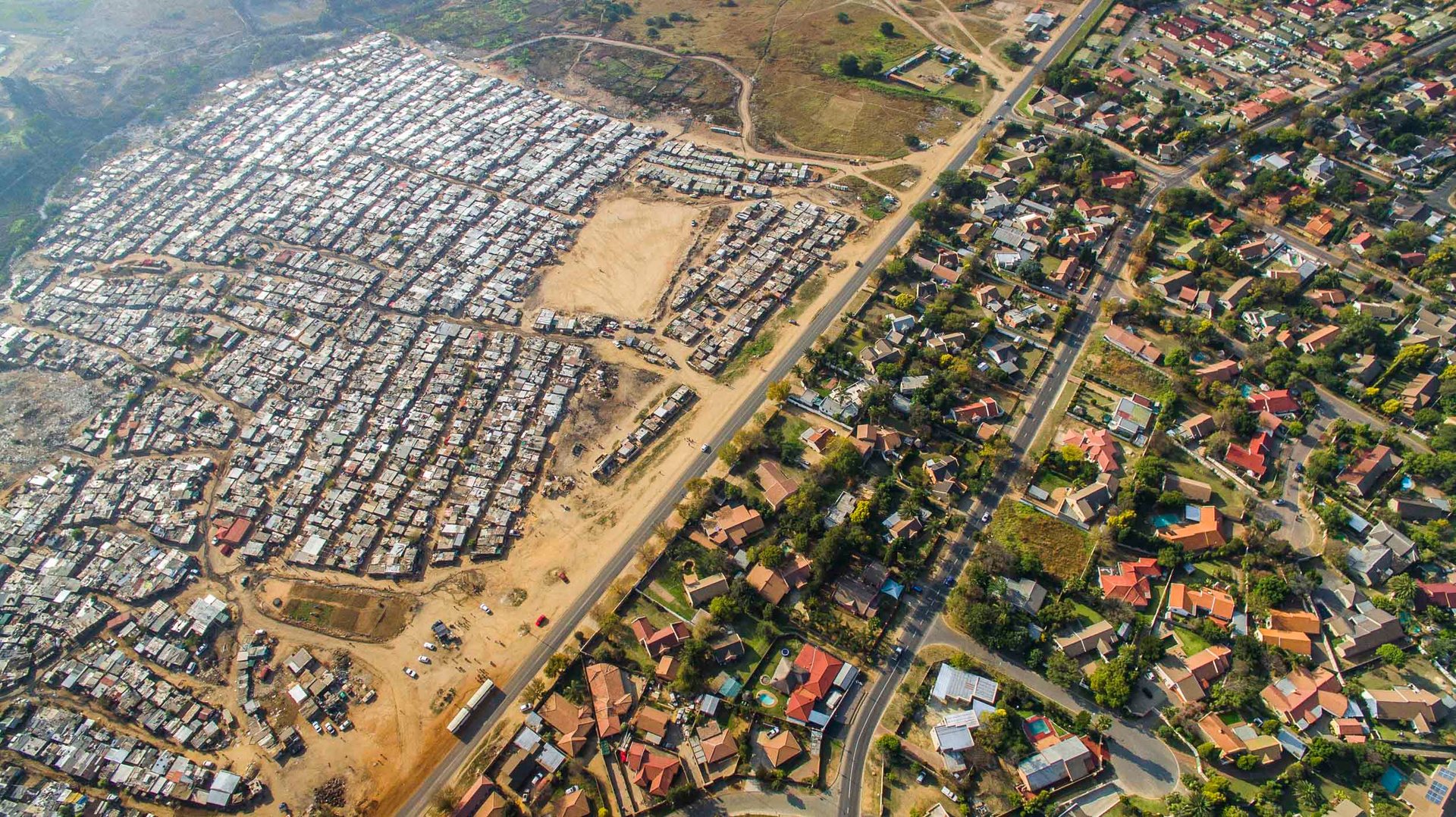
The story of Kya Sands is a story of ash, smoke, and broken promises. Search for the informal settlement on Google and you will find many articles relating to fires; including one that burned over 200 shacks in November 2015. Search a little more and you will find a list of protests and claims that formal housing that was promised but never forthcoming. A little bit more, and you’ll find accounts of the army being mobilized after xenophobic violence erupted.
Across the street, among leafy trees, shady street corners and swimming pools, you find the middle-class suburb of Bloubosrand. A quick search on Property24 shows that many houses are worth over 1 million rand. Across the street, tin shacks with car tires on their roof extend into the distance. If you look even closer, the main thoroughfares in Kya Sands are actually drainages for the black, filthy water emanating from the nearby creek.
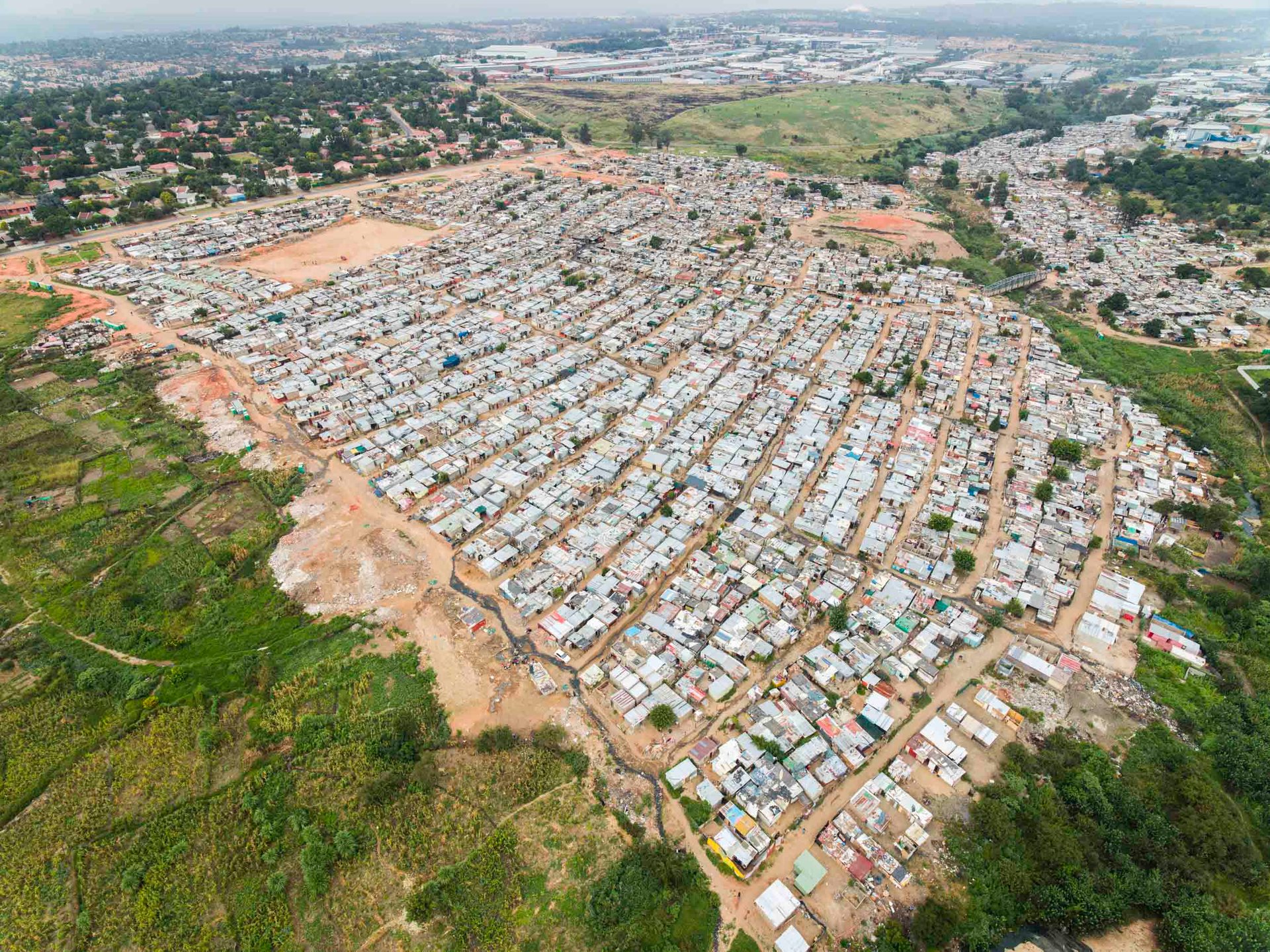
The perspective over the northwest corner of Kya Sands informal area.