Jakarta
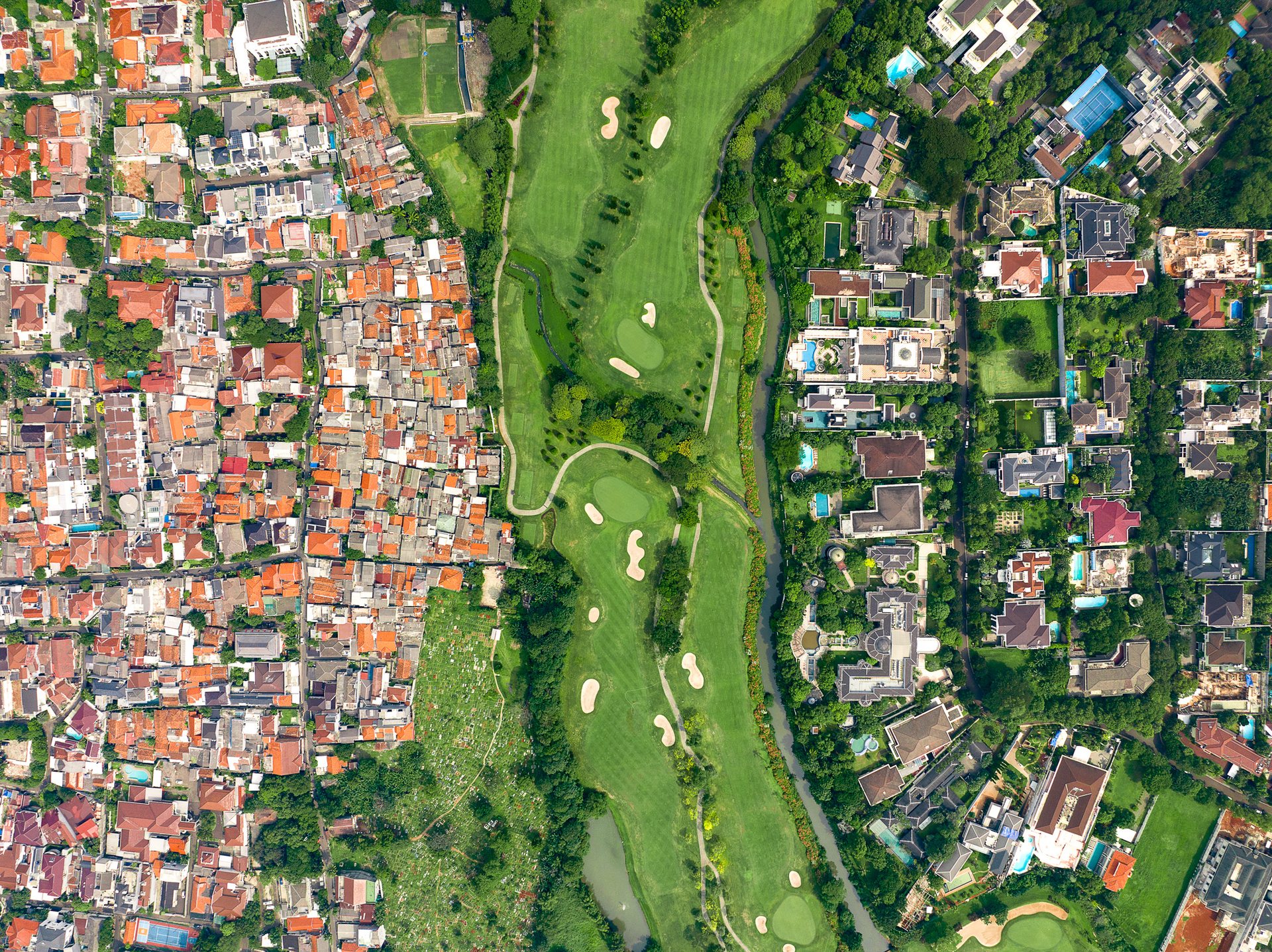
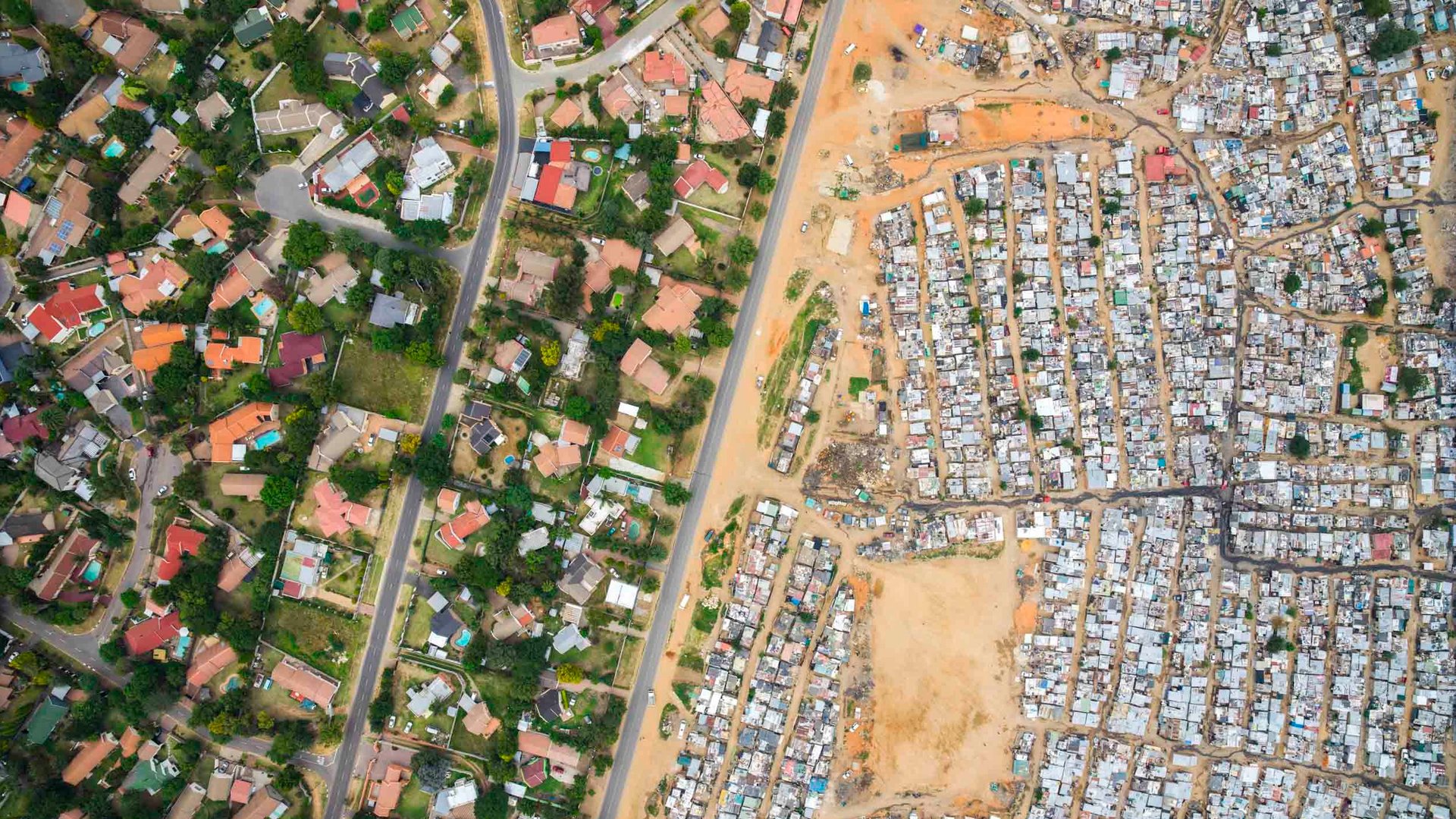
Pondok Indah is one of Jakarta's most exclusive neighborhoods, the city's answer to Beverly Hills, and the Bukit Golf area at its centre is the wealthiest part of it: enormous houses on large plots wrapped around a private golf course, home to conglomerates, officials and expatriates. Yet the boundary is thin. Just beyond the manicured fairways and walls sit the kampungs, the dense, informally built neighborhoods where ordinary Jakartans live in cramped quarters without the same services.
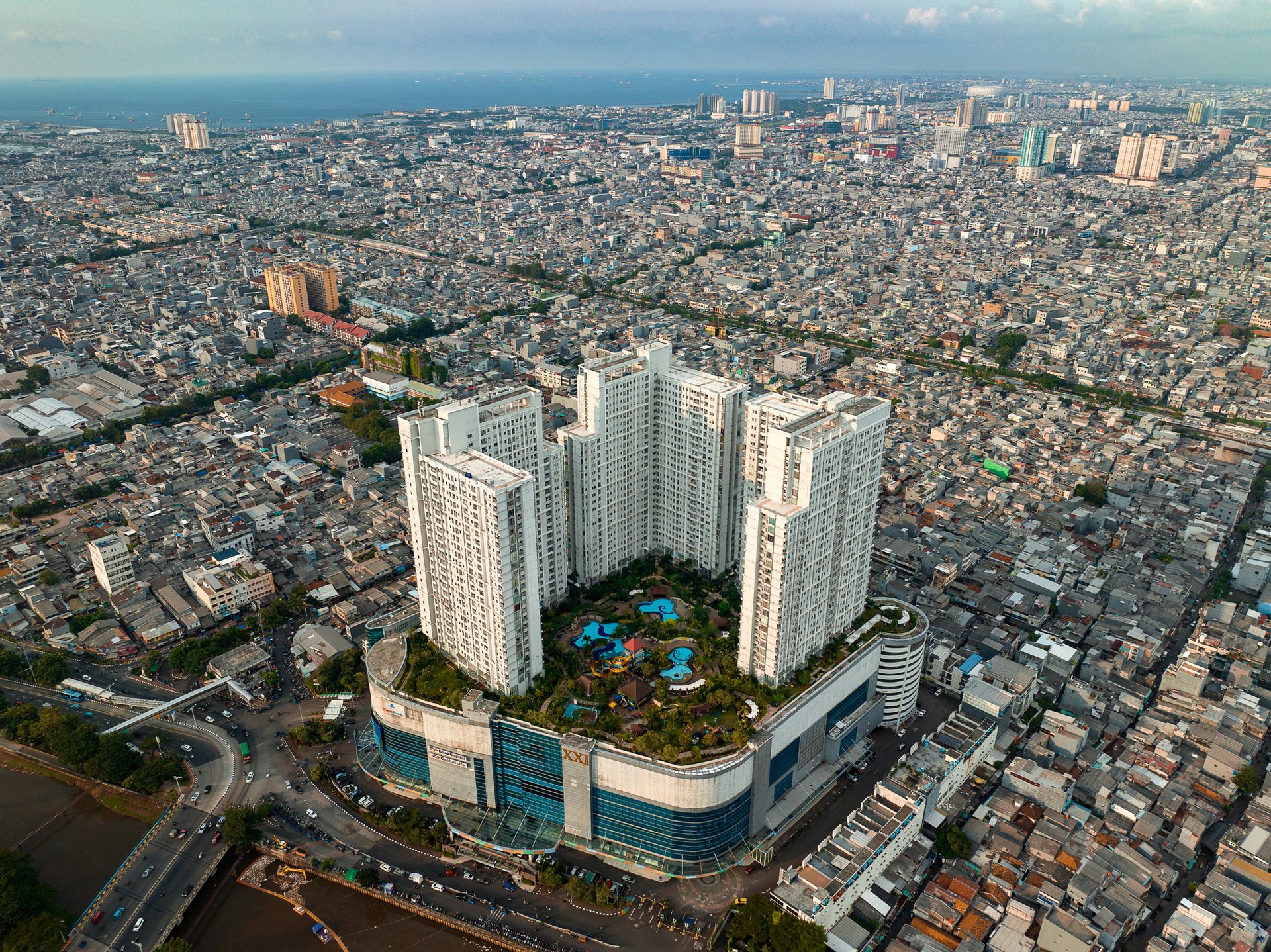
Shopping malls like Seasons City in North Jakarta stand out like citadels, their gleaming facades, swimming pools and expansive interiors standing in sharp contrast to the densely packed, informally built settlements or "kampungs" that are also a defining feature of Jakarta's cityscape.
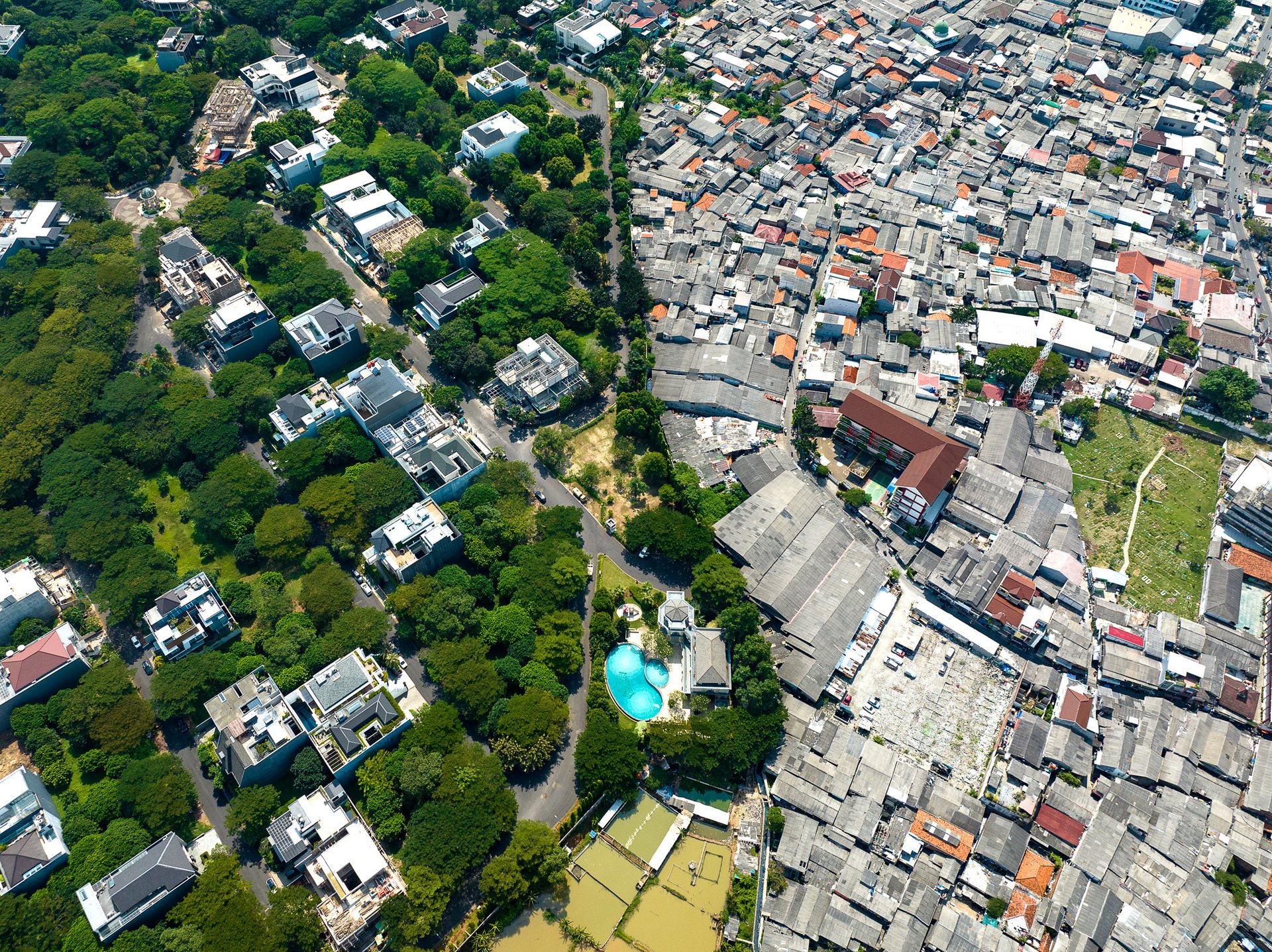
A rapacious need to develop housing, both for the haves and the have nots, has removed all but a small portion of the traditional rice paddy ecosystems that once dominated northern Jakarta. If you search you can still find them, in very reduced numbers, such as at the bottom of this photo.
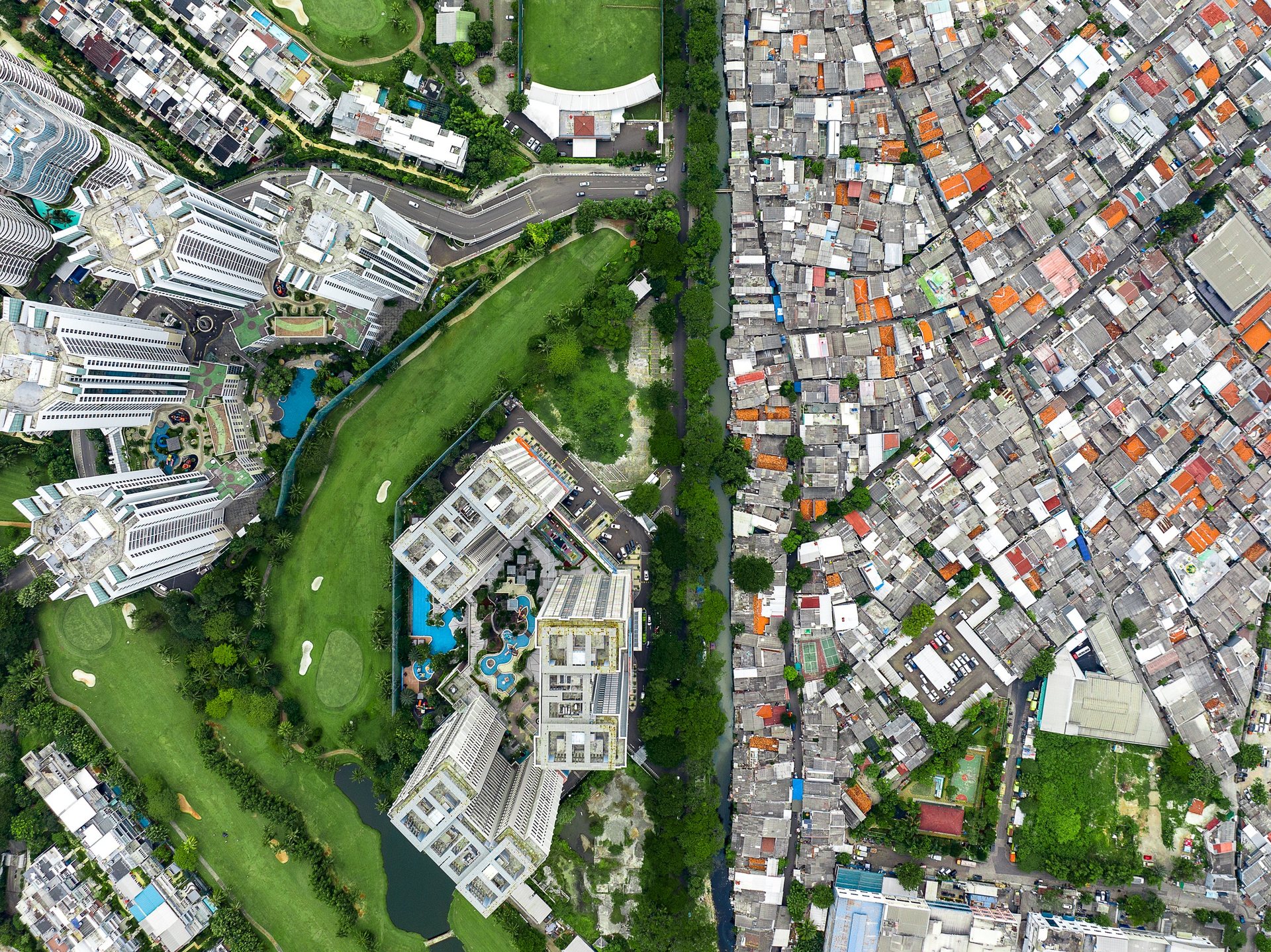
Extreme inequality near Menteng, one of Jakarta's wealthiest neighborhoods.
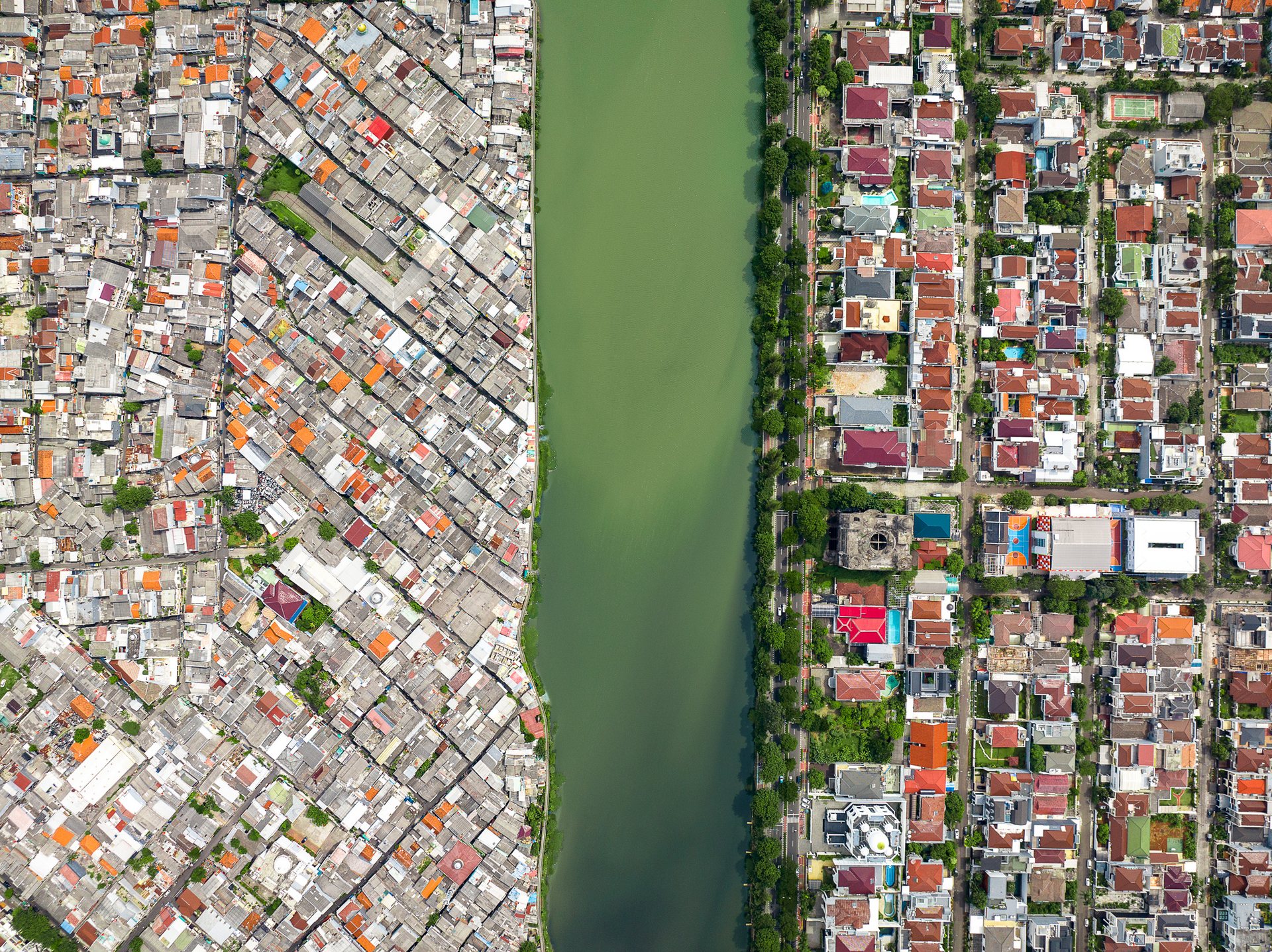
Danau Sunter Barat, or Sunter West Lake, is one of the prominent lakes in North Jakarta. It plays a crucial role in the local water system, acting as a water reservoir for flood control and irrigation purposes. The lakes are part of Jakarta's strategy to manage its recurring floods, a significant issue faced by the city due to its geography and urban planning challenges.
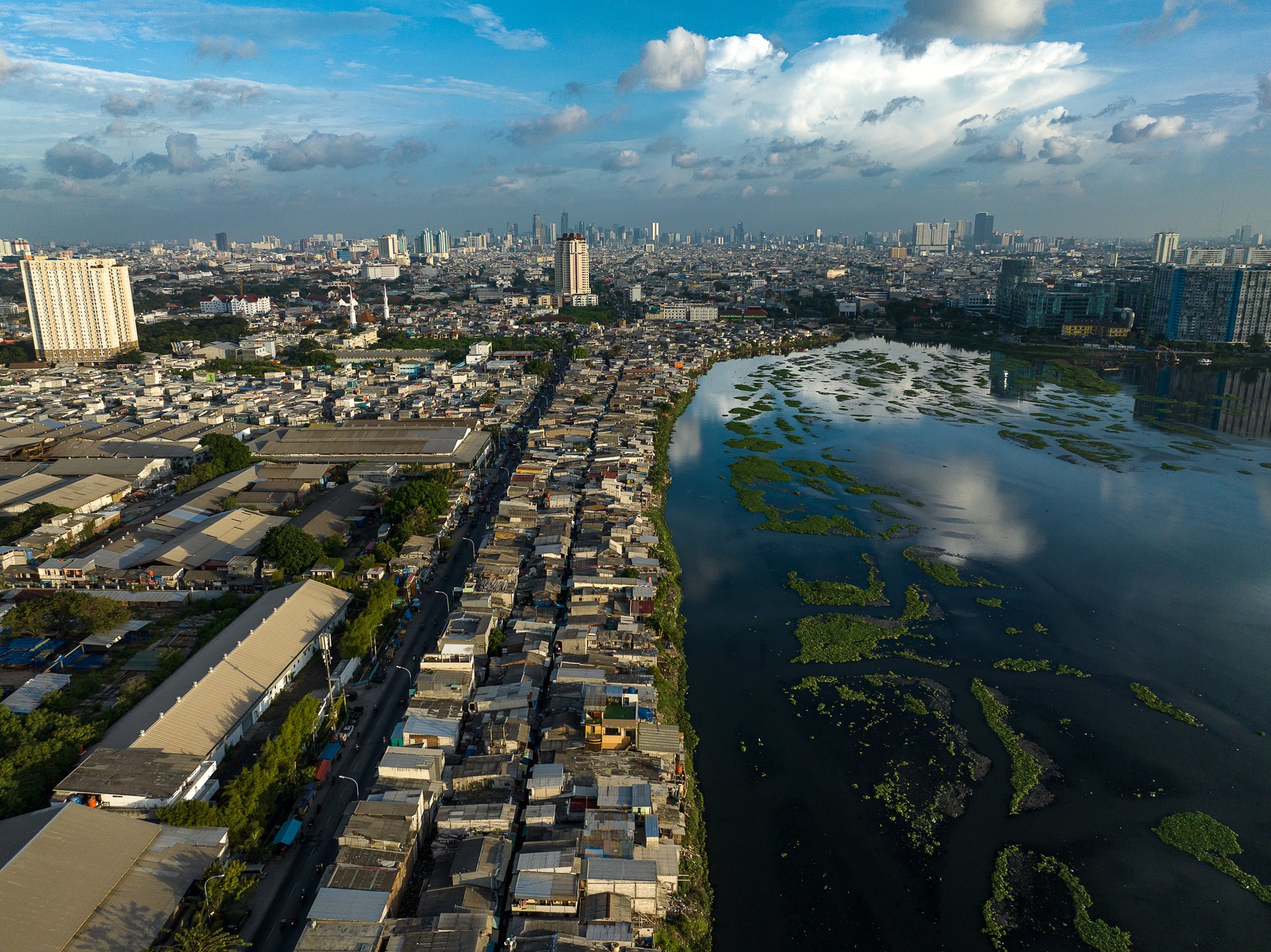
Reclaimed land on Jakarta's northern coast refers to the creation of artificial land by adding large amounts of soil and sand to the existing shoreline, a practice also known as land reclamation. This project was initiated to address Jakarta's pressing land and housing shortages, as well as the threat of rising sea levels due to climate change and land subsidence.
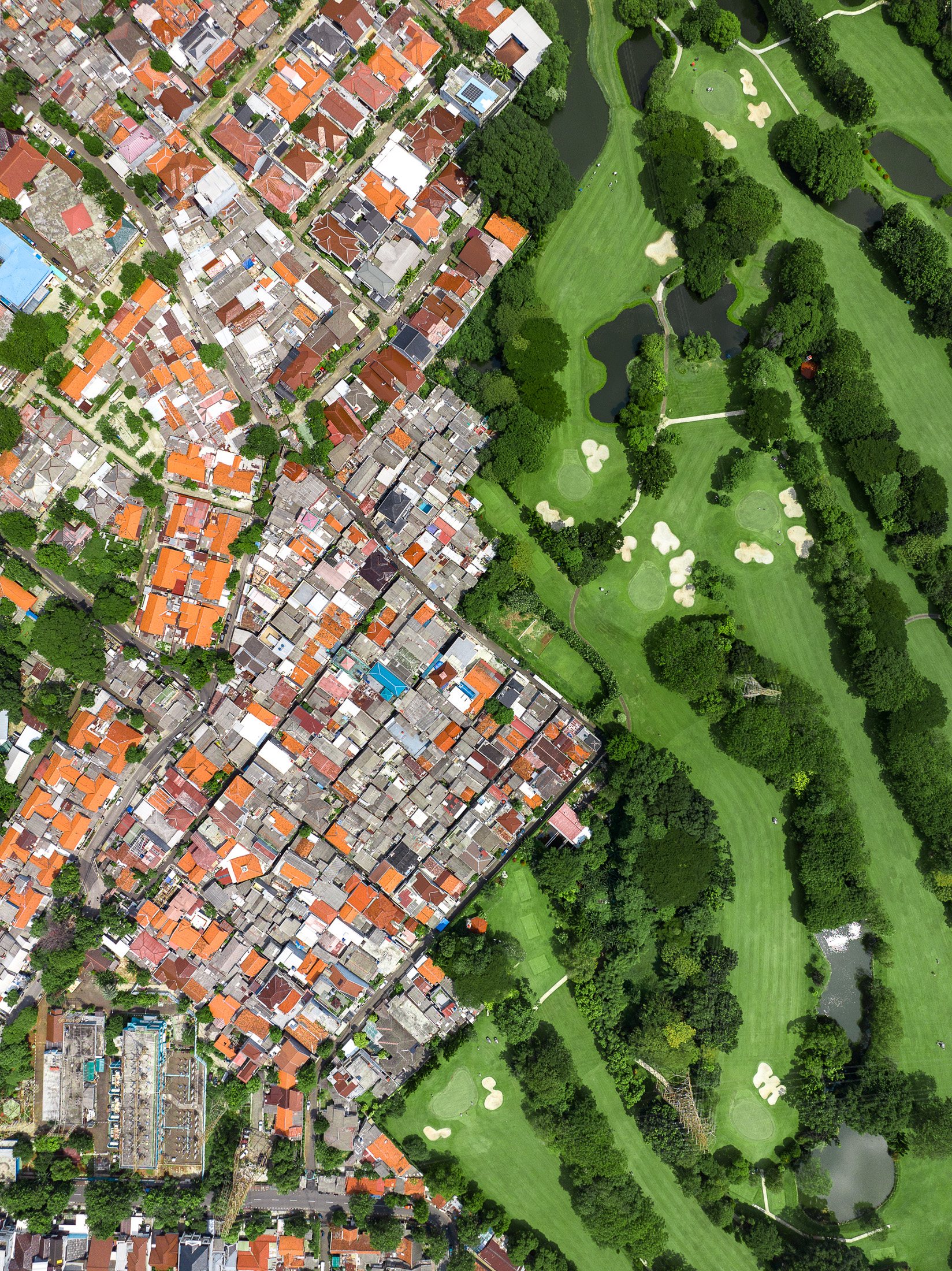
The Jakarta Golf Club in Rawamangun is the oldest course in Indonesia, founded in 1872 and later a favourite of President Suharto. Its fairways spread across 36 hectares of East Jakarta, while the dense roofs of a kampung press right up to its edge. Kampungs, the city's older, self-built working-class neighborhoods, house much of Jakarta's population in tight low-rise warrens of lanes. The contrast is one of space above all: a few rounds of golf occupy ground where thousands might otherwise live, in a city where buildable land is scarce.
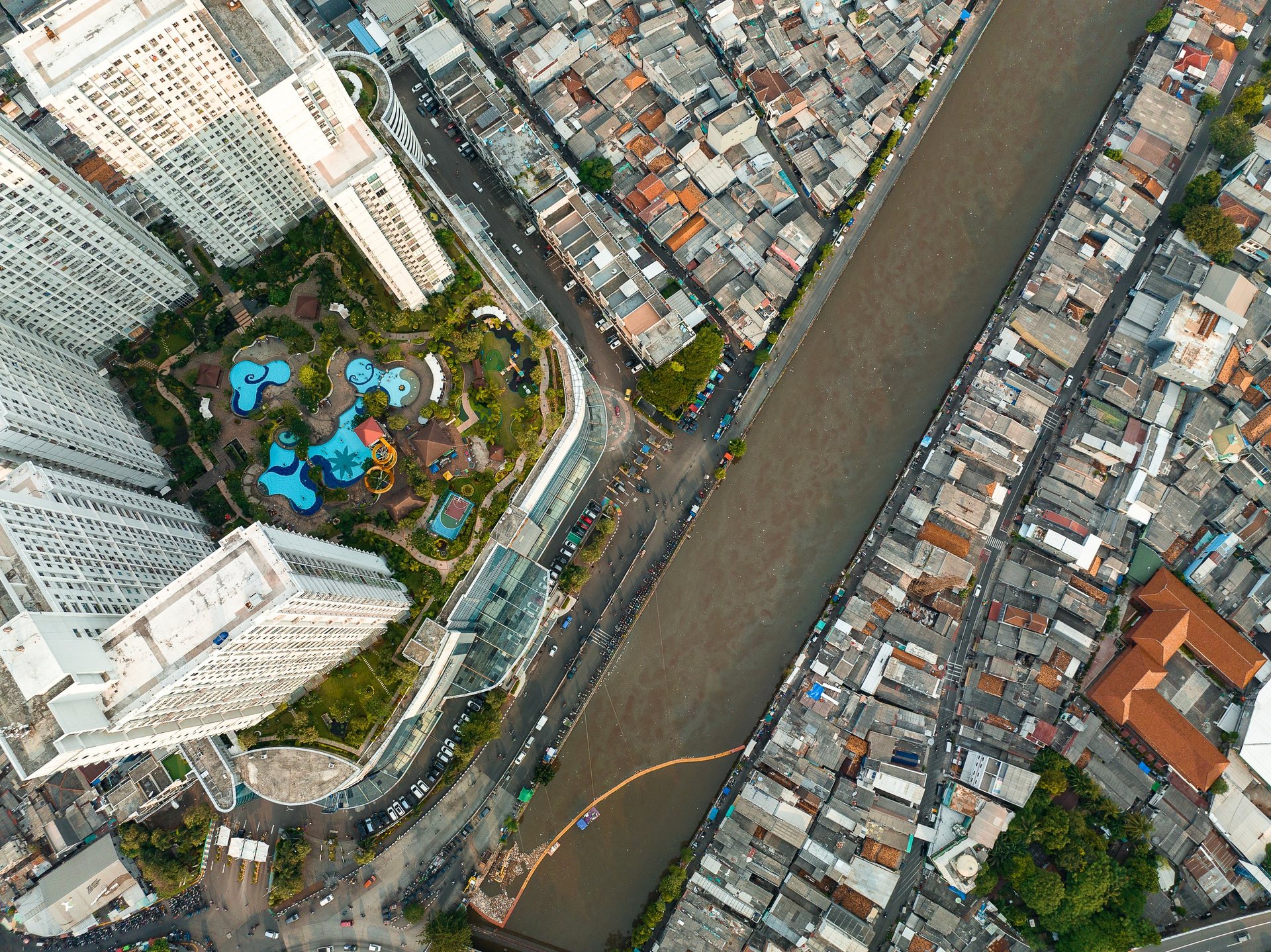
The Ciliwung River plays a significant role in Jakarta's hydrological cycle, serving as an essential water source for residential and agricultural use. However, the river has faced numerous challenges due to rapid urbanization, poor waste management, and environmental degradation. Over the years, the Ciliwung has become heavily polluted with domestic and industrial waste, turning it into one of the most polluted rivers in the world.
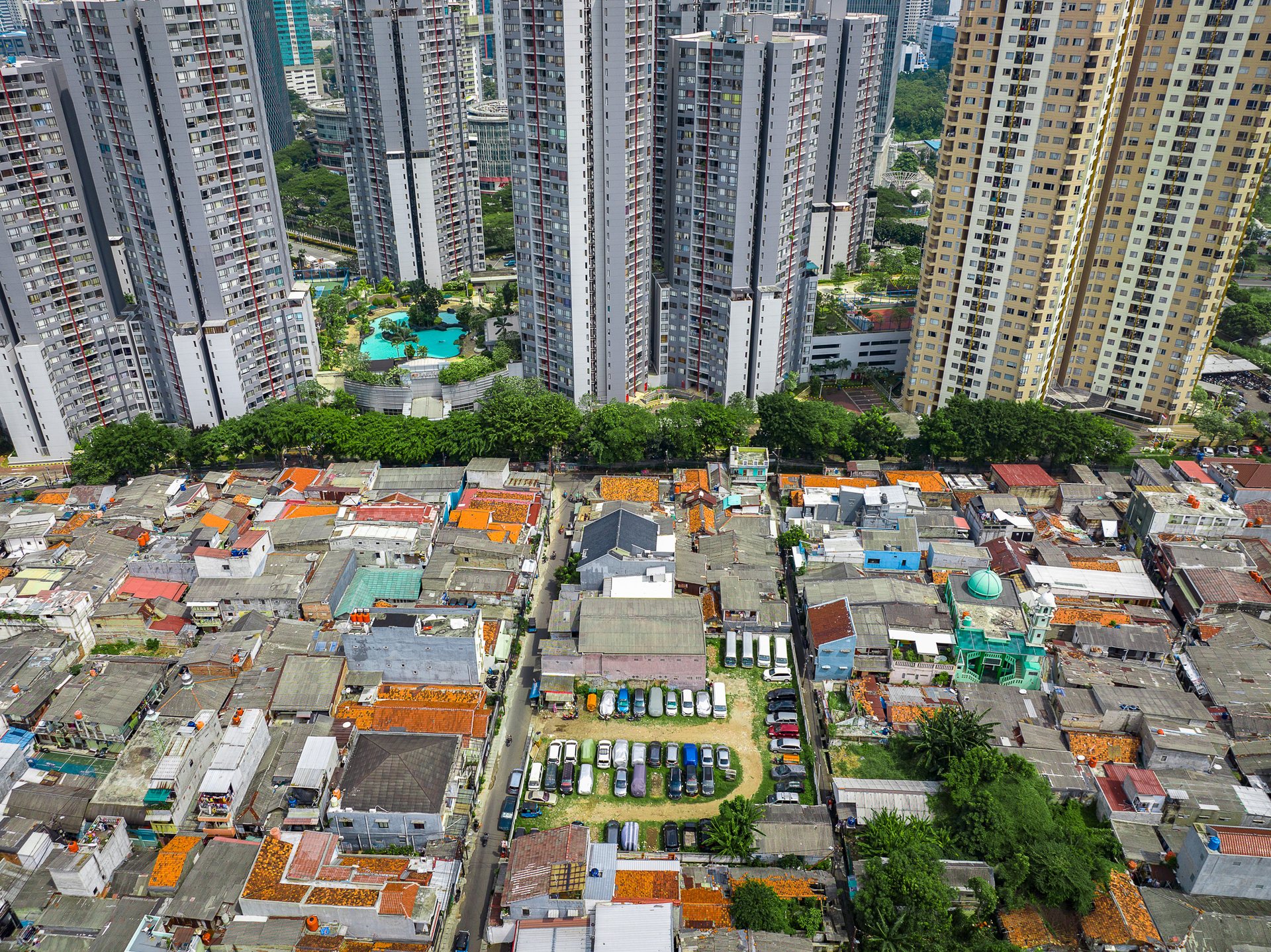
Where development begins: East Jakarta.
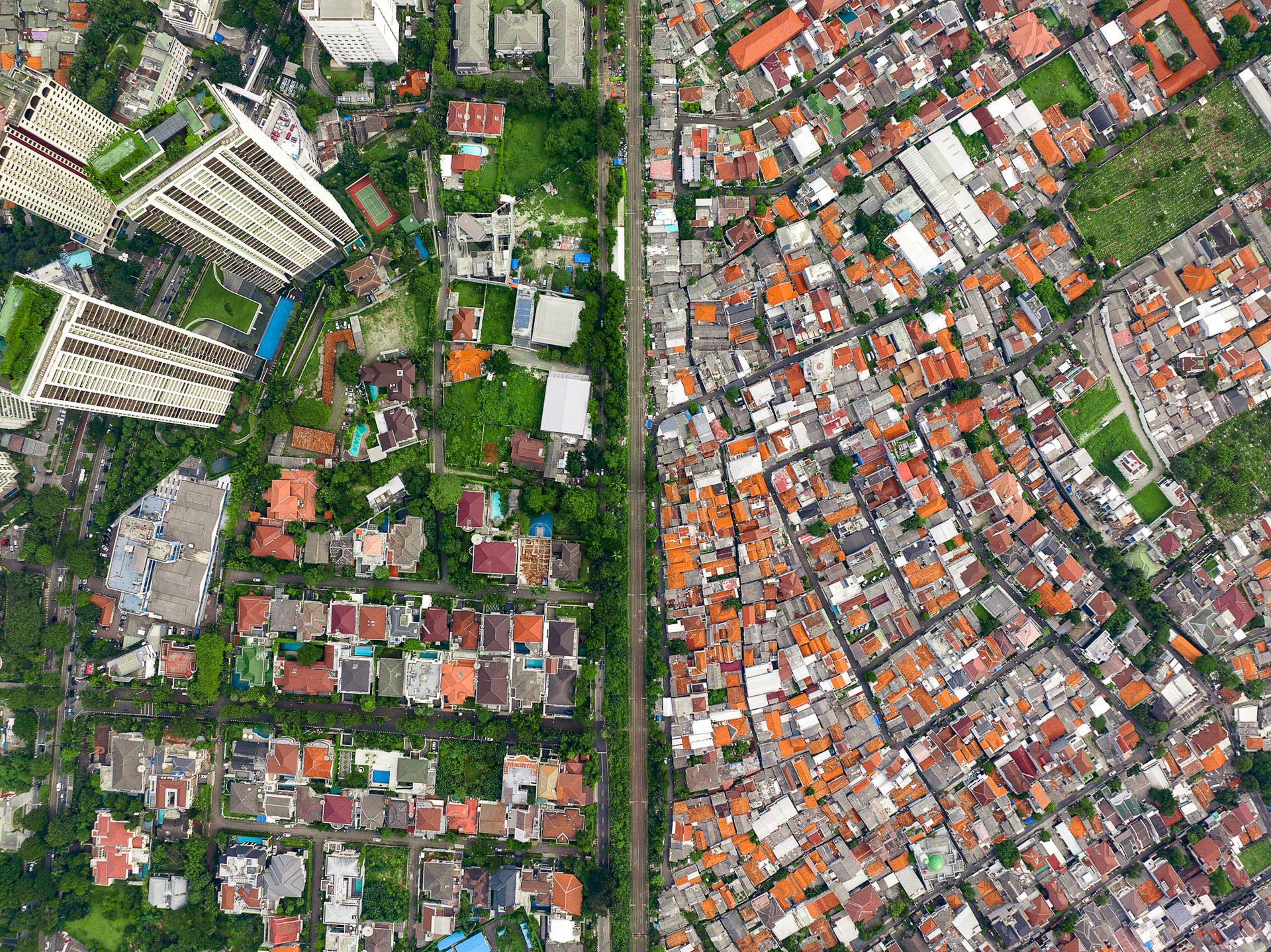
The city's wealthy residents have access to trees, even on the rooftops, providing cover from the relentless heat and smog of the city. There is precious little green space in the poor areas of town, save for the occasional cemetery.
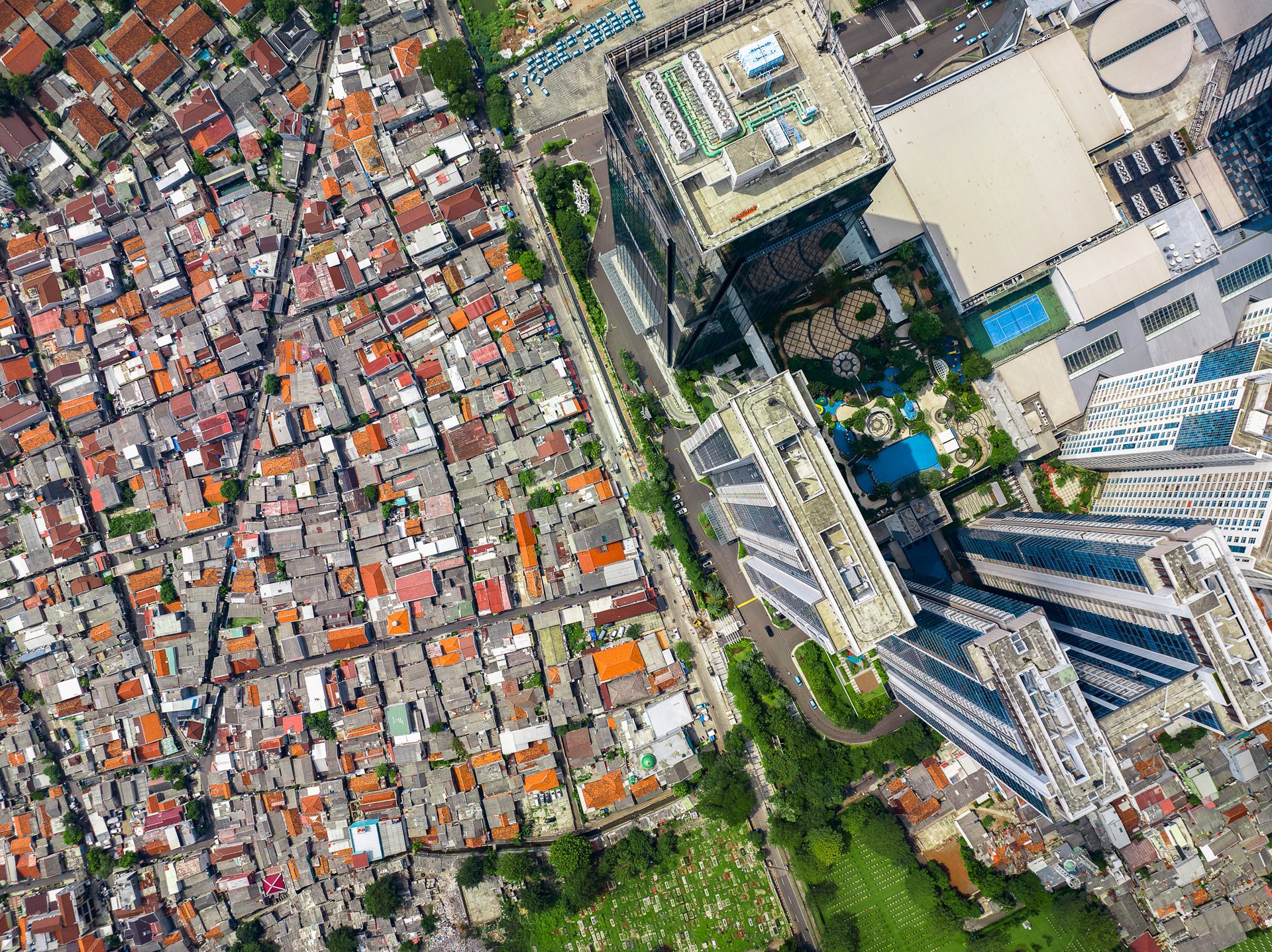
Kampungs next to modern skyscrapers in East Jakarta.
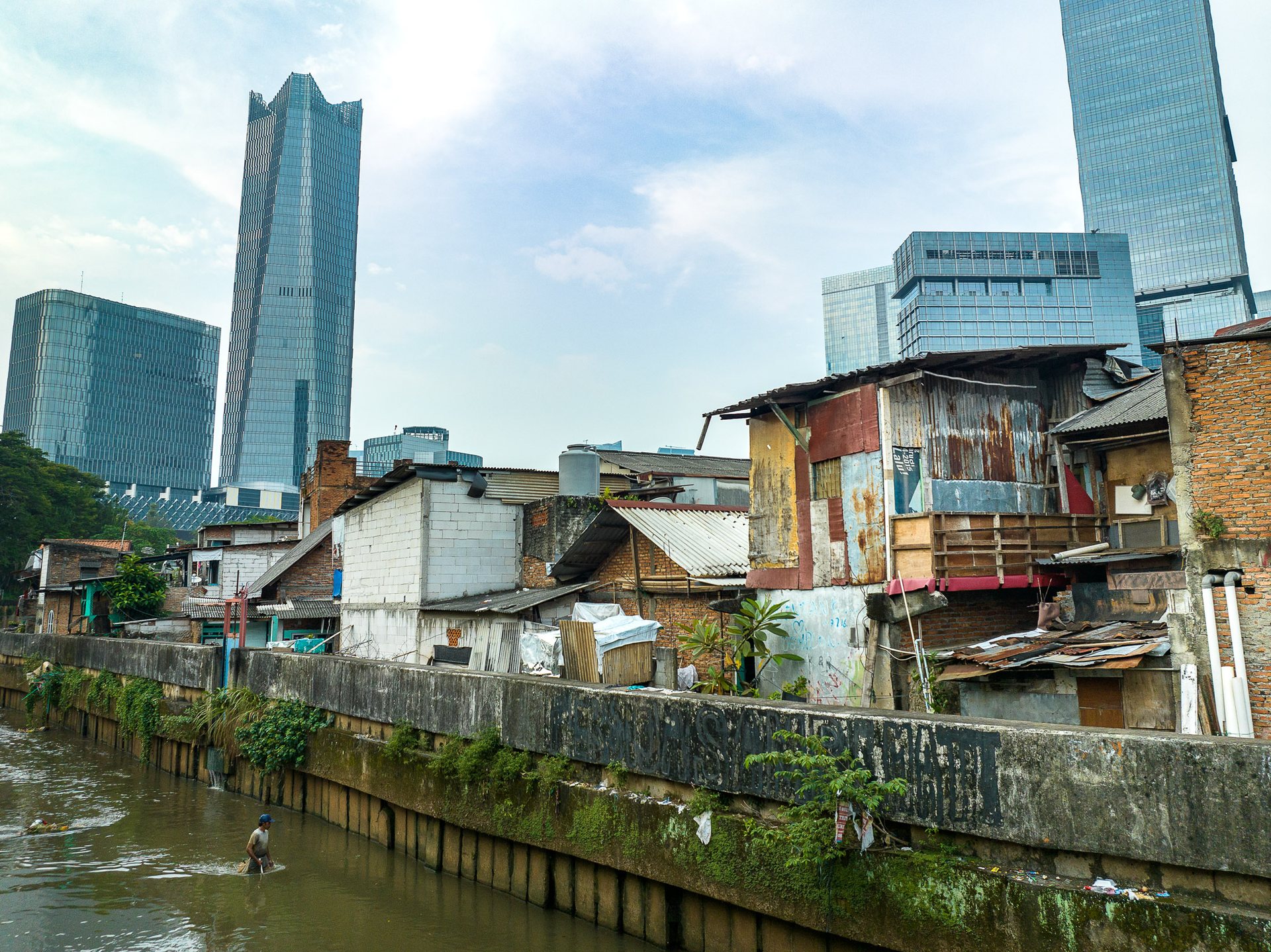
A man wades through a tributary of the Ciliwung River collecting plastic, in the shadow of high-rise buildings including the Four Seasons Hotel.
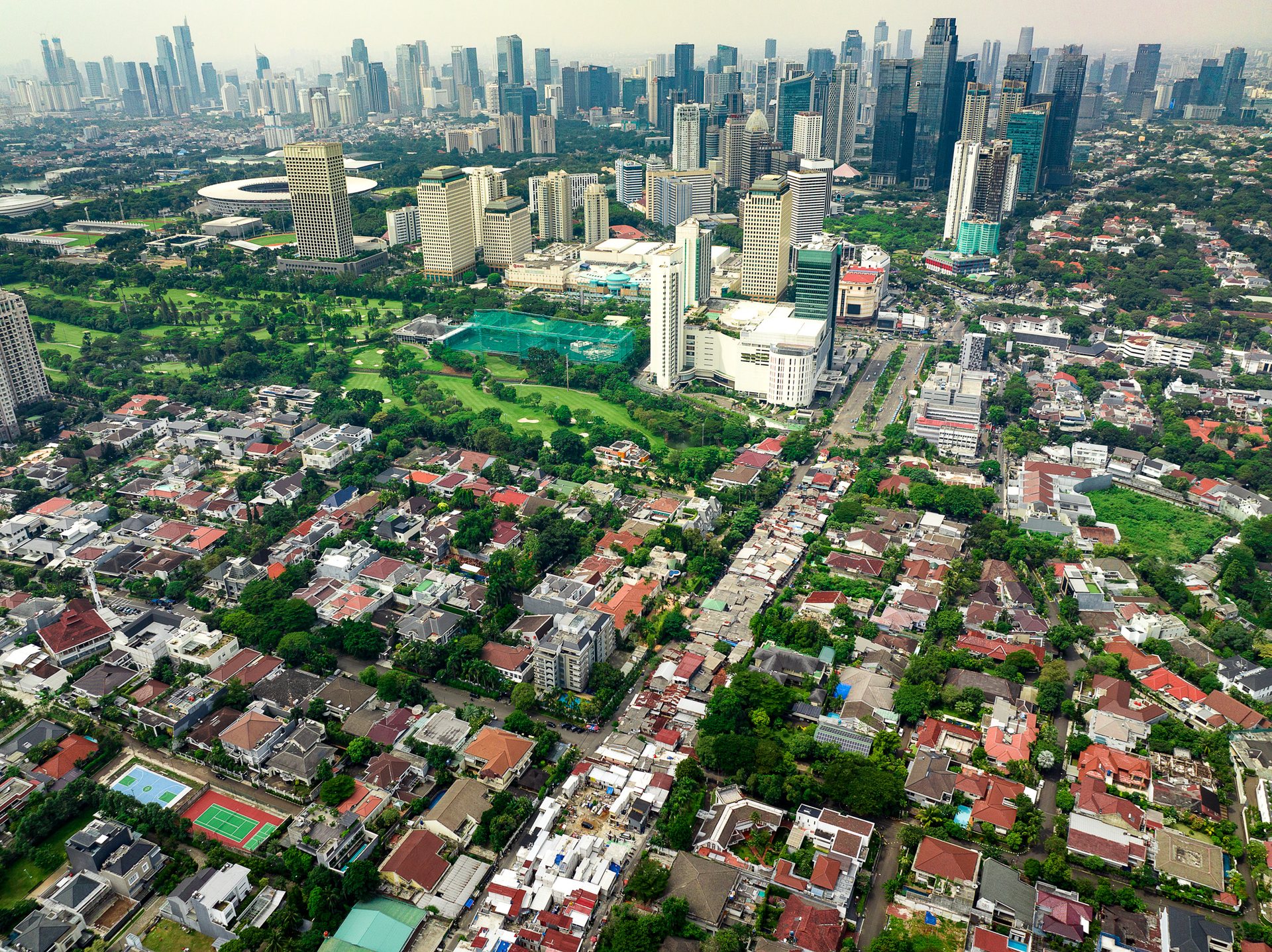
Greater Jakarta has a population of over 30 million, making it one of the largest urban centers in the entire world. Addressing the challenges of urban sprawl, environmental strain, and inequality is a key concern for this hugely complex, congested and rich city.
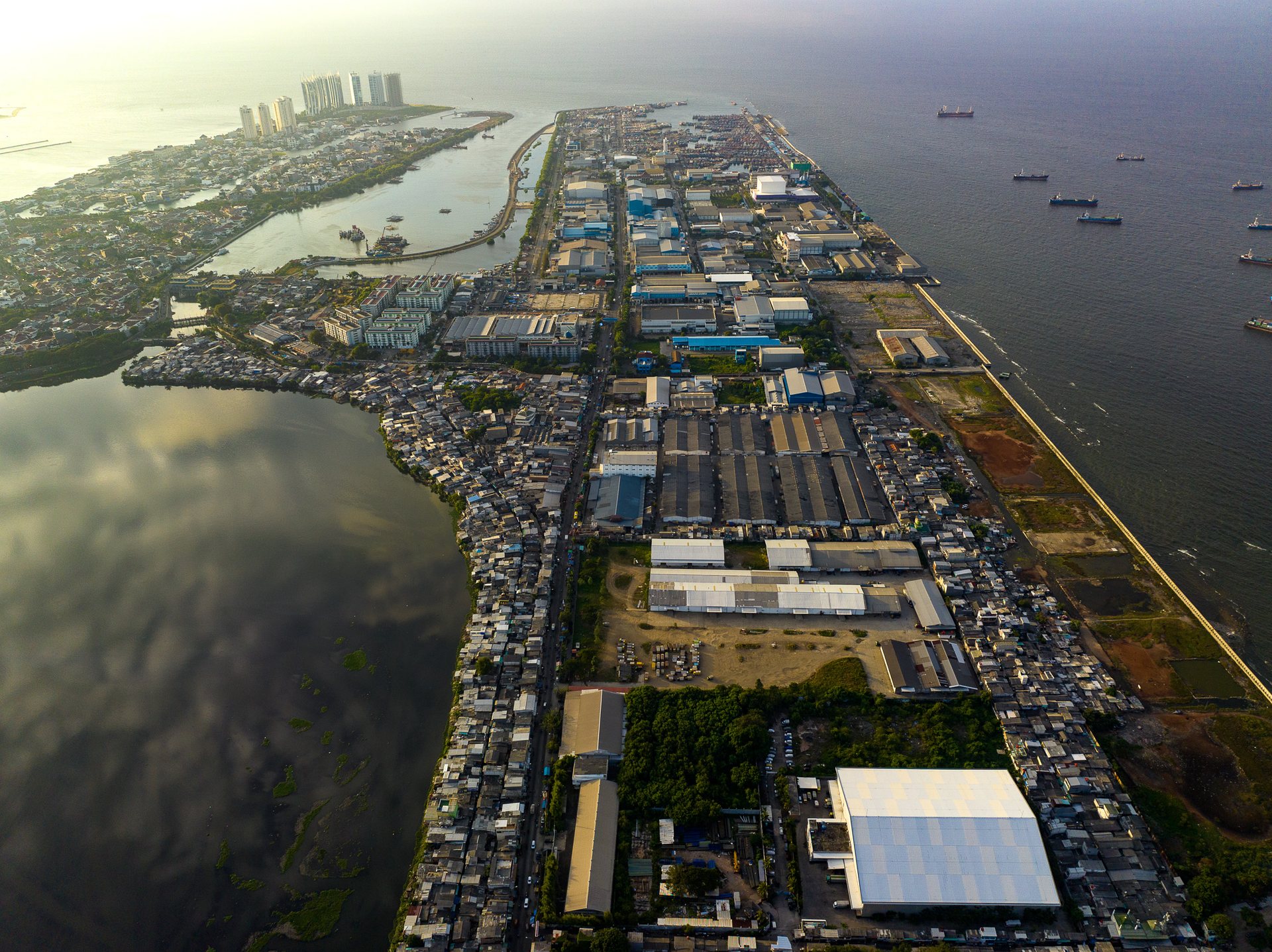
Managing sea level rise is going to be one of the key challenges in the next century, especially as so many of the city's poorest residents live next to the ocean. The city is estimated to be sinking at rates estimated between 5 and 25cm per year in its northern districts. The Great Garuda, a proposed seawall and reclamation project, is the most ambitious of the initiatives designed to mitigate these issues. This project plans to create 17 artificial islands enclosing the giant lagoon with Jakarta at its center, with the shape resembling the mythical Garuda bird when viewed from above.
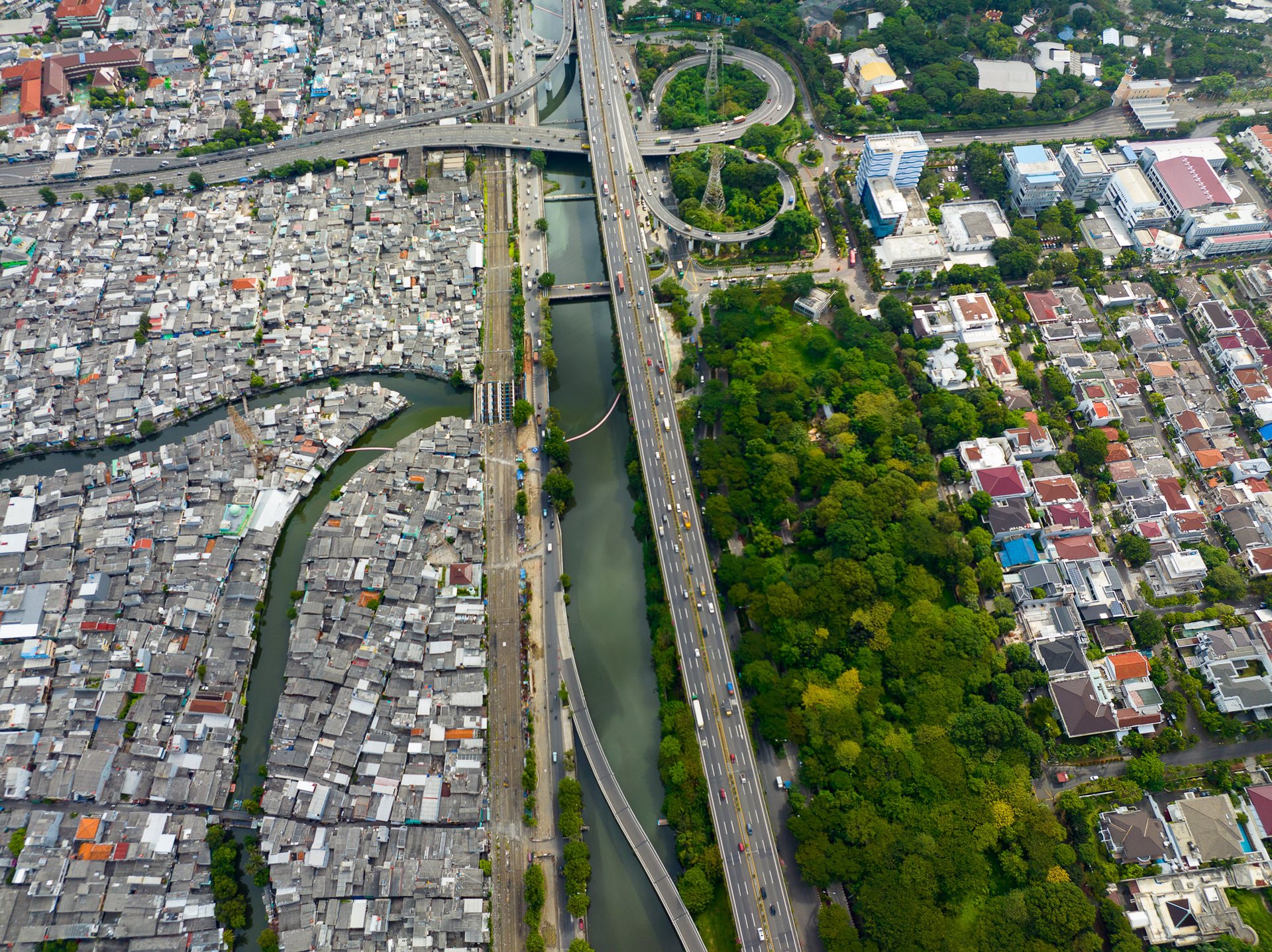
The mangrove forests in Jakarta, specifically in the northern coastal areas, serve as crucial protective barriers against coastal erosion, storm surges, and even mitigate the impact of rising sea levels. They are vital for maintaining local biodiversity, acting as breeding grounds and habitats for a variety of marine and bird species. However, these ecosystems have suffered severe degradation in recent decades, leading to multiple environmental issues, including exacerbated flooding. Intense development along the coast has all but erased the natural flood controls of the environment, and been replaced by canals, barriers and artificial lakes.
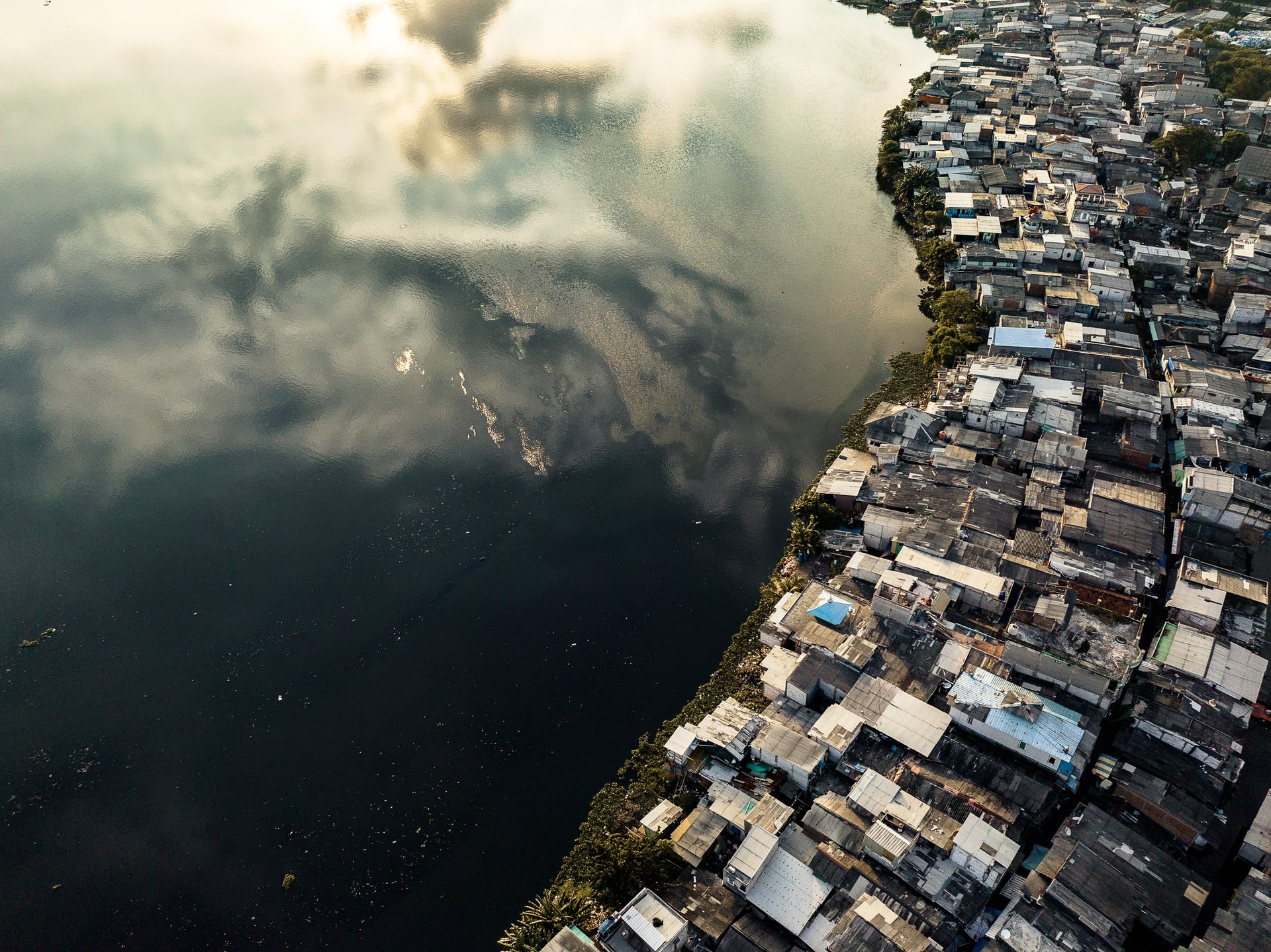
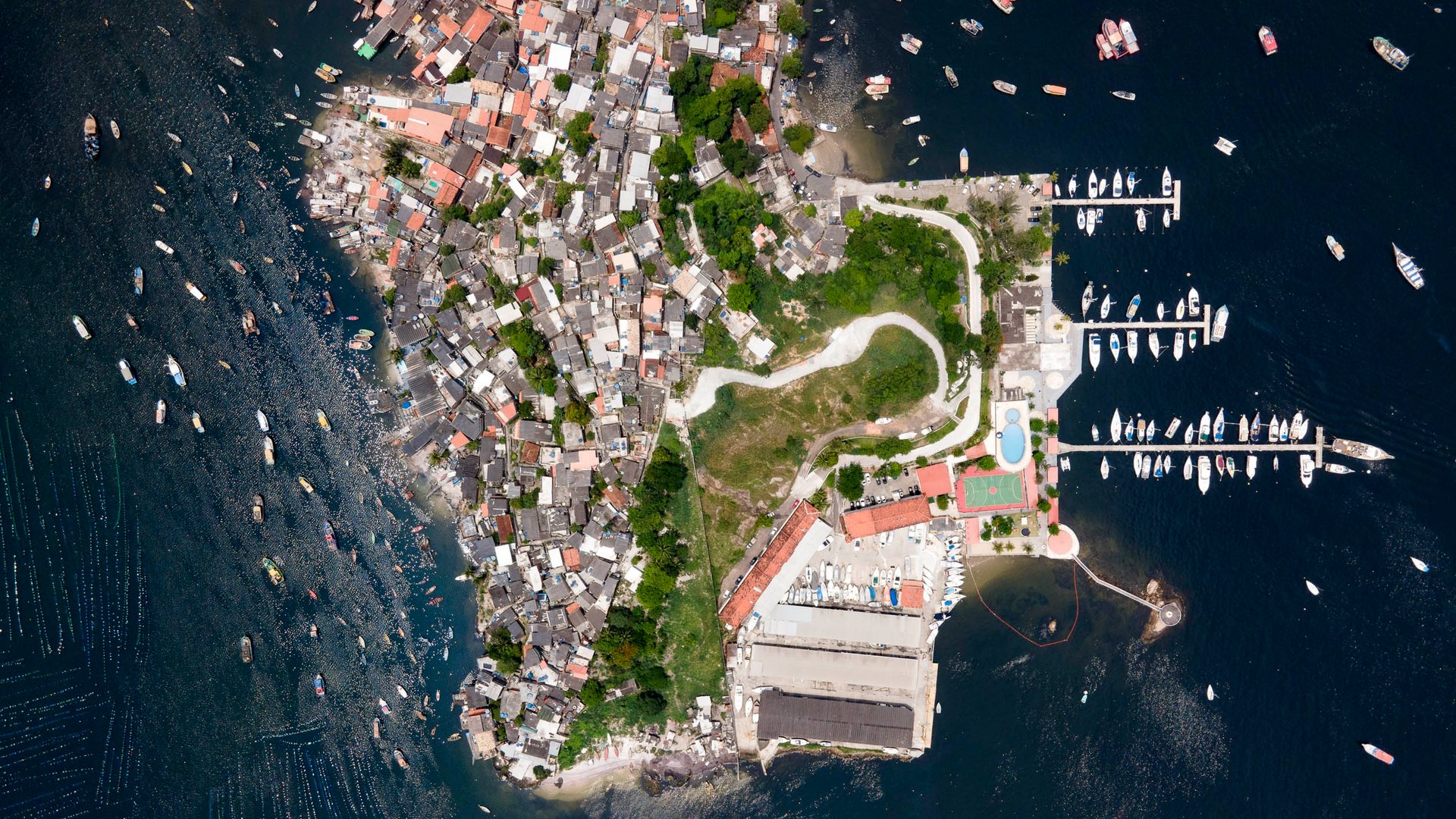
Informal settlements on the coastline of Northern Jakarta.
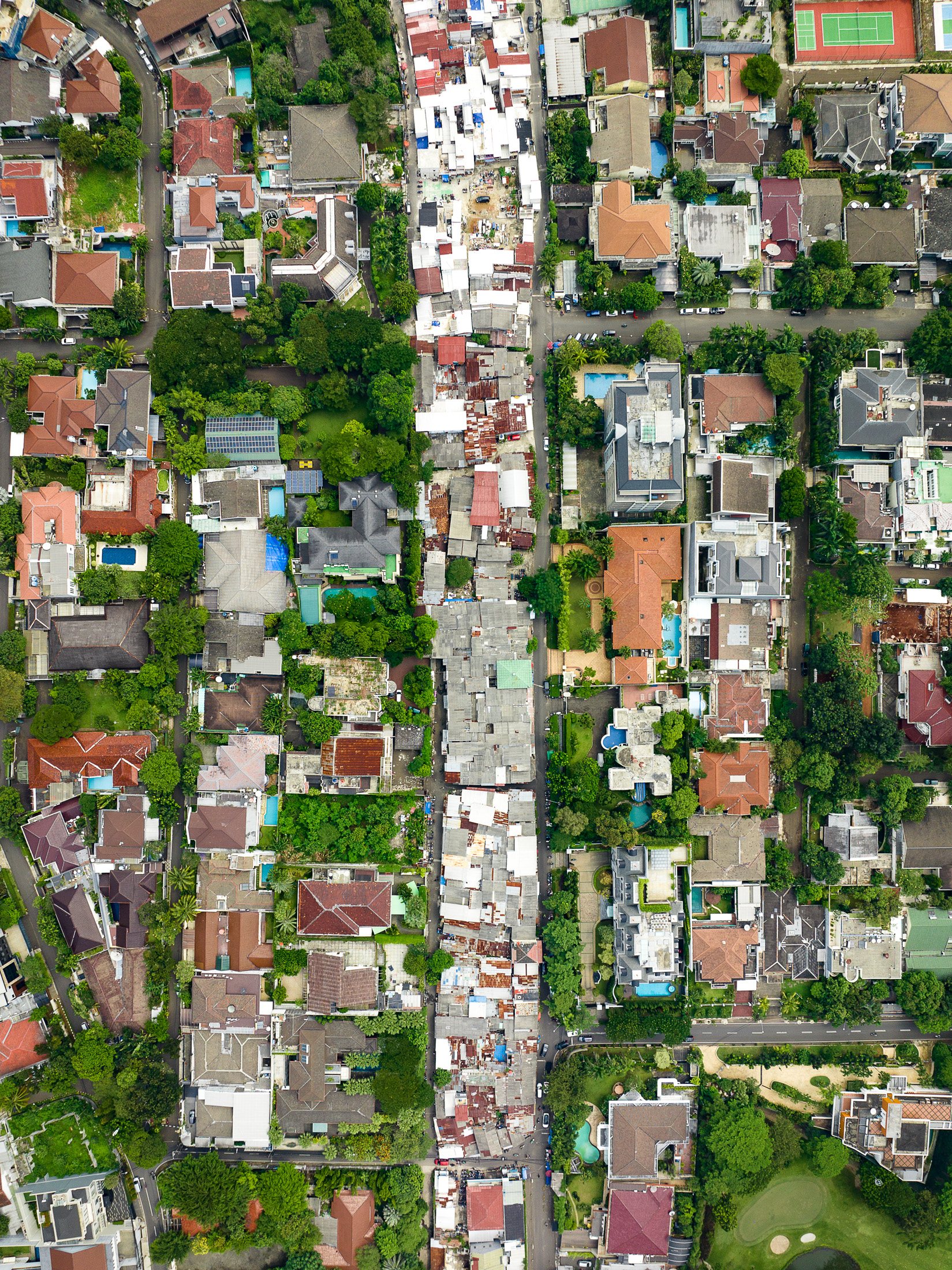
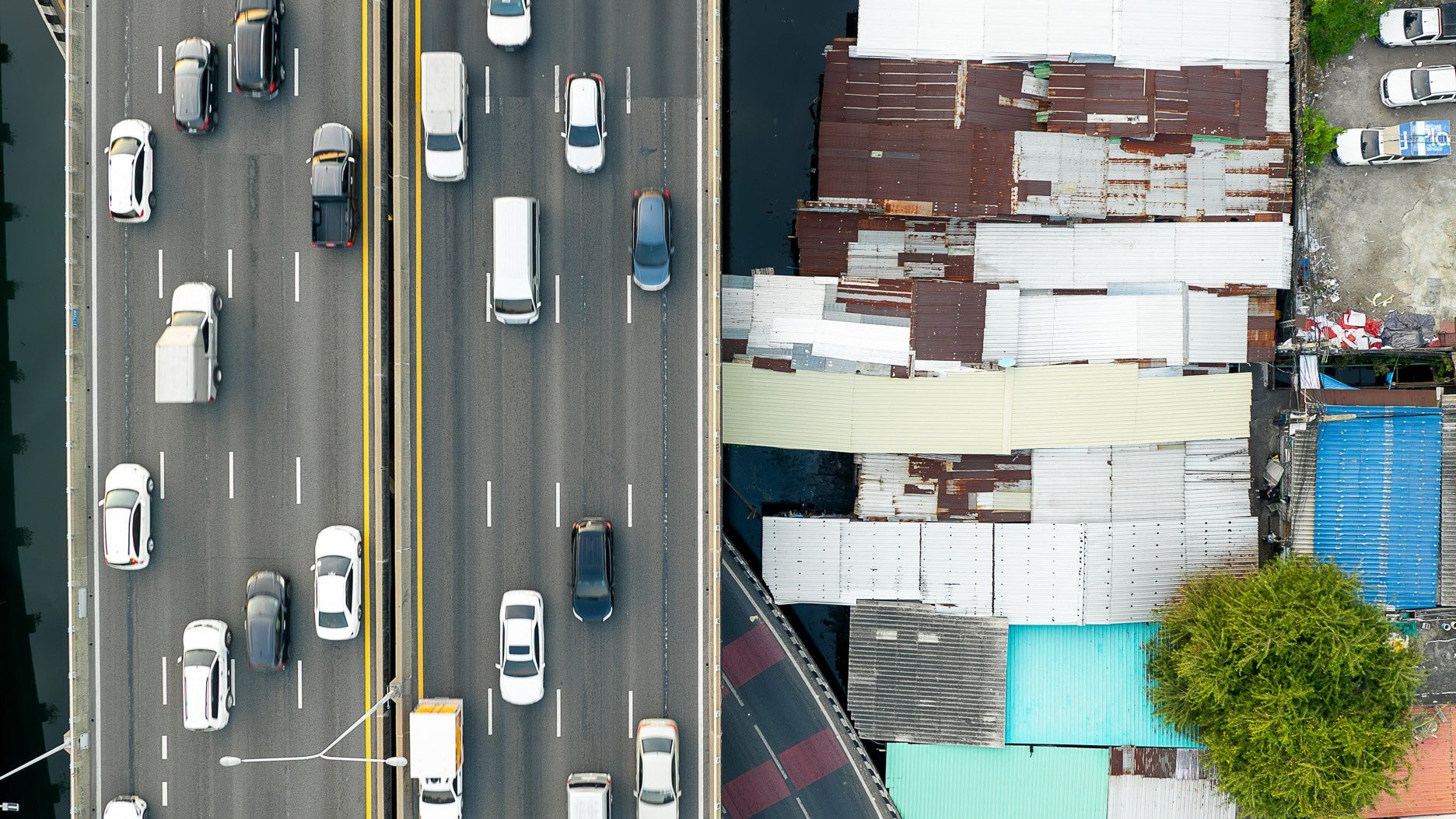
Slums proliferate in a never-used easement terminating in a giant road near Jakarta's central business district.
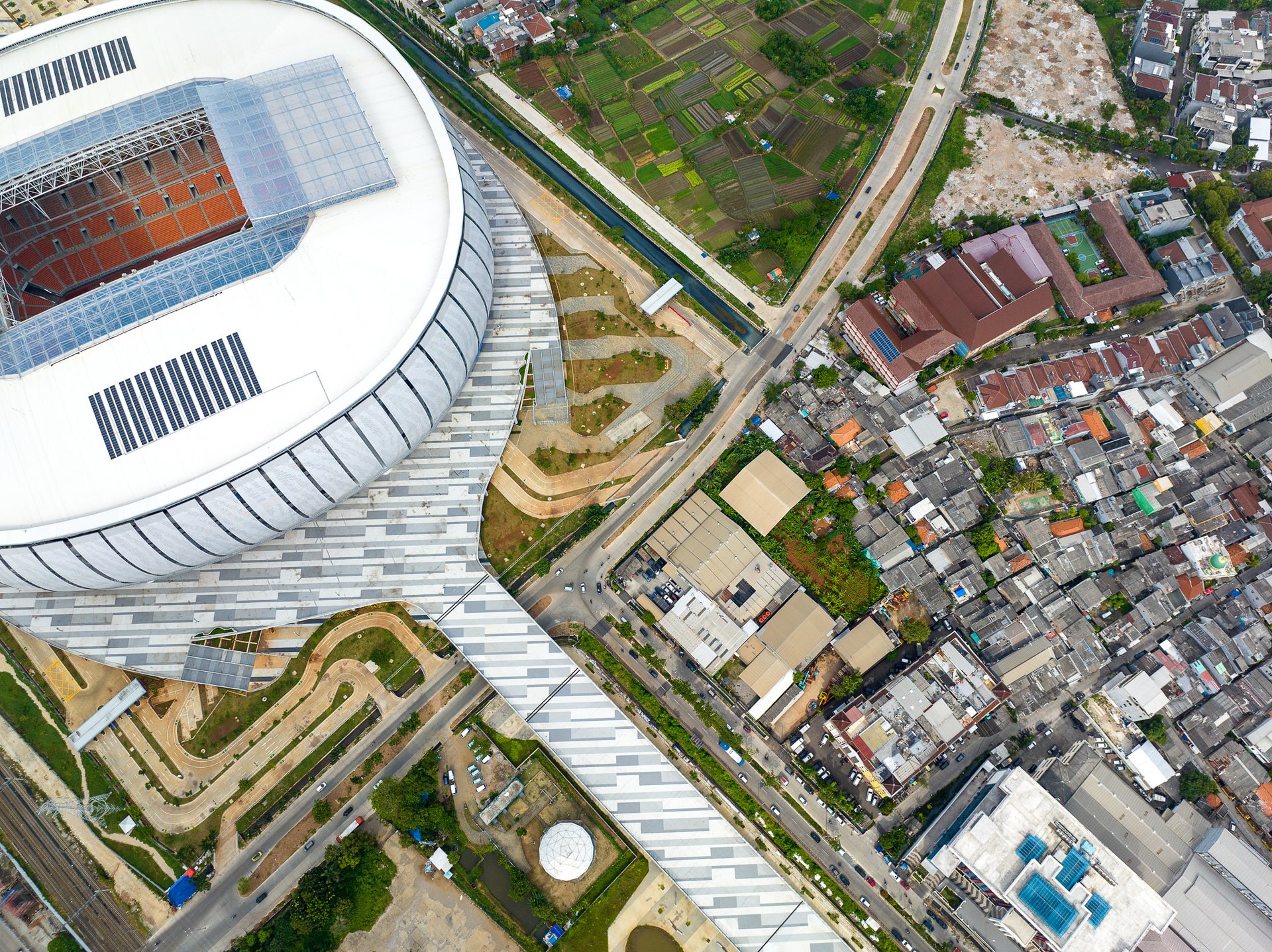
The Jakarta International Stadium, opened in 2022, is the largest-capacity retractable-roof stadium in the world by capacity. Its construction was delayed for years, in part by disputes over the land itself, contested ground in Tanjung Priok occupied by informal residents who were eventually evicted to make way for it. The legal fights went on even as the stadium rose. Some of those settlements still stand right beside it, in the shadow of the new arena.
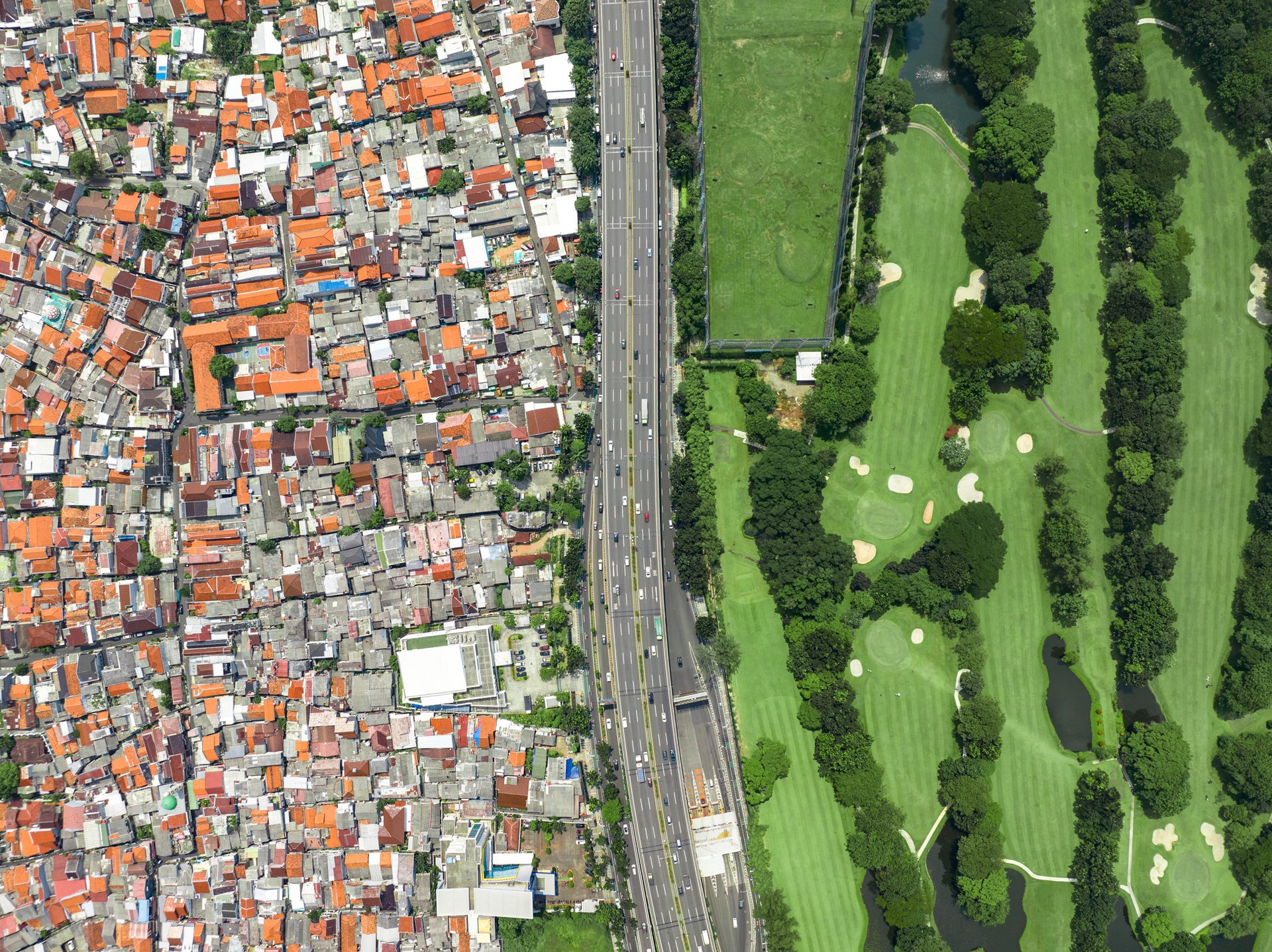
Jakarta Golf Club is one of the city's oldest golf clubs, occupying a significant amount of land, a scarce resource in a city like Jakarta that is grappling with housing shortages. The stark contrast between the sprawling, lush golf course and the surrounding crowded residential areas epitomizes the spatial inequality in Jakarta. The club, which caters largely to affluent individuals, exists in stark contrast to nearby kampungs or low-income housing areas where living conditions are often cramped and lack basic amenities.
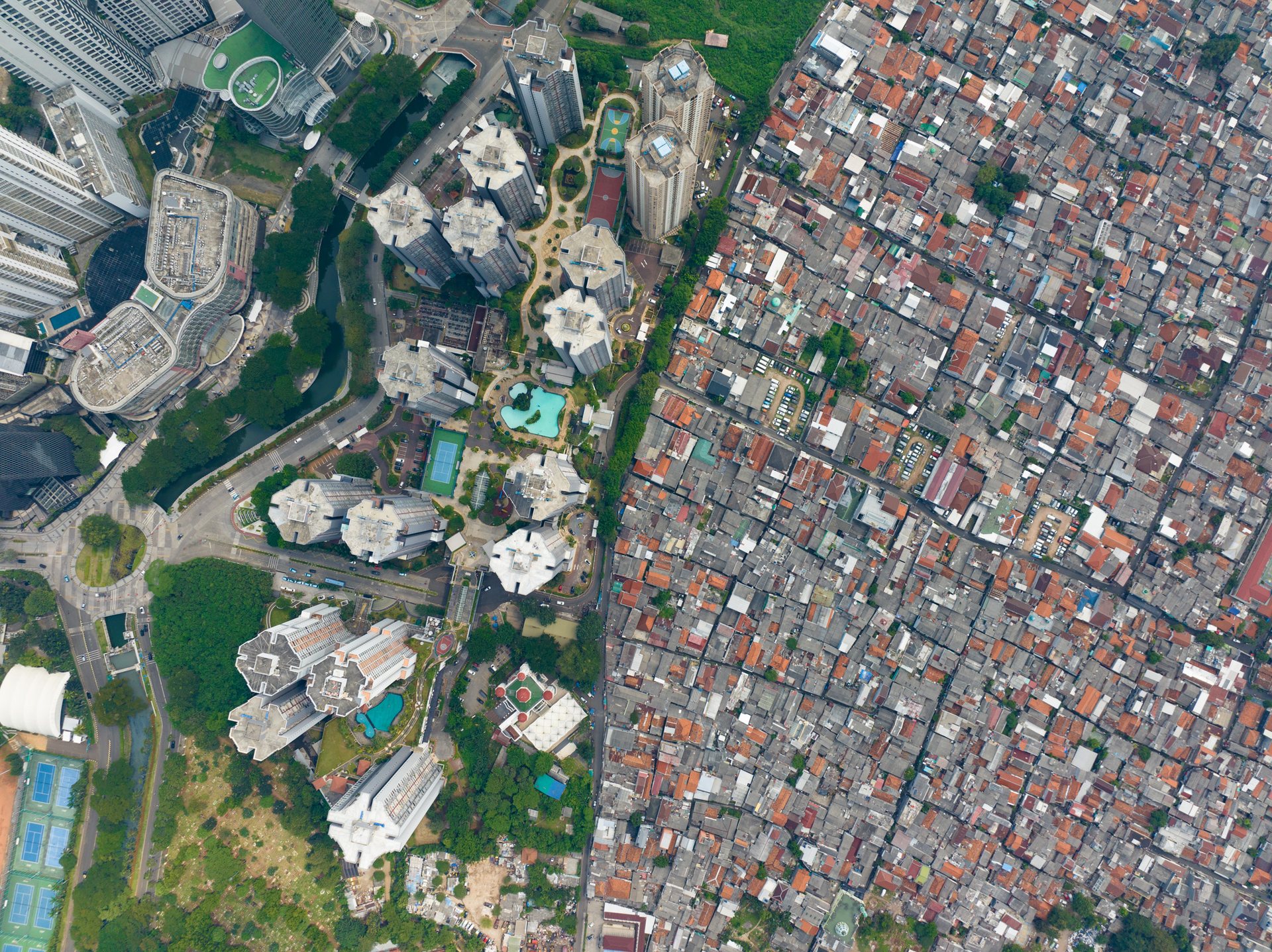
Apartment blocks rise beside the kampungs of East Jakarta. The contrast is not accidental. The city has long regarded the kampungs, the dense, self-built neighborhoods where much of Jakarta lives, as disorderly and unsanitary, and the high-rise rental flats, rusunawa, as the modern replacement. In parts of East Jakarta, residents cleared from riverside kampungs were resettled into towers like these. Many resisted the move, since relocation tends to scatter the livelihoods and tight social ties that hold a kampung together.