Durban
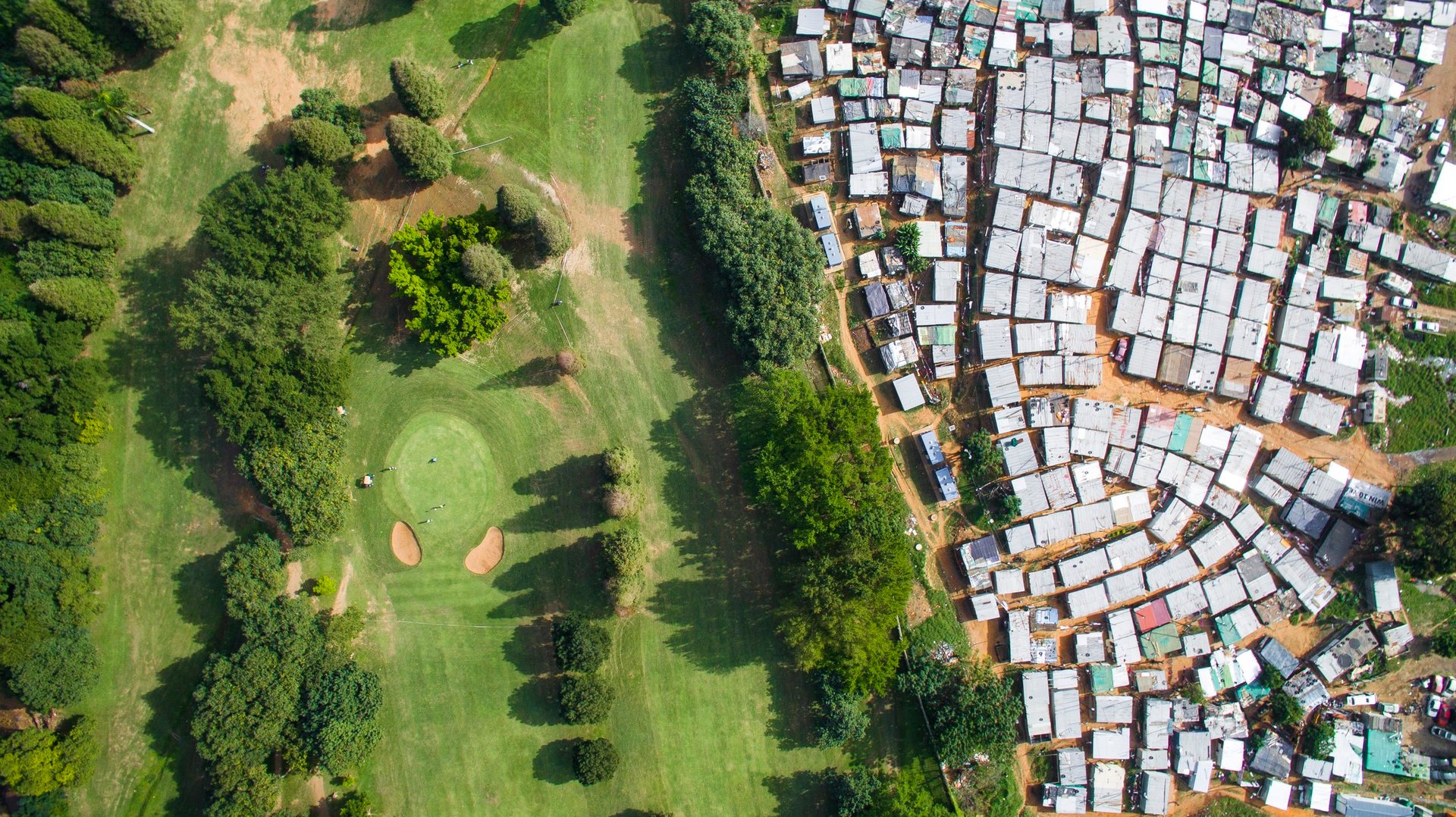
Papwa Sewgolum Golf Course in Durban, named after an apartheid-era golfer. Ironically, a sprawling informal settlement exists just meters from the tee for the 6th hole.
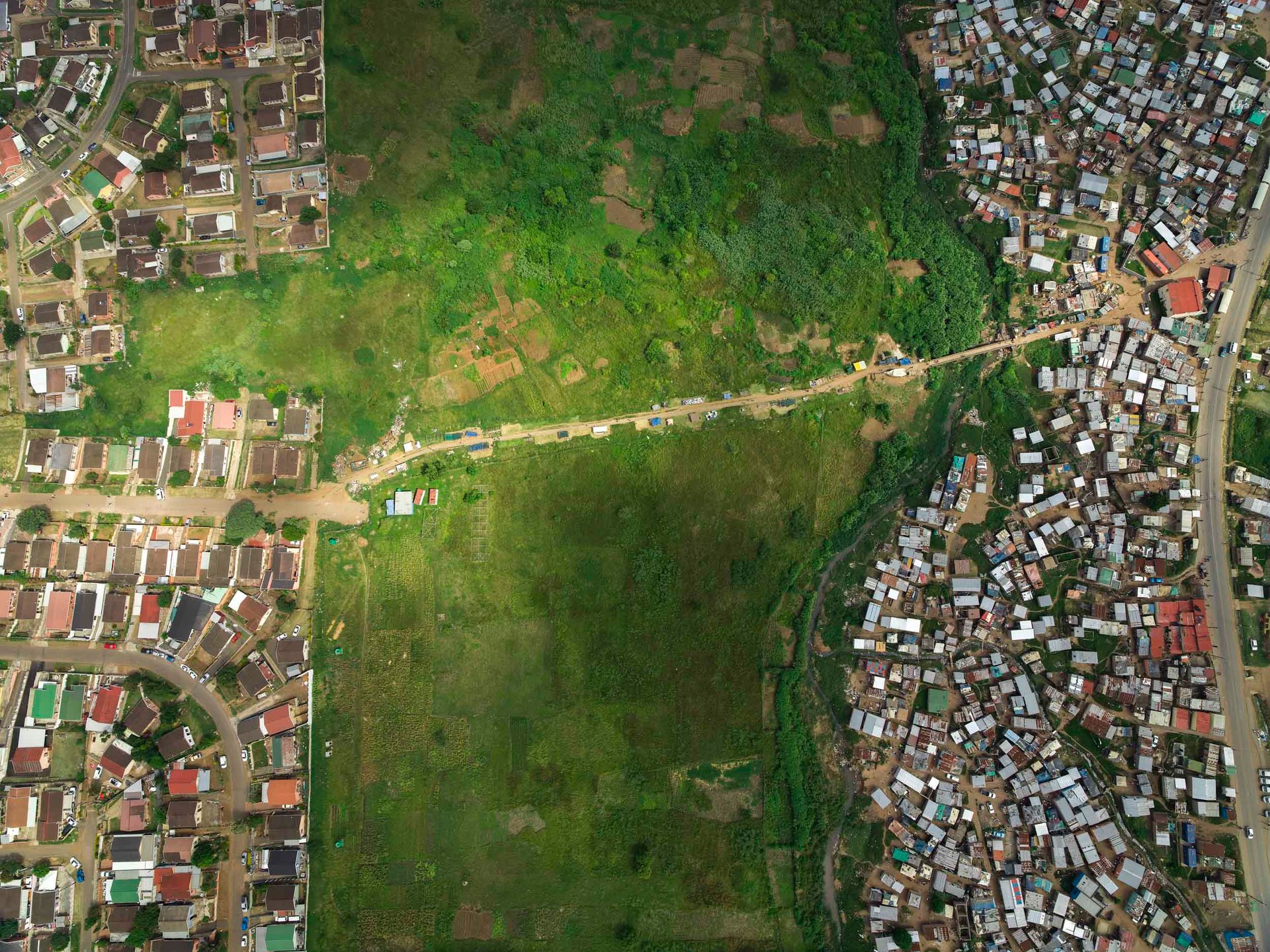
Sunlight shines on the single footpath connecting the Black and Indian communities on either side of the Ohlanga River in Durban, South Africa.
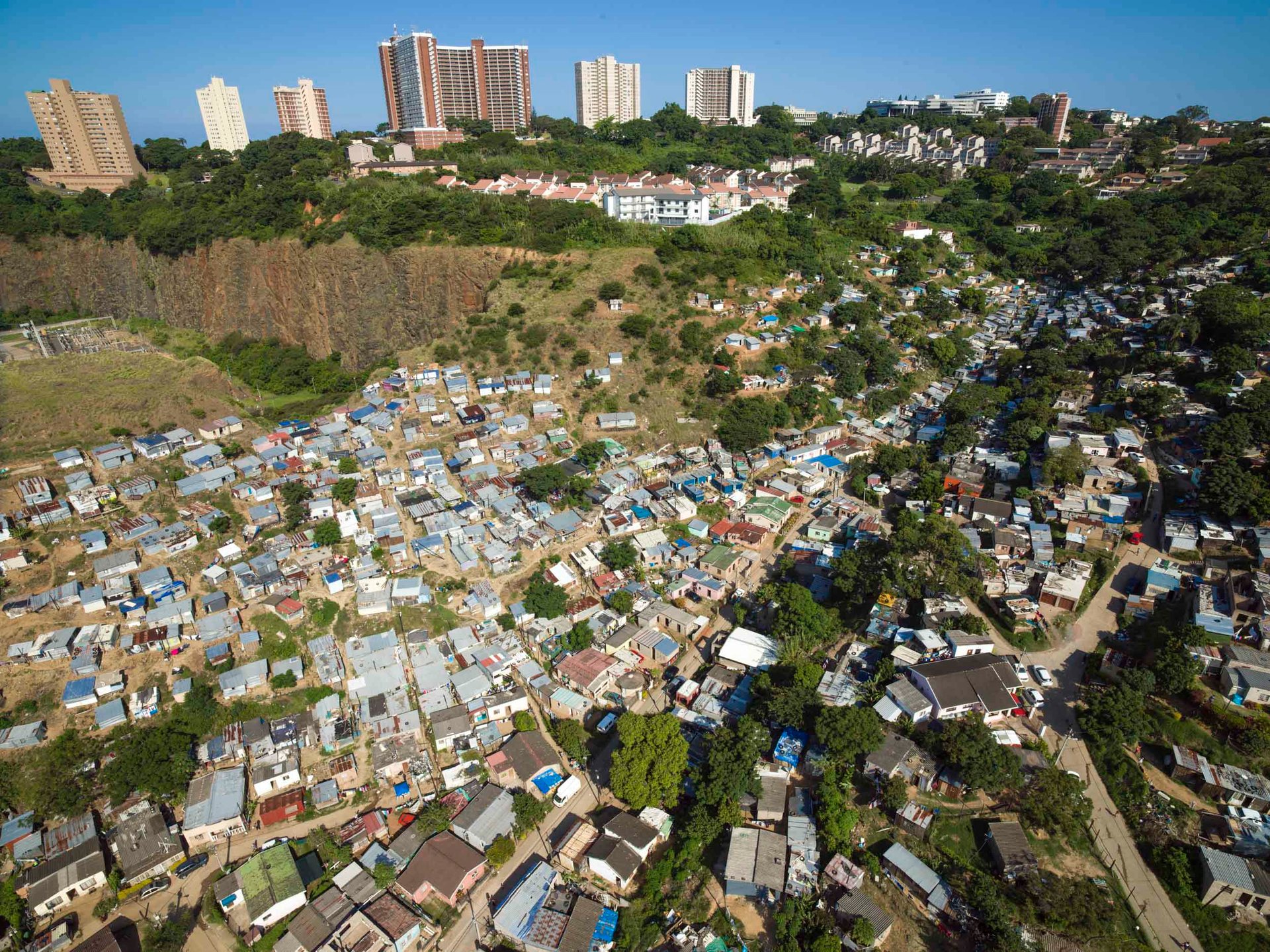
Morningside is one of Durban’s richest suburbs, and for good reason. The location is spectacular. High-rise apartment buildings tower over cliffs above the Umgeni River, with beautiful views of the spectacular Moses Mabhida soccer stadium, Durban Country Club, and Indian Ocean. Even former President Jacob Zuma has an official state residence there, one of three around South Africa.
In a twist of irony, the golf course is named after an apartheid-era golfer of Indian descent, named Sewsunker “Papwa” Sewgolum. Papwa Sewgolum was an excellent self-taught golfer, with no formal schooling. He is famous for his reversed, cross-handed grip (called the “Sewsunker” grip even today). He is possibly most famous, however, for winning the Natal Open at the whites-only Durban Country Club in 1963.
When the prizes were given, he had to receive his trophy outside, in the pouring rain, while the white players sat comfortably inside. The pictures of him in the rain were broadcast around the world, resulting in an international outcry inspiring a number of countries to impose sanctions on South African sporting events.
Just as it looked as if his career would take off, the South African government banned Sewgolum from all local tournaments and also withdrew his passport, preventing him from competing abroad. “Papwa” died impoverished in 1978, not yet 50, from a heart attack.
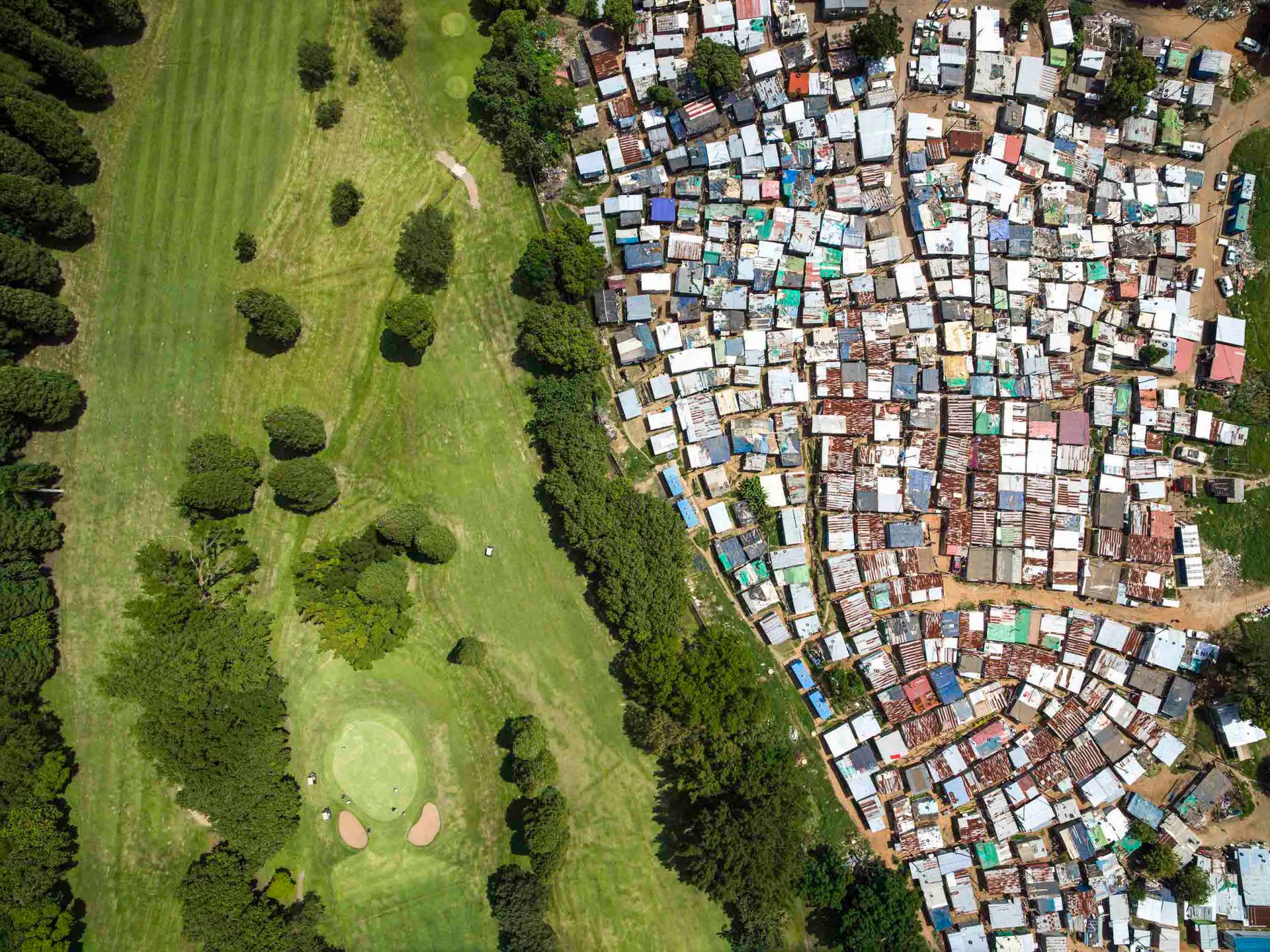
Papwa Sewgolum Golf Course.
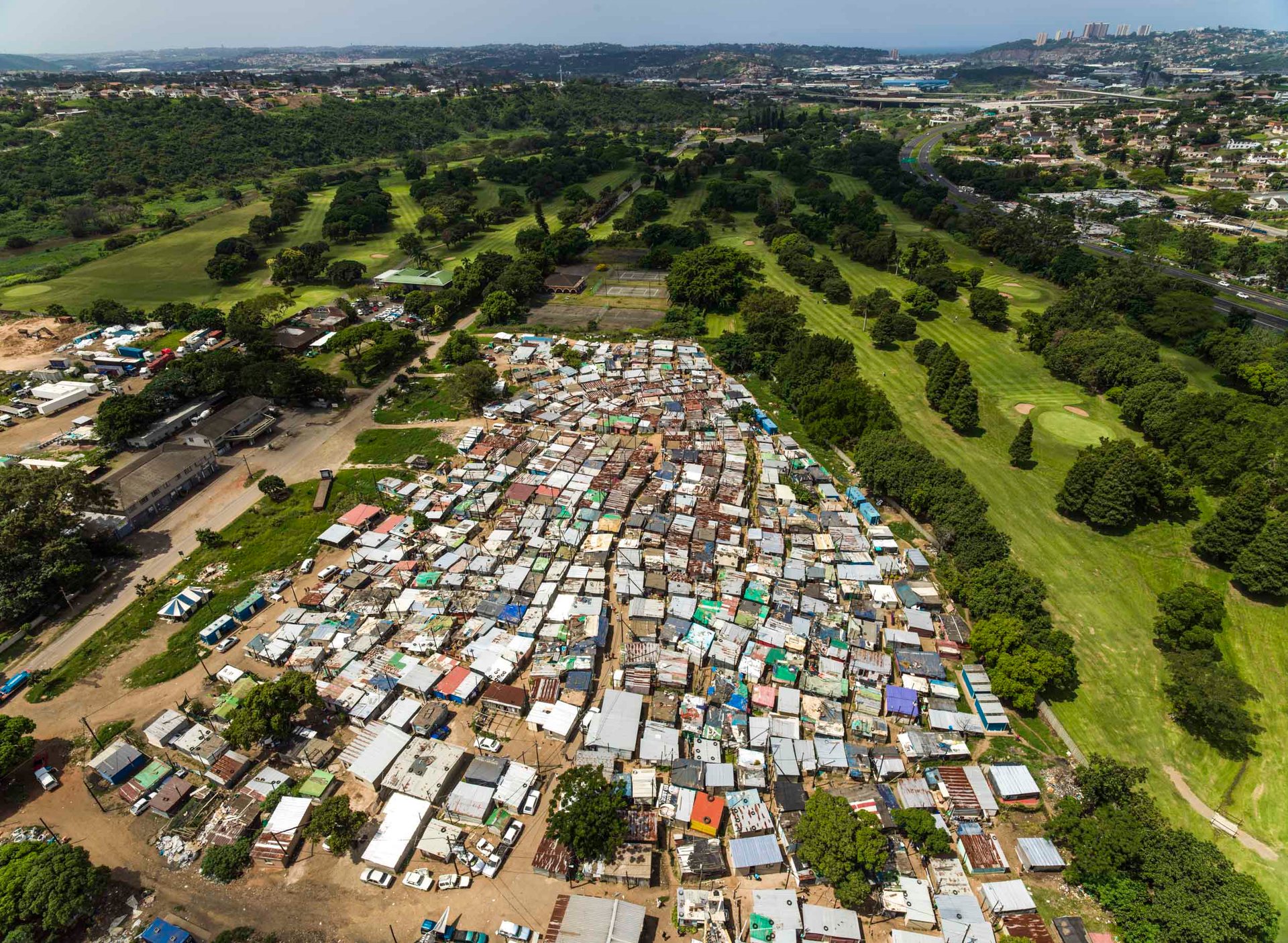
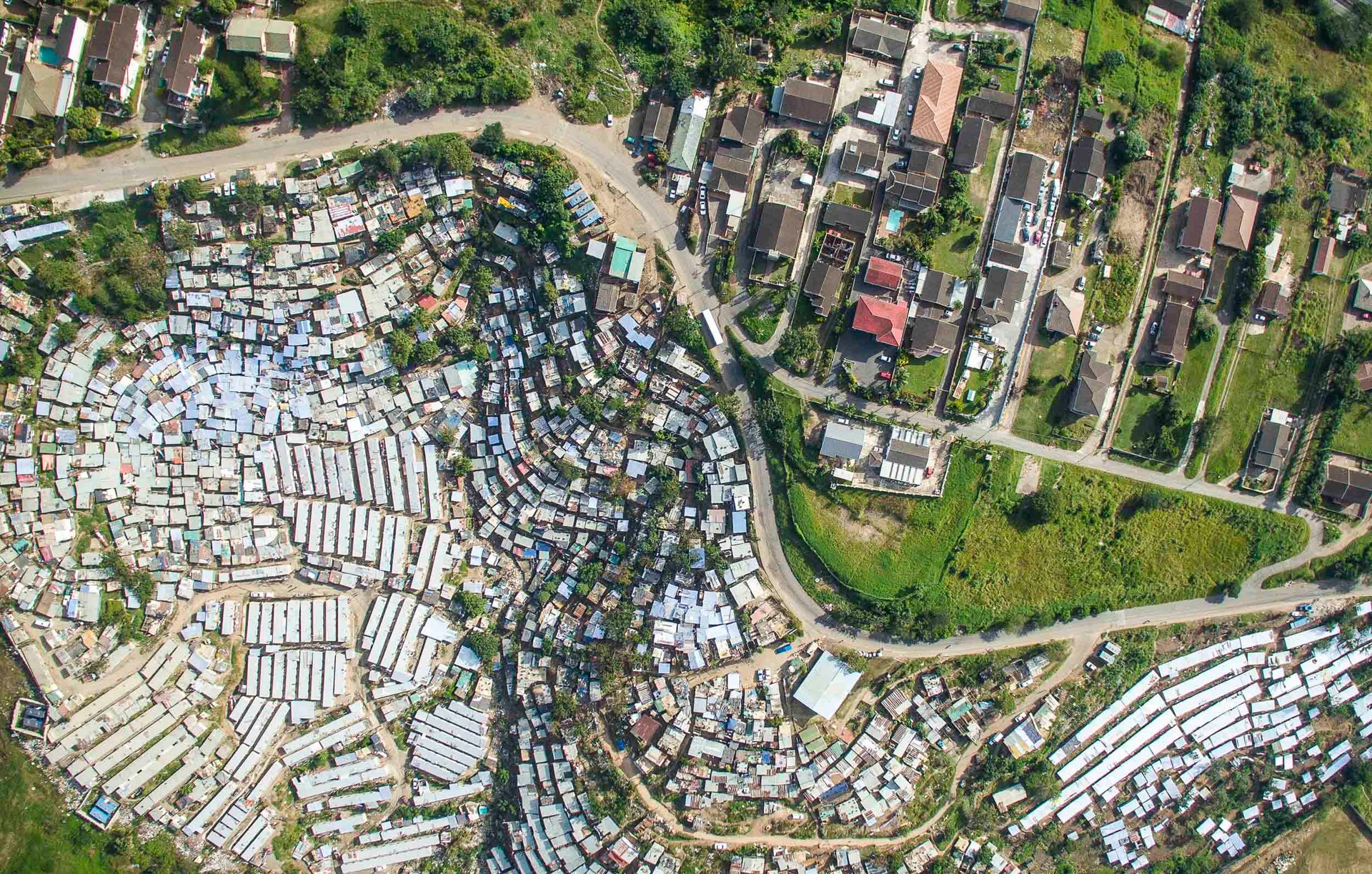
Kennedy Rd, Durban.
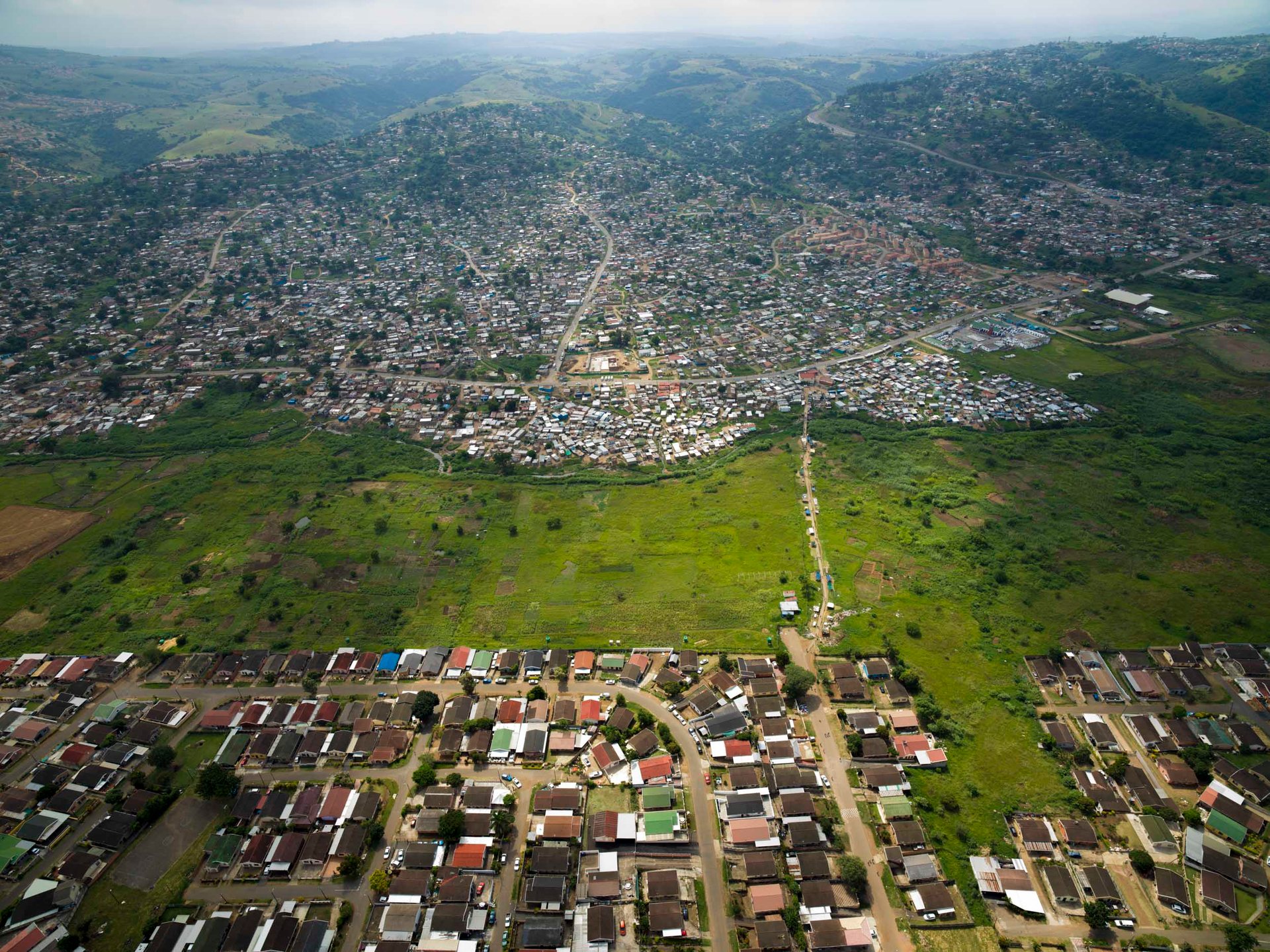
The beautiful Umgeni River Valley, home to the Zulu Nation, and intentionally designed to separate black from Indian communities during apartheid in South Africa.
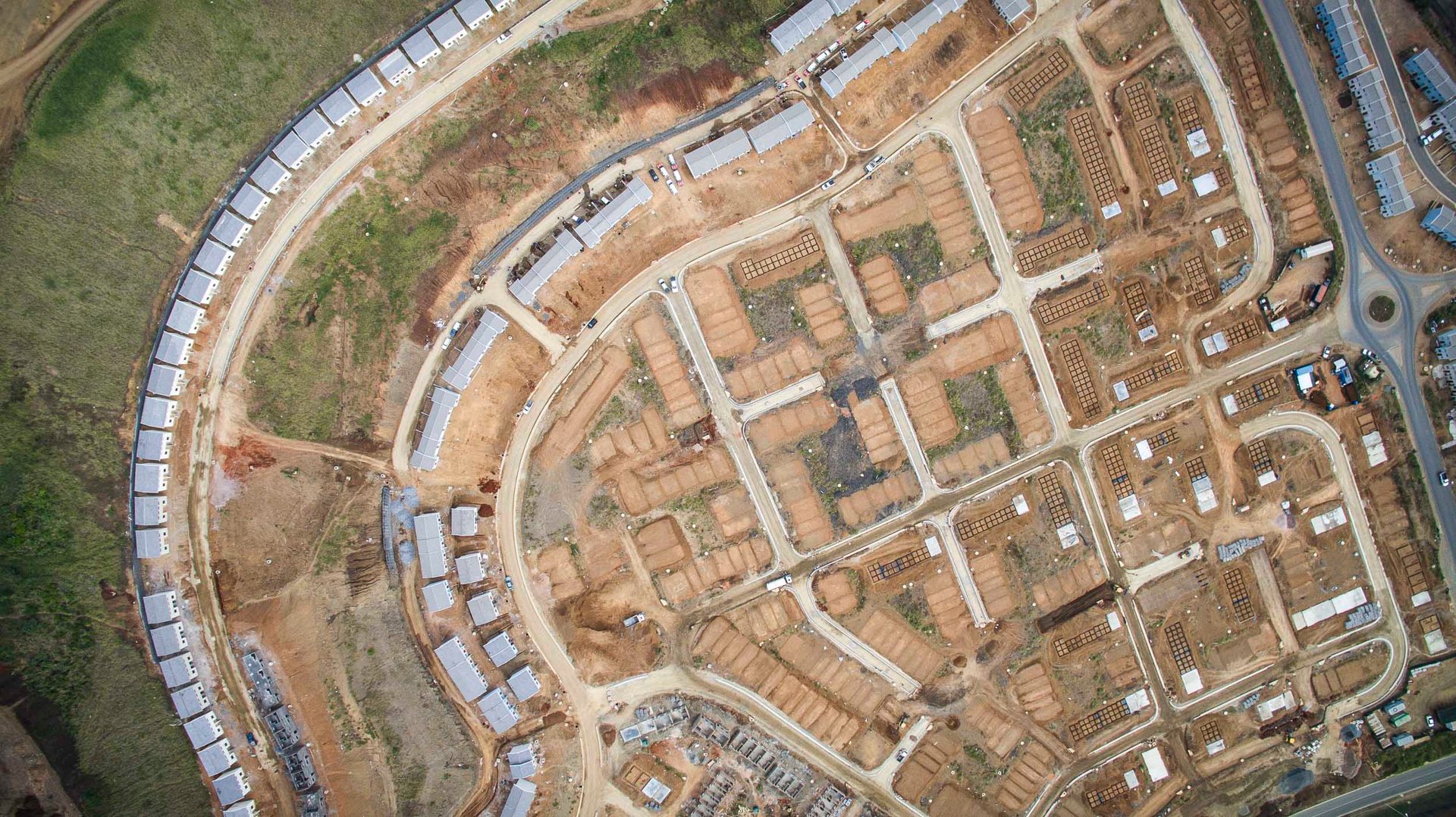
Cornubia, situated in Durban, South Africa, is a notable example of efforts to counteract the city's pronounced socio-economic disparities. Initiated as a mixed-use, mixed-income development, it aims to integrate diverse economic classes by offering a range of housing options, including both subsidized and market-rate units. While still under development, Cornubia aspires to incorporate commercial and industrial zones, schools, and healthcare facilities, creating a self-contained and sustainable community. The project faces the daunting task of bridging the gap between the affluent and the marginalized, offering a model for urban development that grapples directly with the persistent legacy of apartheid.
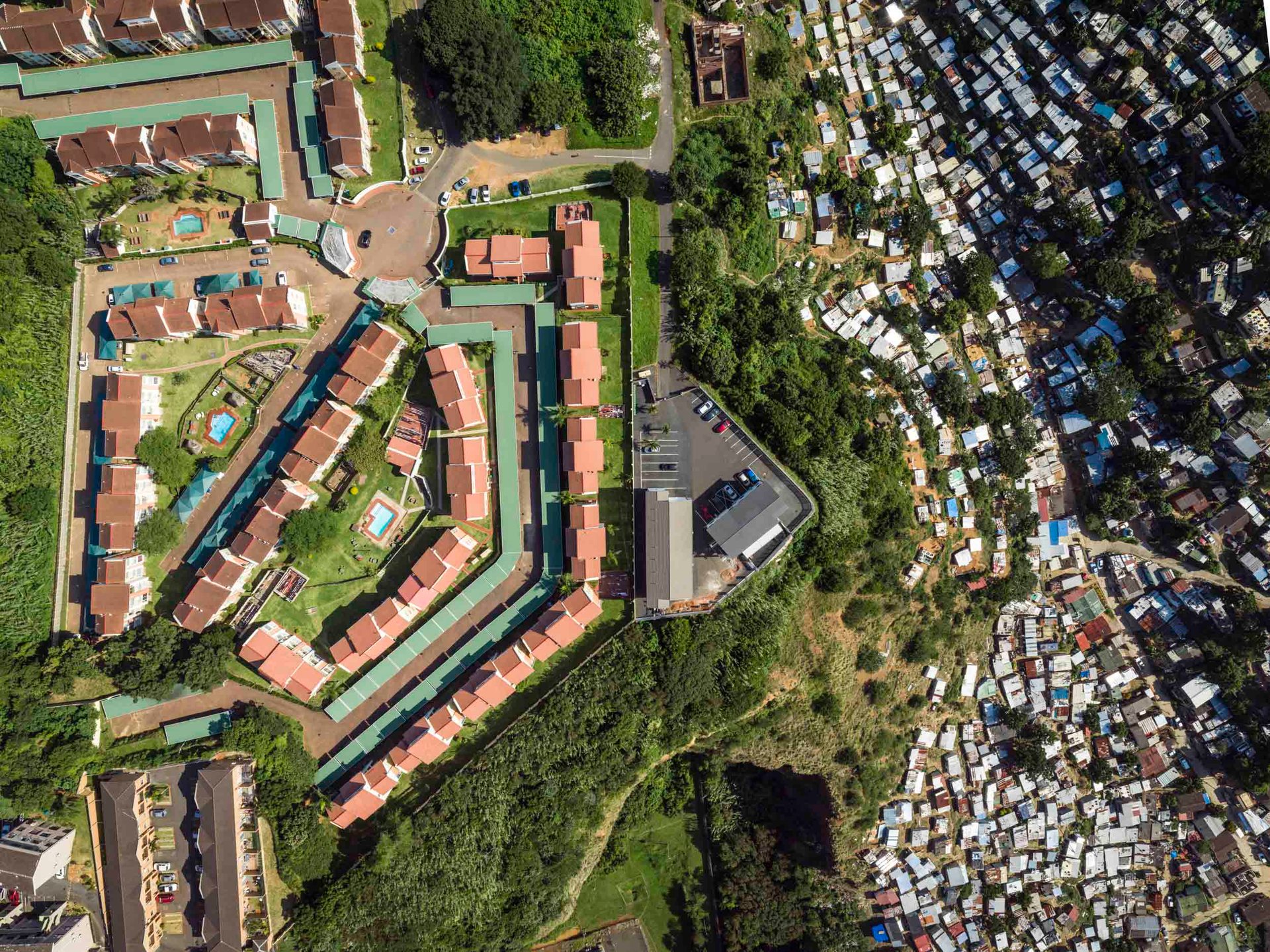
Shacks line the drainages underneath the wealthy suburb of Morningside in Durban, South Africa.
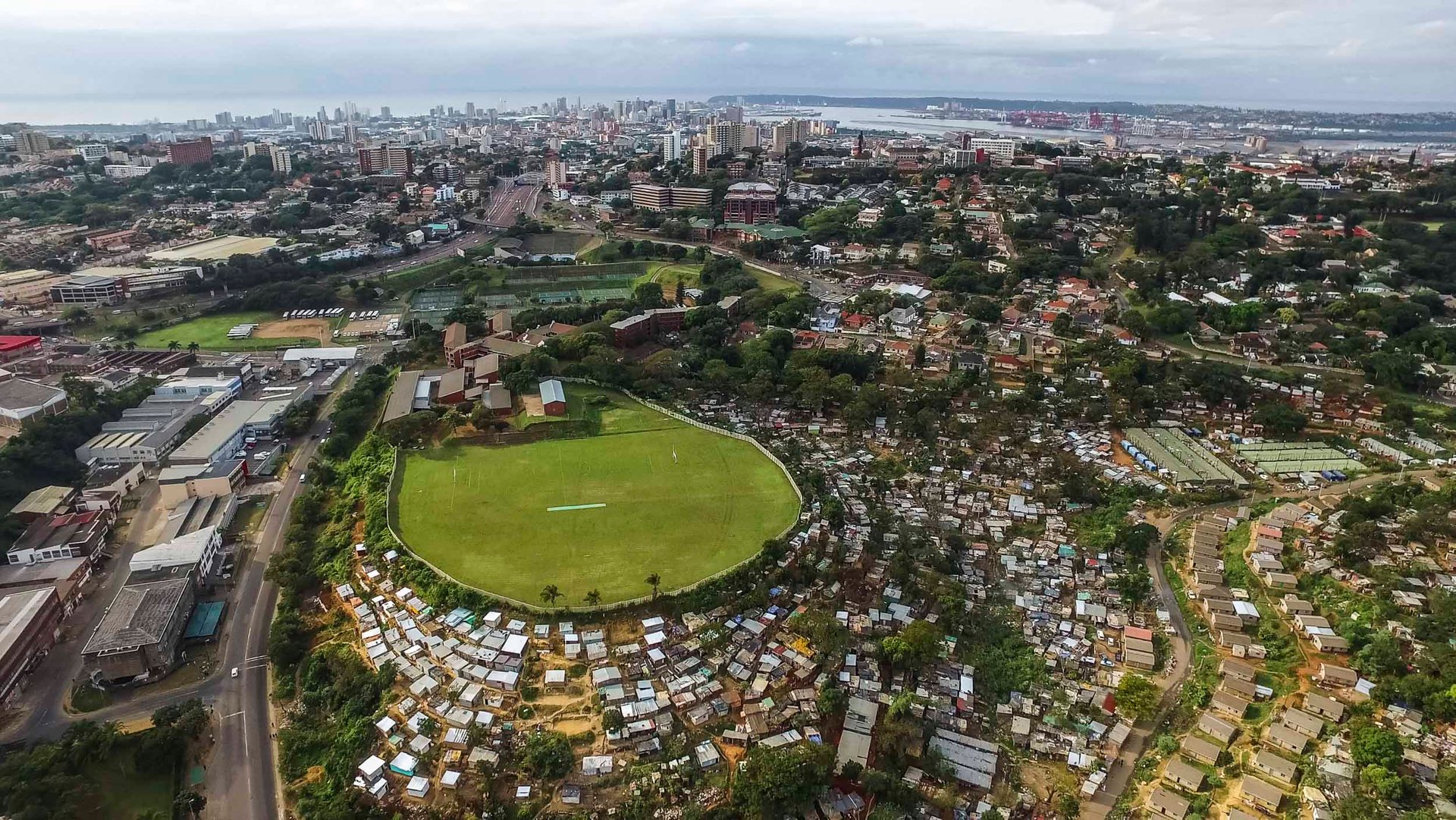
A cricket pitch surrounded by shacks, with the city center of Durban and the port in the background.
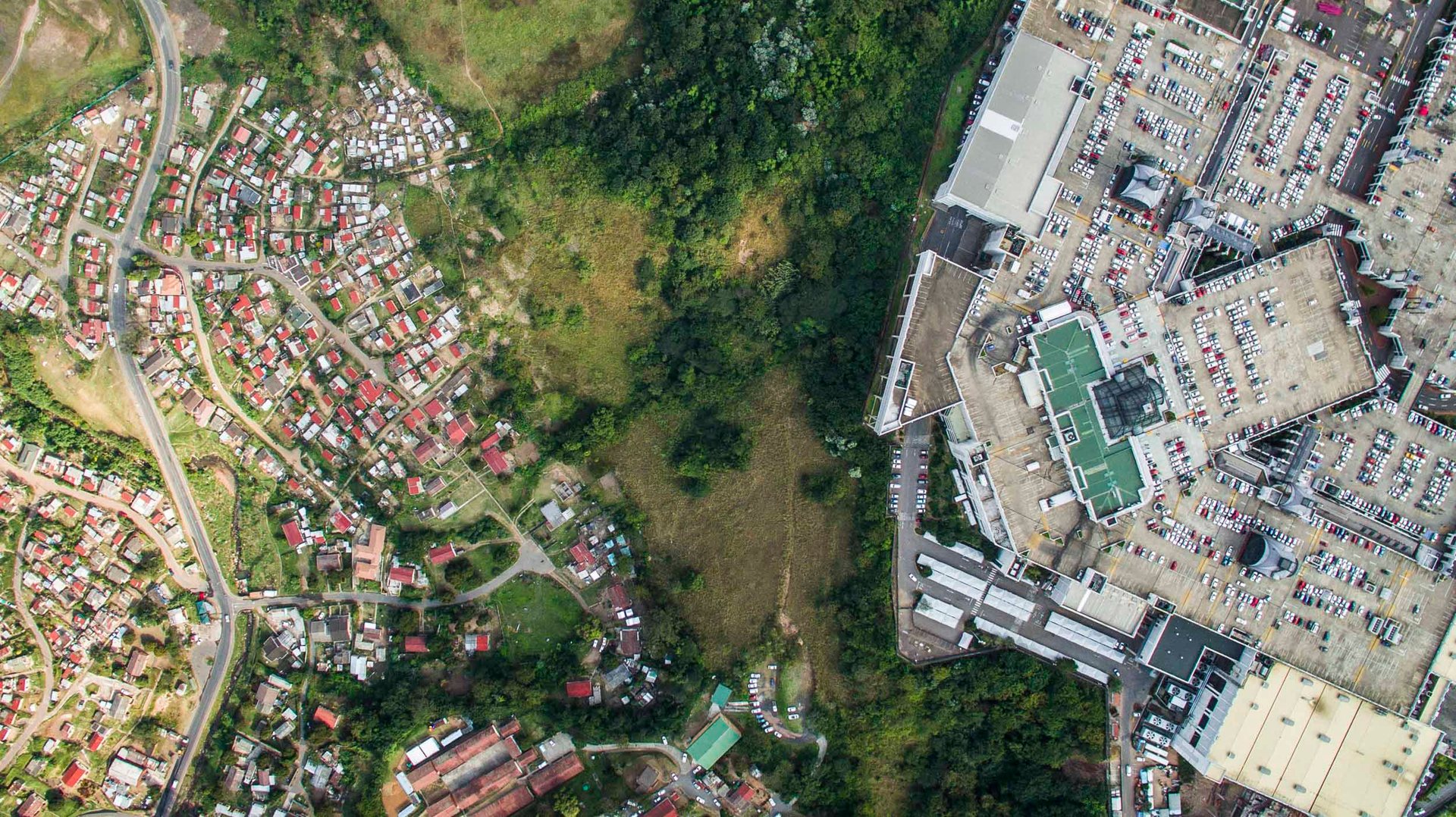
The Pavilion shopping center and shacks.
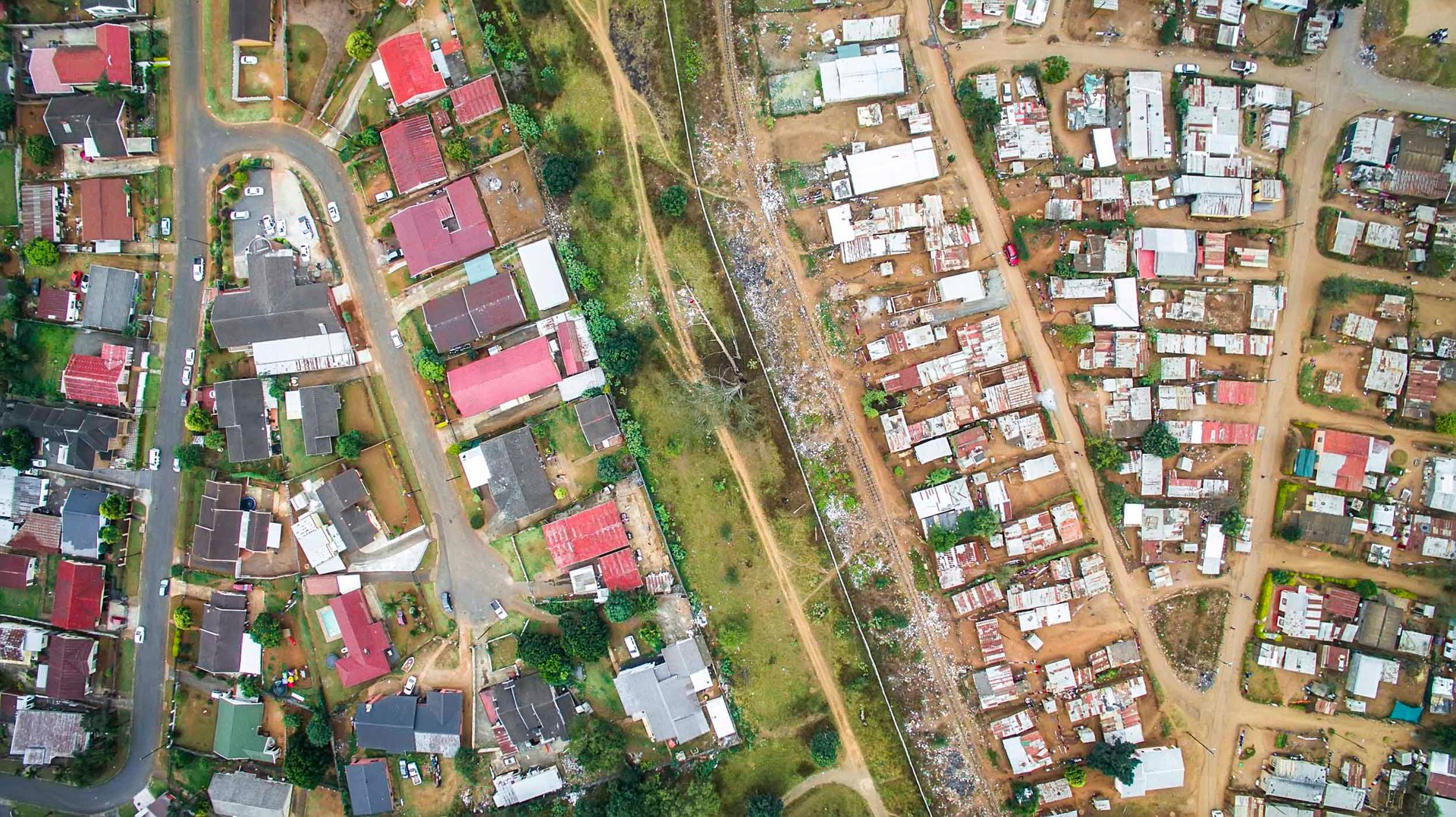
Rail lines separate communities in Pietermaritzburg, a town near Durban on the way to Johannesburg.